Pugsly's Barbershop

Pugsly’s Barbershop, 15 Years Later


Photographing a Kingston, New York Barbershop Across Three Visits

One of the unexpected benefits of working on the same photography project for more than 15 years is getting the chance to go back.

When I started Barbershops of America, the goal was fairly simple: travel around the country and photograph traditional barbershops. I certainly wasn't thinking about what it would mean to photograph the same people and places multiple times over the course of 5, 10, or 15 years.

Pugsly's in Kingston, New York is one of the places that has given me that opportunity.

I've now photographed The Nefarious Dr. Pugsly three different times during the life of this project. The first was at his original barbershop. The second and third were at Pugsly's SideShow, the second shop he opened a short distance away.

Put together, those photographs tell a different kind of story than any single visit could.
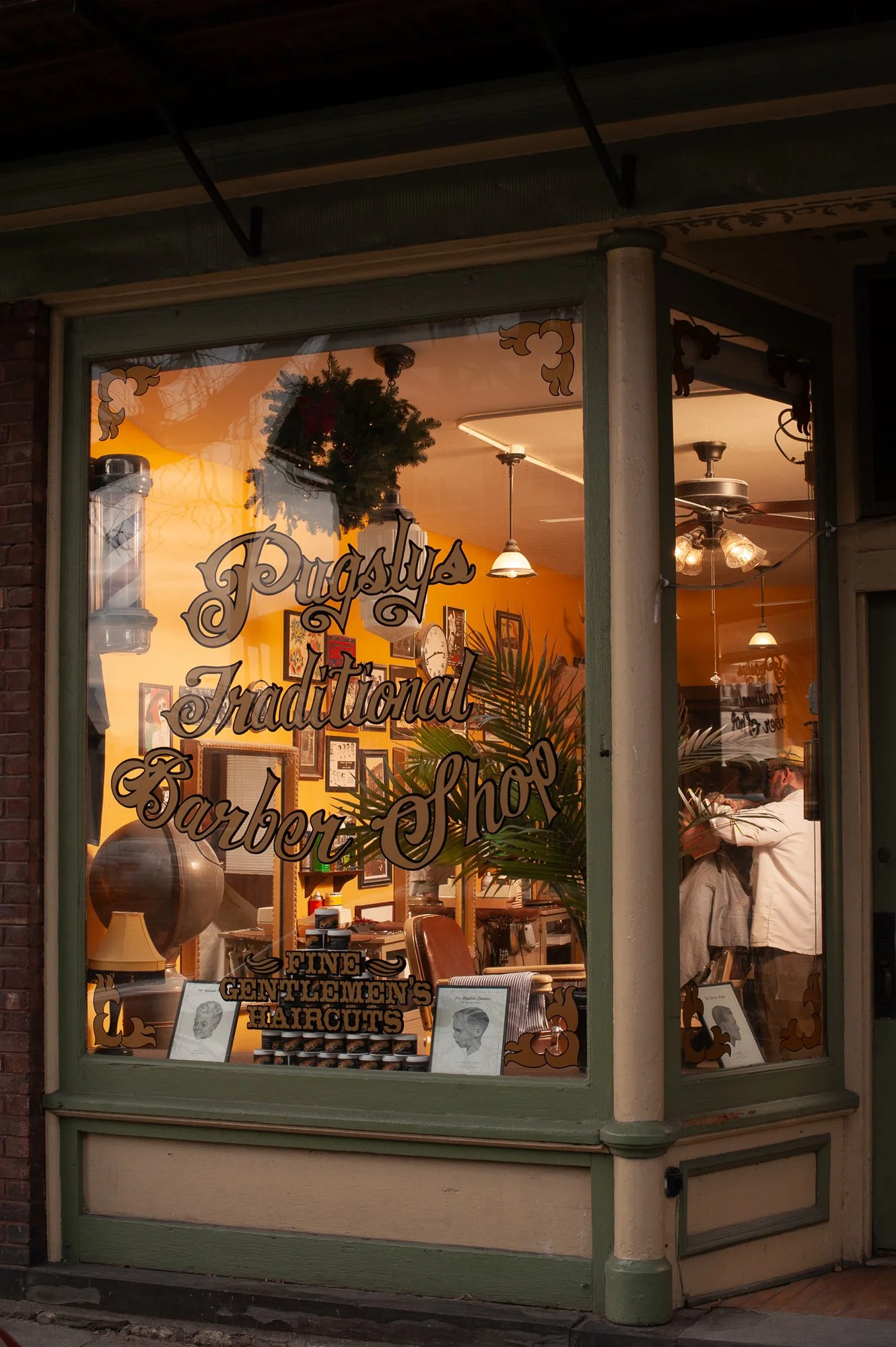
Exterior view of Pugsly’s Traditional Barber Shop in Kingston, New York, with the barbershop visible through the front windows.

Pugsly’s Traditional Barber Shop seen from the street in Kingston, New York.
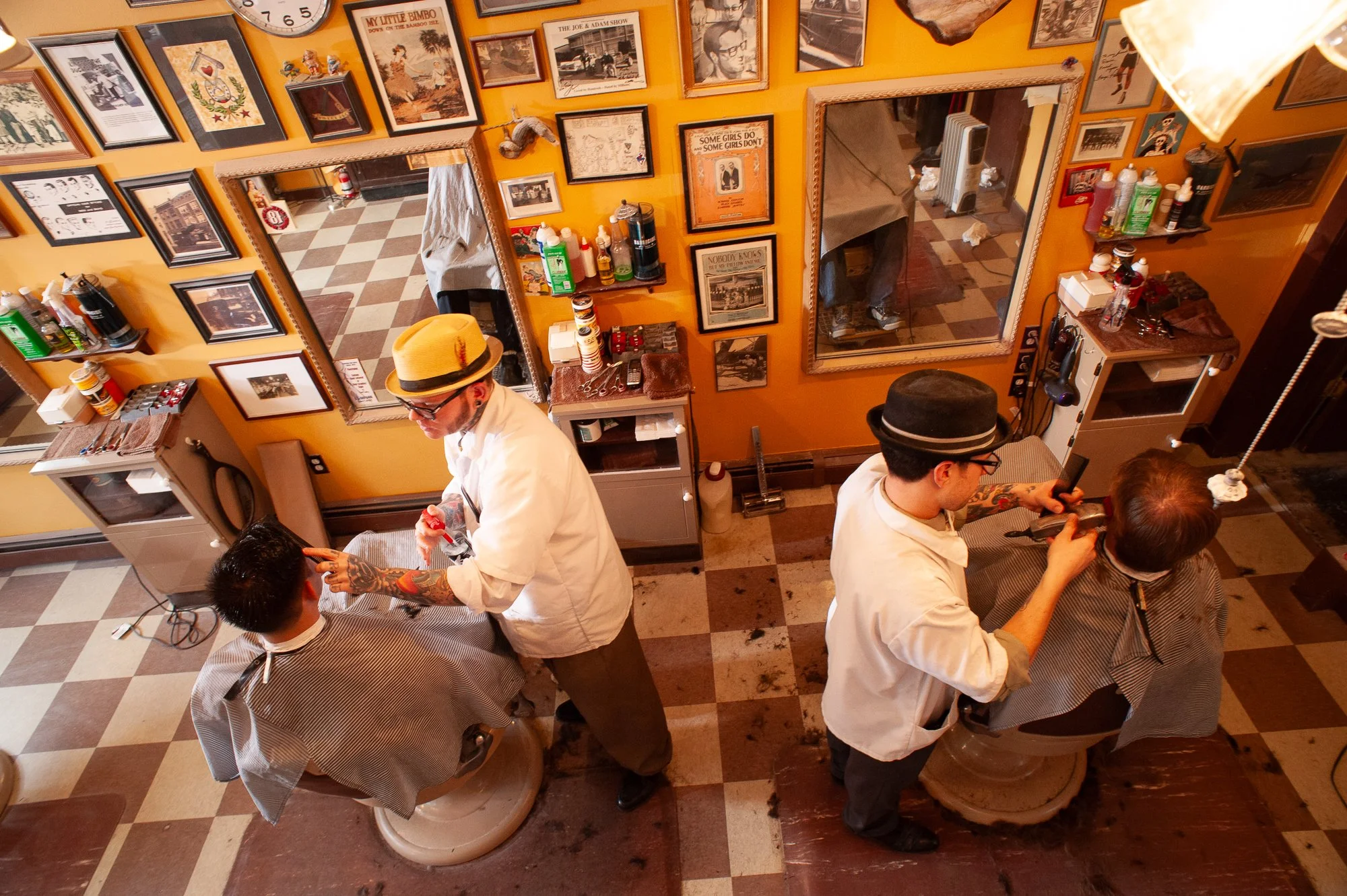
Two barbers cutting clients' hair inside Pugsly's SideShow Barbershop in Kingston, New York.

Barbers work on haircuts across the shop, with the checkered floor and decorated walls visible throughout the space.
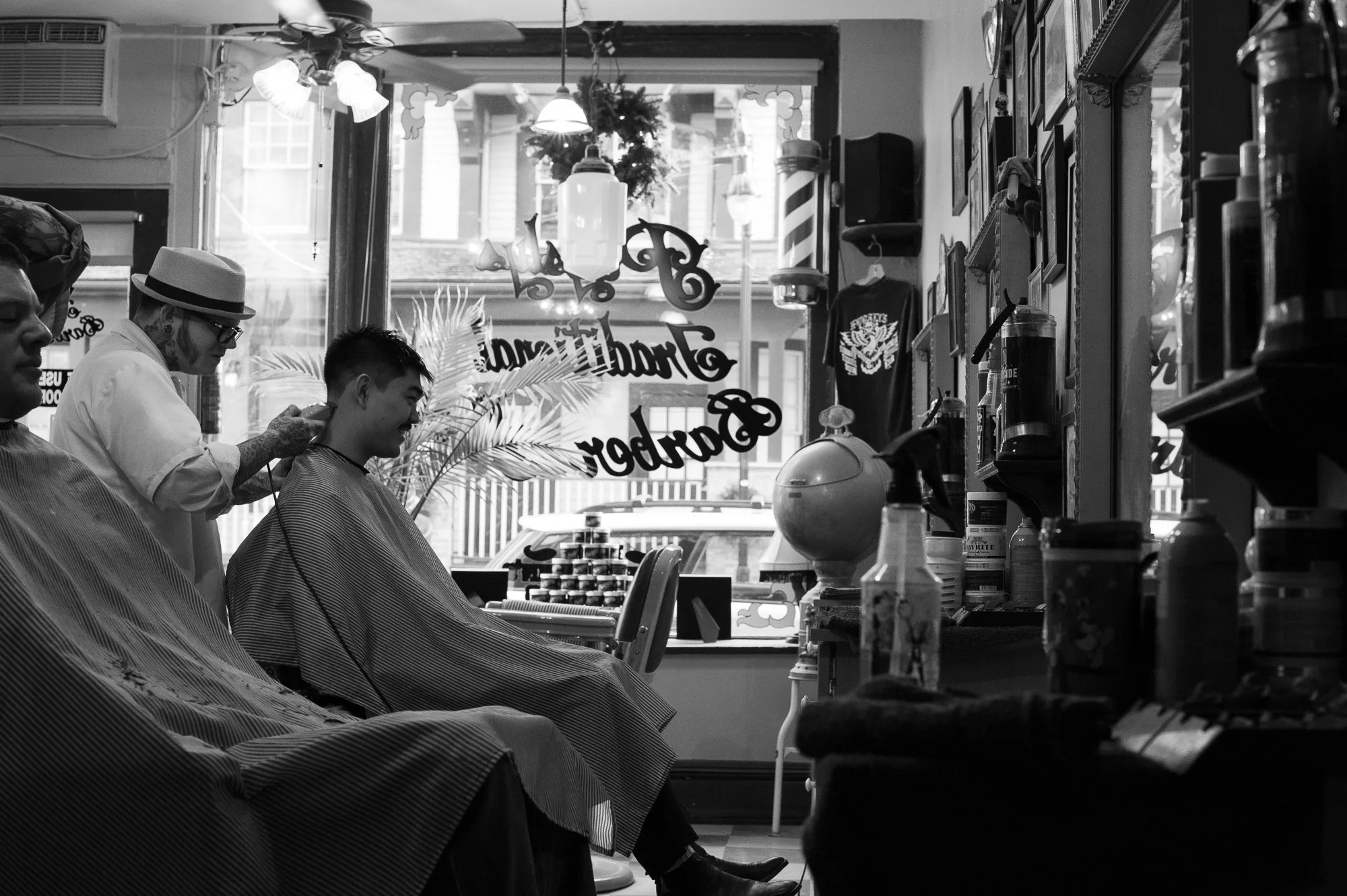
Barber cutting a client's hair inside Pugsly's SideShow Barbershop in Kingston, New York.

Barber trims a client's hair beside the front window, surrounded by the working details of the shop.

The First Visit: Pugsly’s Original Barbershop

I first met Pugsly sometime around 2011. I honestly don't remember exactly how we connected, which is true of quite a few relationships that came out of the early years of this project. What I do remember is him and the shop.

At that point I had already photographed plenty of old neighborhood barbershops, but Pugsly's felt different. It had all the visual references of a traditional American barbershop, but it wasn't an old shop that had simply survived unchanged for decades.

Pugsly had built his place very deliberately.

He was part of a generation of barbers who clearly respected the history of the trade but weren't interested in simply preserving it. There was an obsessive attention to the space, the tools, the haircut, and the experience of being there.

Years later, when I interviewed him, Pugsly described his intention as creating a traditional walk-in gentleman's barbershop with a 1940s influence, while making the quality of the haircut and the experience equally important.

That philosophy was visible before I ever knew how to put it into words.

And it made the shop an important part of Barbershops of America.
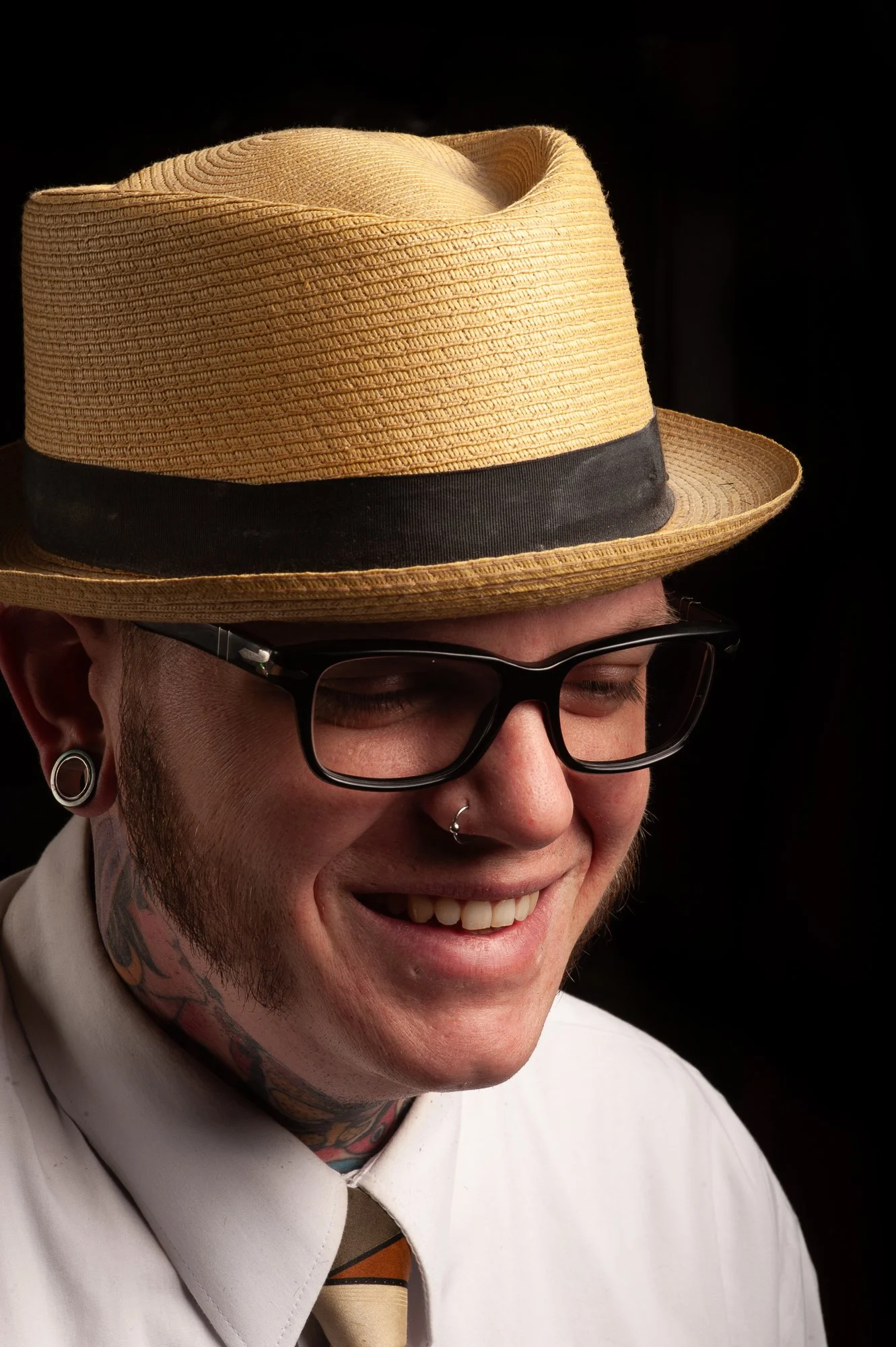
Barber portrait at Pugsly's Barbershop in Kingston, New York, wearing a straw hat and glasses.

Pugsly smiling in his straw hat and glasses during a portrait inside the shop.
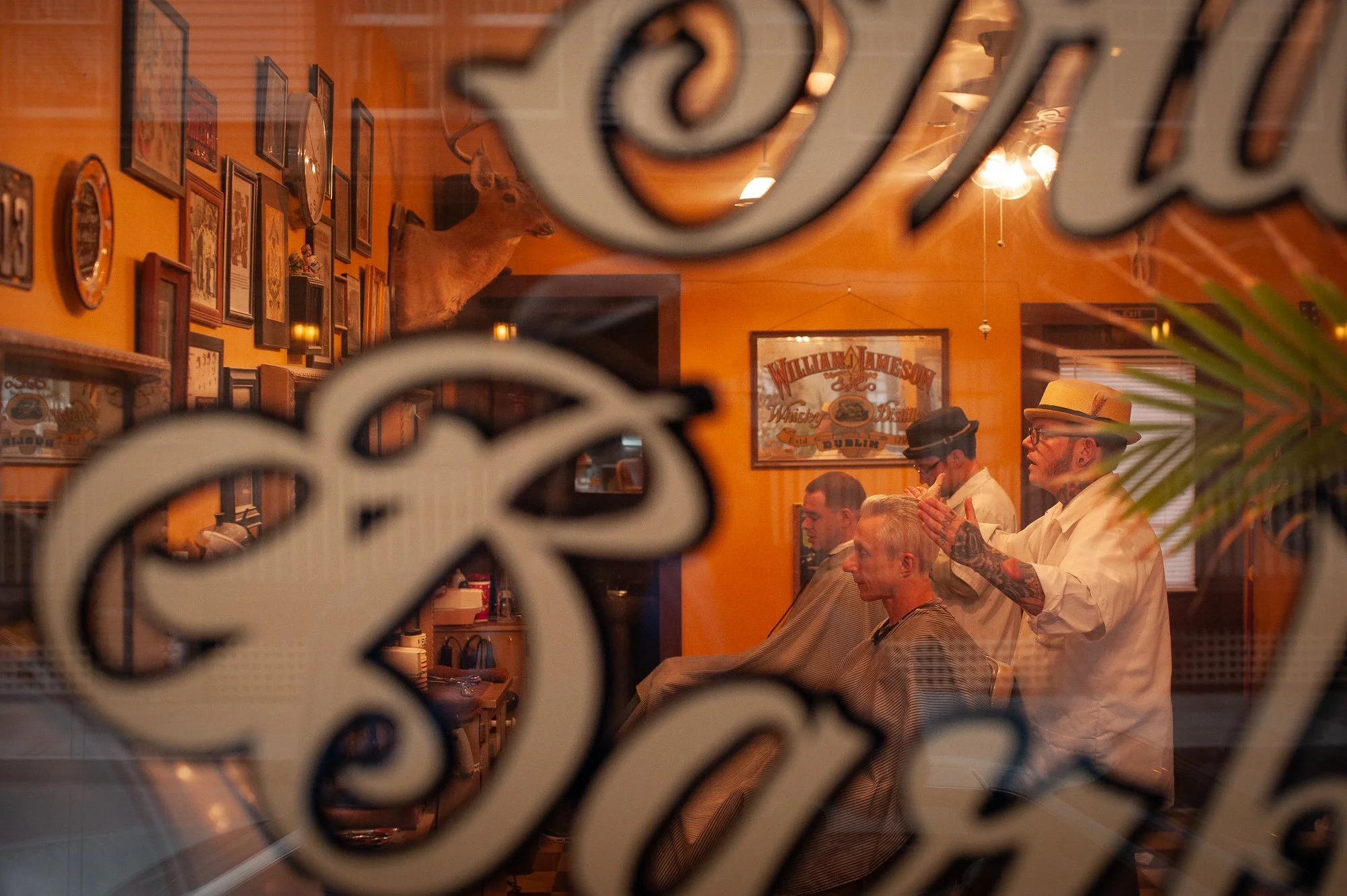
Vintage taxidermy and barber shop details fill the interior of Pugsly’s SideShow in Kingston, New York.

Through the front window, a haircut is underway inside Pugsly’s Barbershop in Kingston, New York.
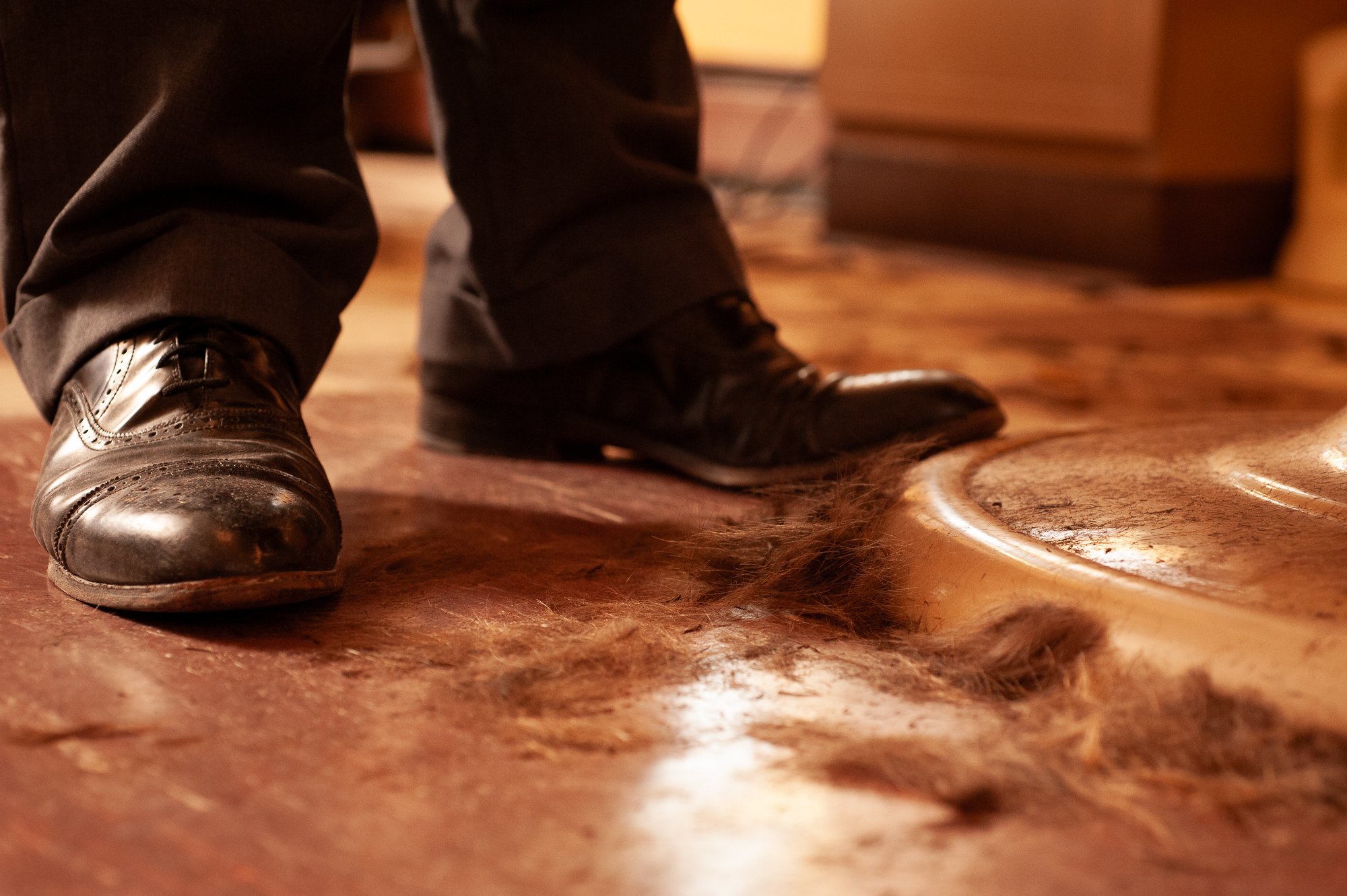
Hair clippings on the floor beside a barber's shoes and chair at Pugsly's SideShow Barbershop.

Hair clippings on the floor capture a small detail from a day of work inside the shop.
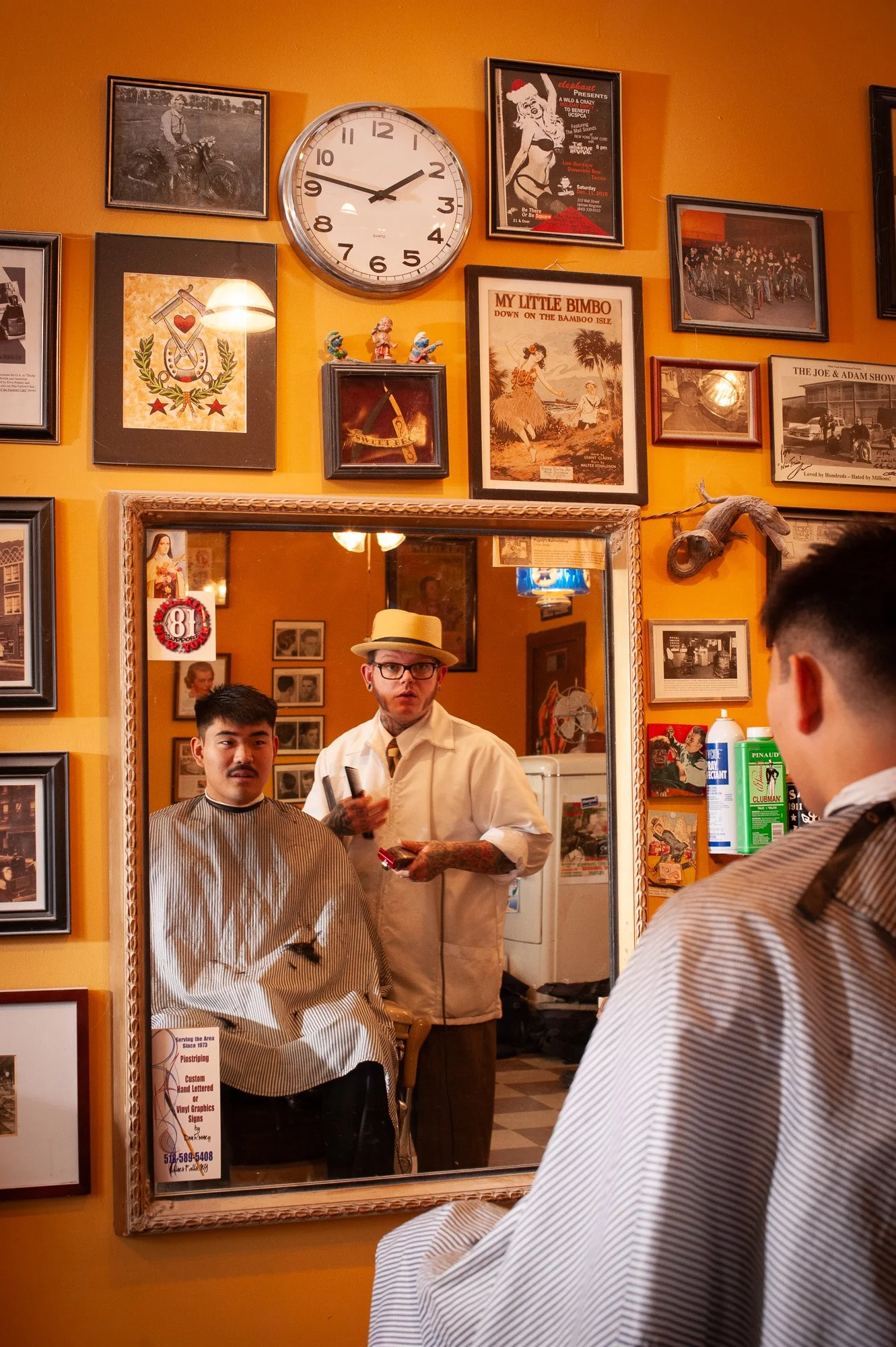
Barber cutting a client's hair inside Pugsly's SideShow Barbershop in Kingston, New York.

A haircut in progress at Pugsly's Barbershop, surrounded by the shop's photographs, artwork, and vintage decor.
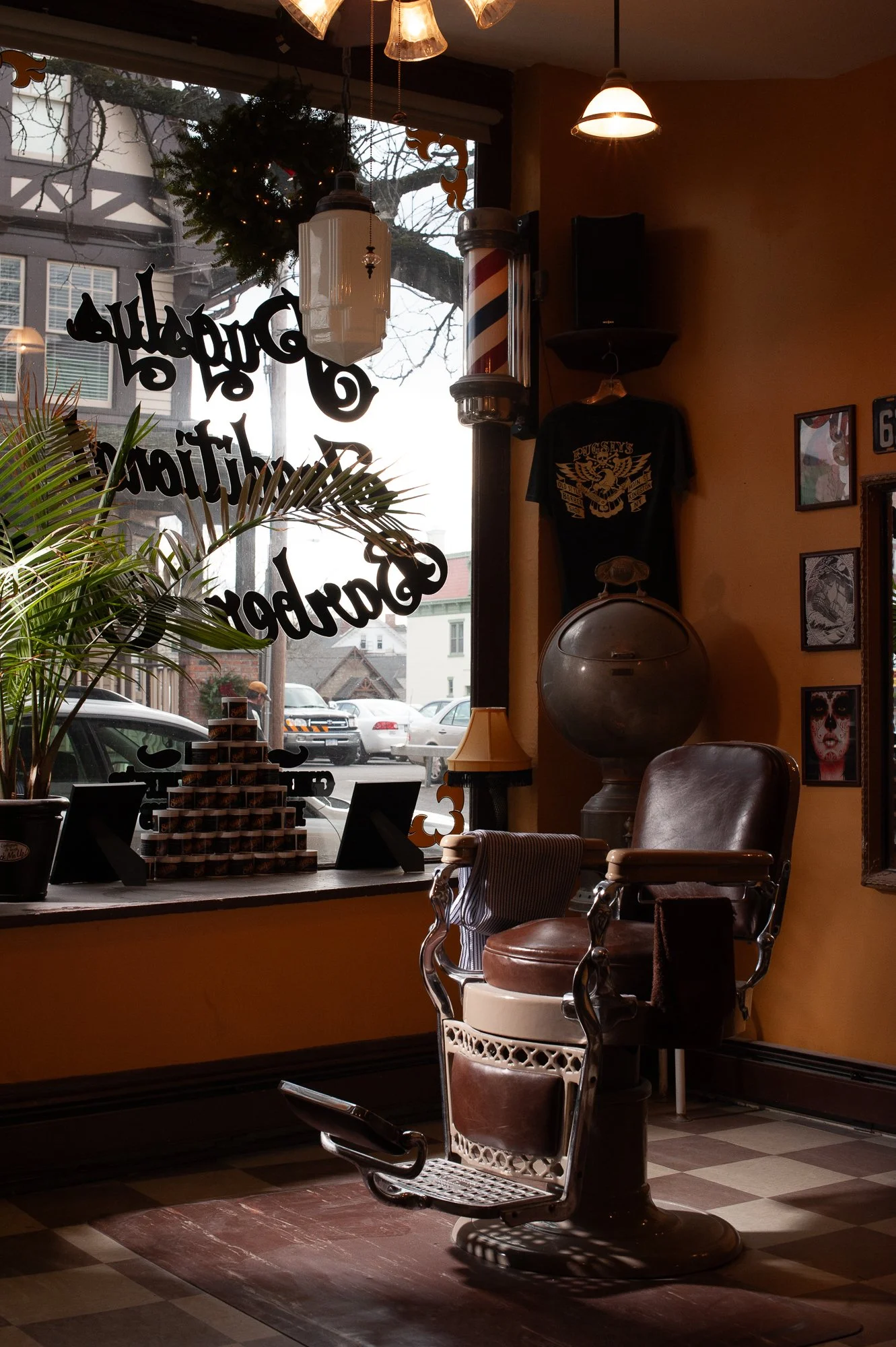
Interior of Pugsly's SideShow Barbershop showing a vintage barber chair and decorated window.

Warm light, vintage details, and a barber chair waiting for the next client.

A Second Shop: Pugsly’s SideShow

By the time I returned, Pugsly had opened another shop.

Pugsly's SideShow wasn't intended to be a copy of the original. It grew out of a practical problem with the first shop: people were waiting too long.

The original was built around the traditional walk-in model. SideShow was appointment-based and gave Pugsly an opportunity to create something slightly different.

It also looked different.

The original shop leaned heavily into the visual language of the classic American barbershop. SideShow was more eccentric and personal. It still had one foot planted firmly in barbering tradition, but there was more room for Pugsly's other influences: cars, motorcycles, custom culture, music, signs, paint, and all the strange objects that somehow make perfect sense when they're together in the same room.

I photographed SideShow for the first time during the final push for the Barbershops of America book.

The timing wasn't exactly ideal.

I was crossing the country and the only opportunity I had to photograph the shop was Christmas Eve. Pugsly opened the place anyway.

That's the kind of thing I remember as much as the photographs.
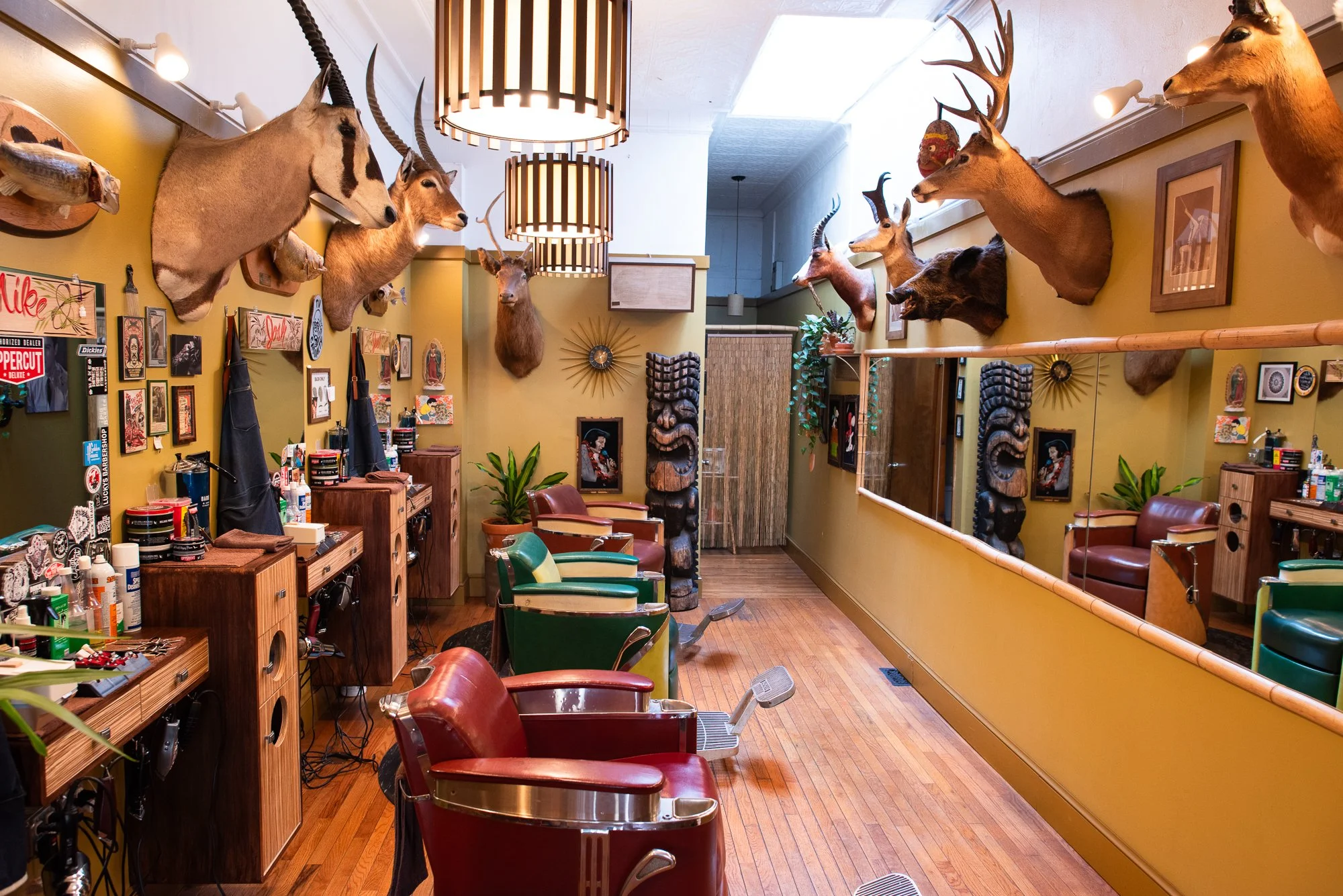
Barber stations and vintage decor line the interior of Pugsly’s barbershop in Kingston, New York.

Inside Pugsly’s Sideshow, vintage decor and barber stations fill the Kingston, New York shop.
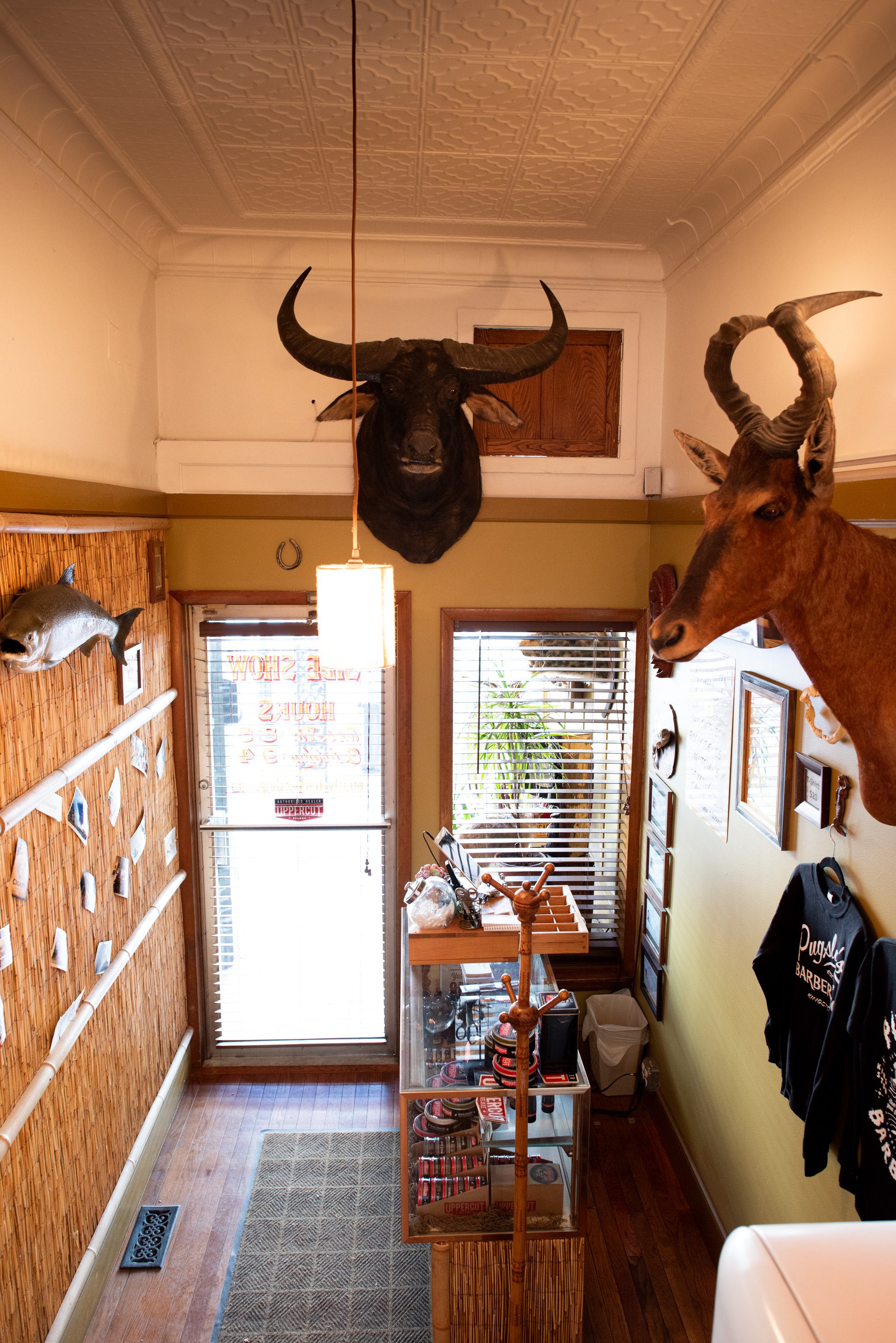
Vintage barber chair inside Pugsly’s Traditional Barber Shop.

Taxidermy and vintage barber shop details surround the entryway inside Pugsly’s SideShow.
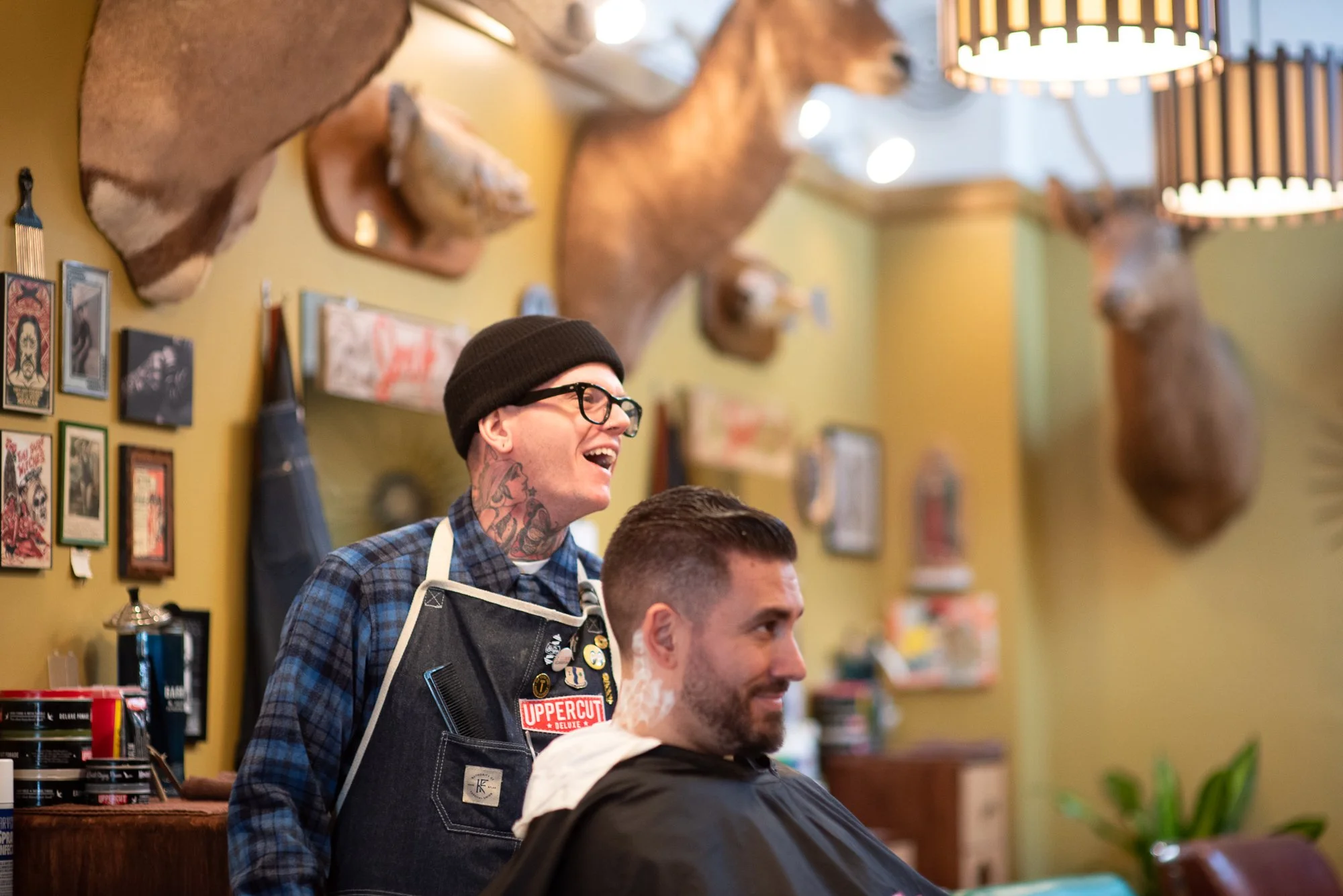
Pugsly shares a laugh with a client during a haircut at his barbershop in Kingston, New York.

Between cuts, there’s always time for a laugh.
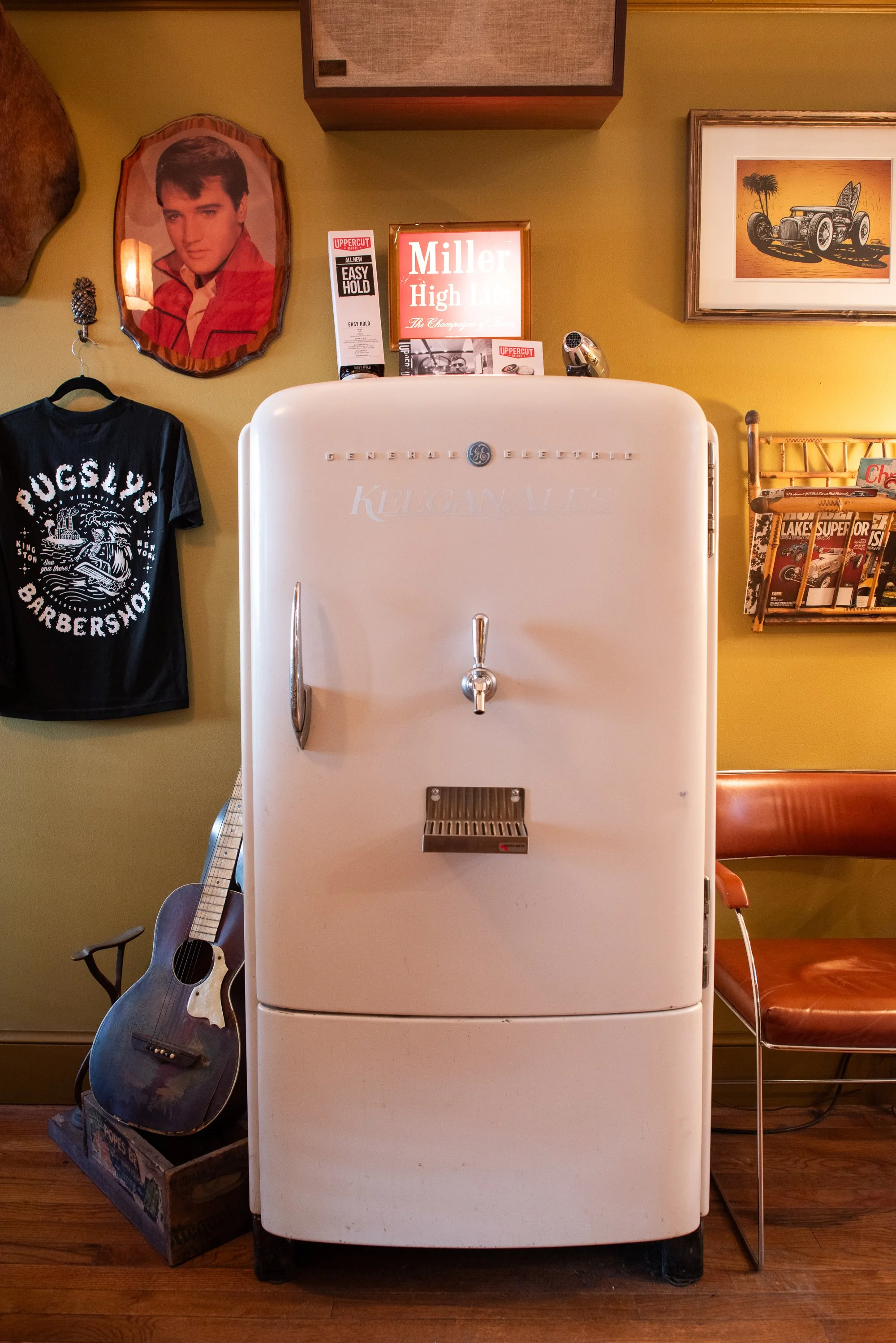
Vintage interior details at Pugsly's SideShow barbershop in Kingston, New York

Vintage kegerator and memorabilia fill a corner inside Pugsly’s SideShow.

Going Back Again

In 2026, I found myself back in Kingston.

By this point, Barbershops of America had been part of my life for more than 15 years. I had photographed roughly 250 barbershops across all 50 states, published a book, driven an unreasonable number of miles, and watched plenty of the places I photographed disappear.

So I went back to SideShow.

This was the third time I had photographed Pugsly and the second time I had photographed this particular shop.

There was no need to recreate the photographs from the previous visits. That isn't really the point.

The point was to photograph what was there now.

A barbershop isn't a movie set. Things move. Objects accumulate. Chairs get worn. Walls fill up. People get older. Businesses evolve. Something that seemed completely ordinary during the first visit can become significant simply because it is still there years later.

And things that seemed permanent sometimes disappear.
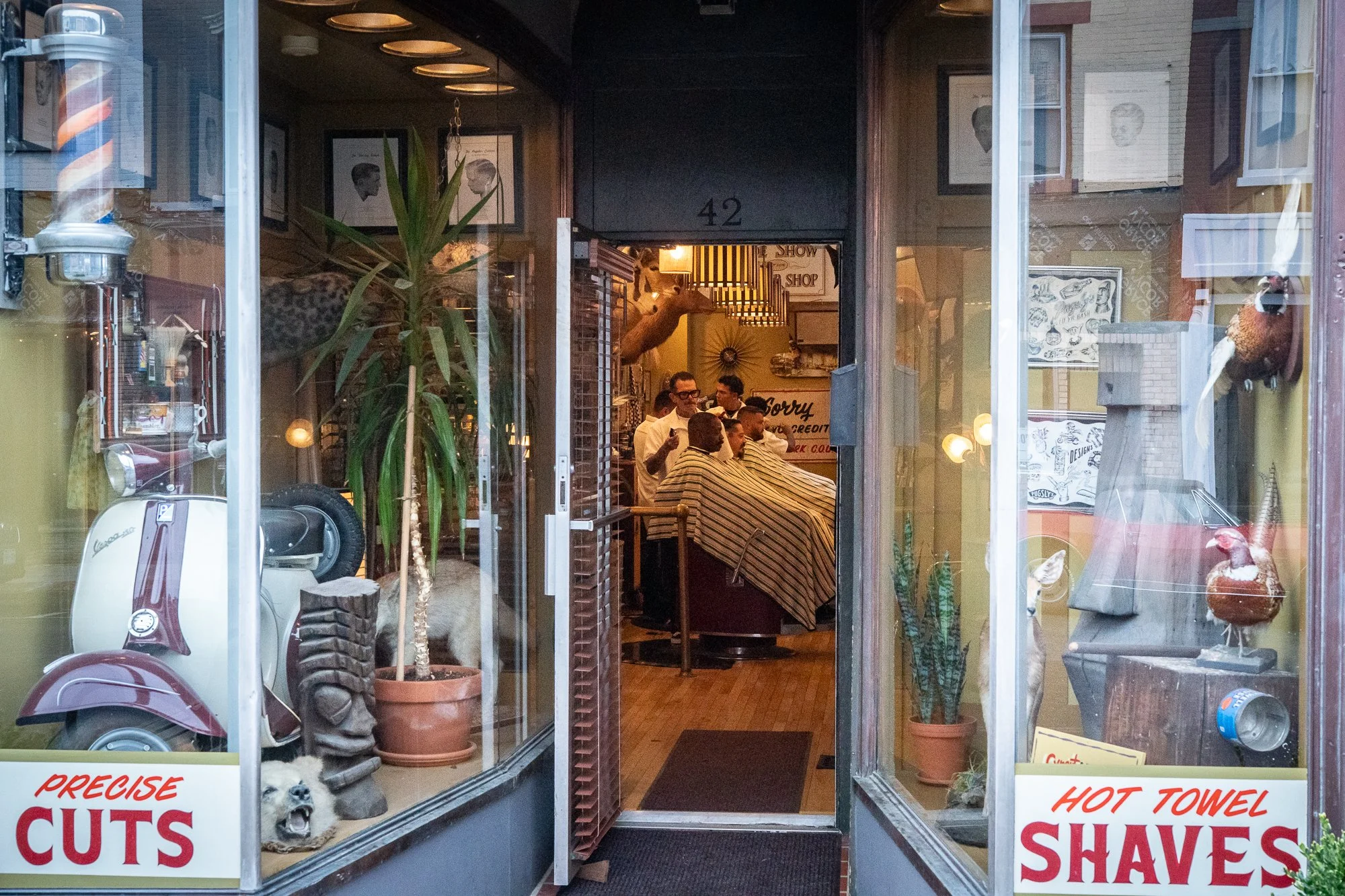
Barbers and clients inside Pugsly’s Barbershop in Kingston, New York, viewed through the front entrance.

Seen from the street, barbers work with clients inside Pugsly’s Sideshow.
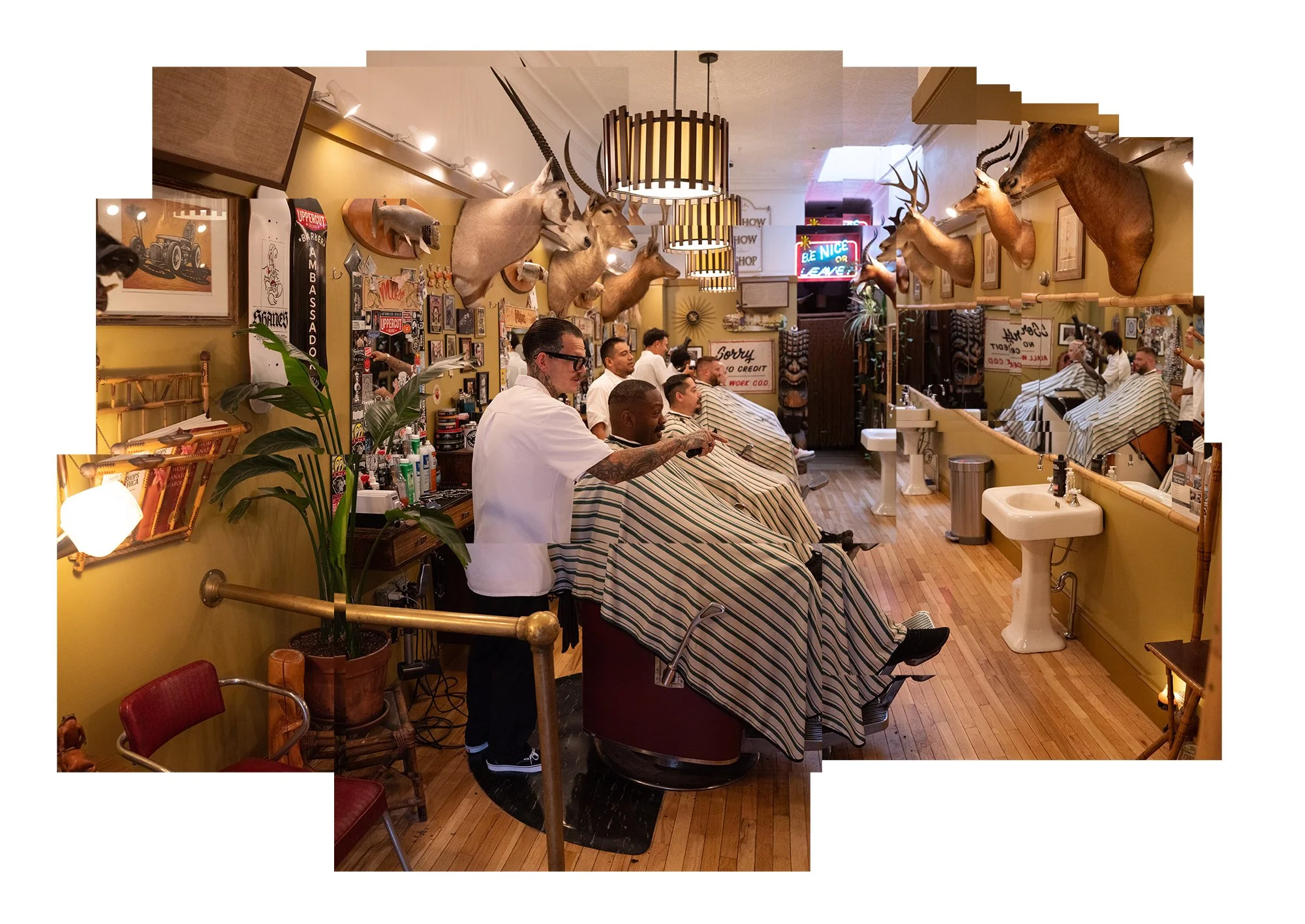
A collage of the Pugsly's barbershop interior showing barbers working with clients, barber chairs, mirrors, plants, and mounted animal displays.

A busy day at Pugsly's Sideshow - barbers working across the shop's row of chairs and detailed interior.
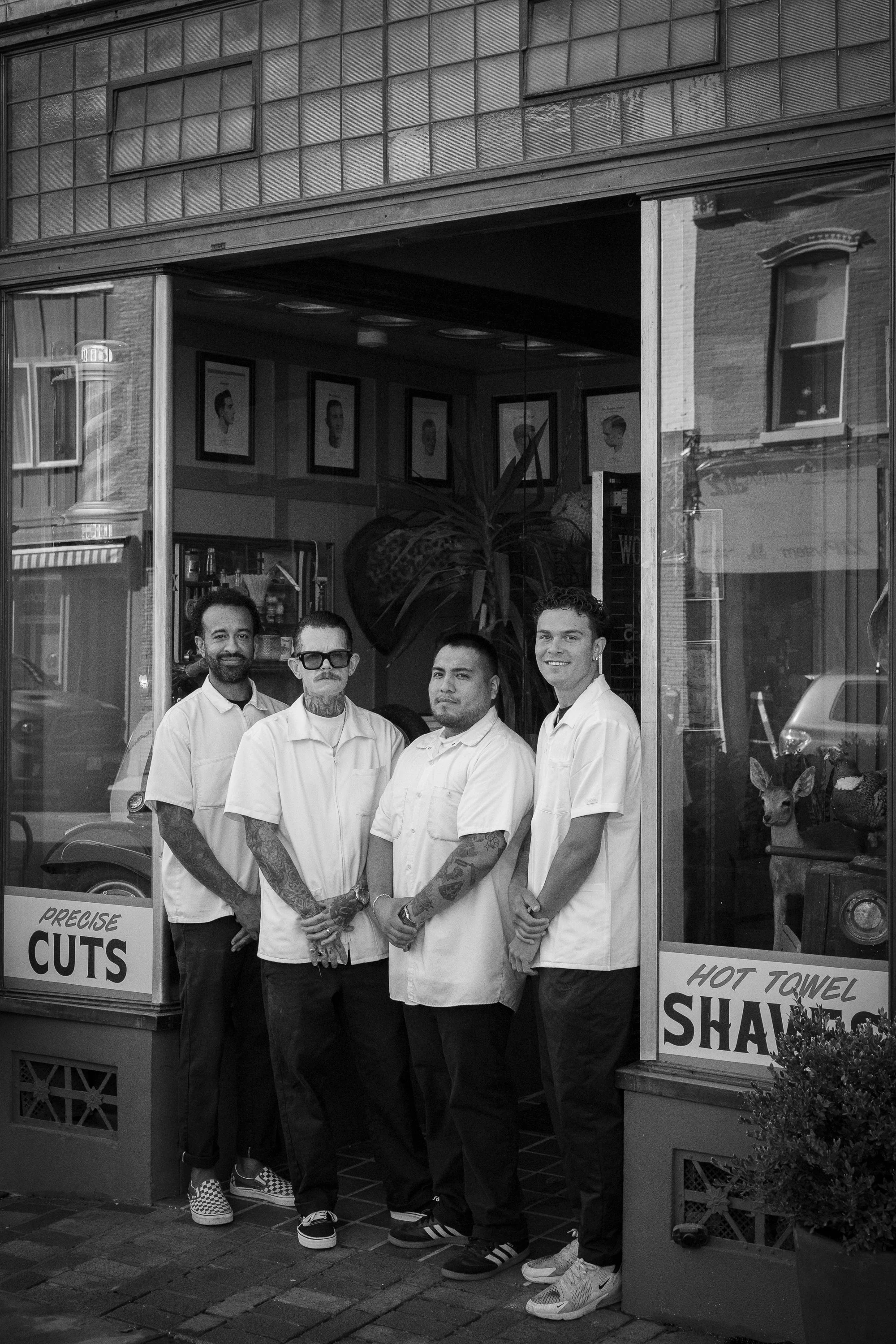
Four barbers standing together outside Pugsly's barbershop in matching white work shirts.Four barbers standing together outside Pugsly's barbershop in matching white work shirts.

The Pugsly's team outside the shop.

What 15 Years Does to a Photograph

This is the part of Barbershops of America that has become increasingly interesting to me.

When I started the project, I was primarily documenting places.

Now I'm documenting time.

A photograph of a barbershop made today can be interesting because of the people, light, architecture, objects, or activity happening inside the frame. But make another photograph of that place ten years later and suddenly the first photograph contains information you didn't realize you were recording.

The haircut on the wall. The price board. The magazines. The barber chair. The person sitting in it. The businesses next door. The way people dressed. The objects that disappeared and the ones that somehow never moved.

None of those things necessarily feel historic when you're standing there.

Time does that work for you.

That's why returning to Pugsly's matters to me.
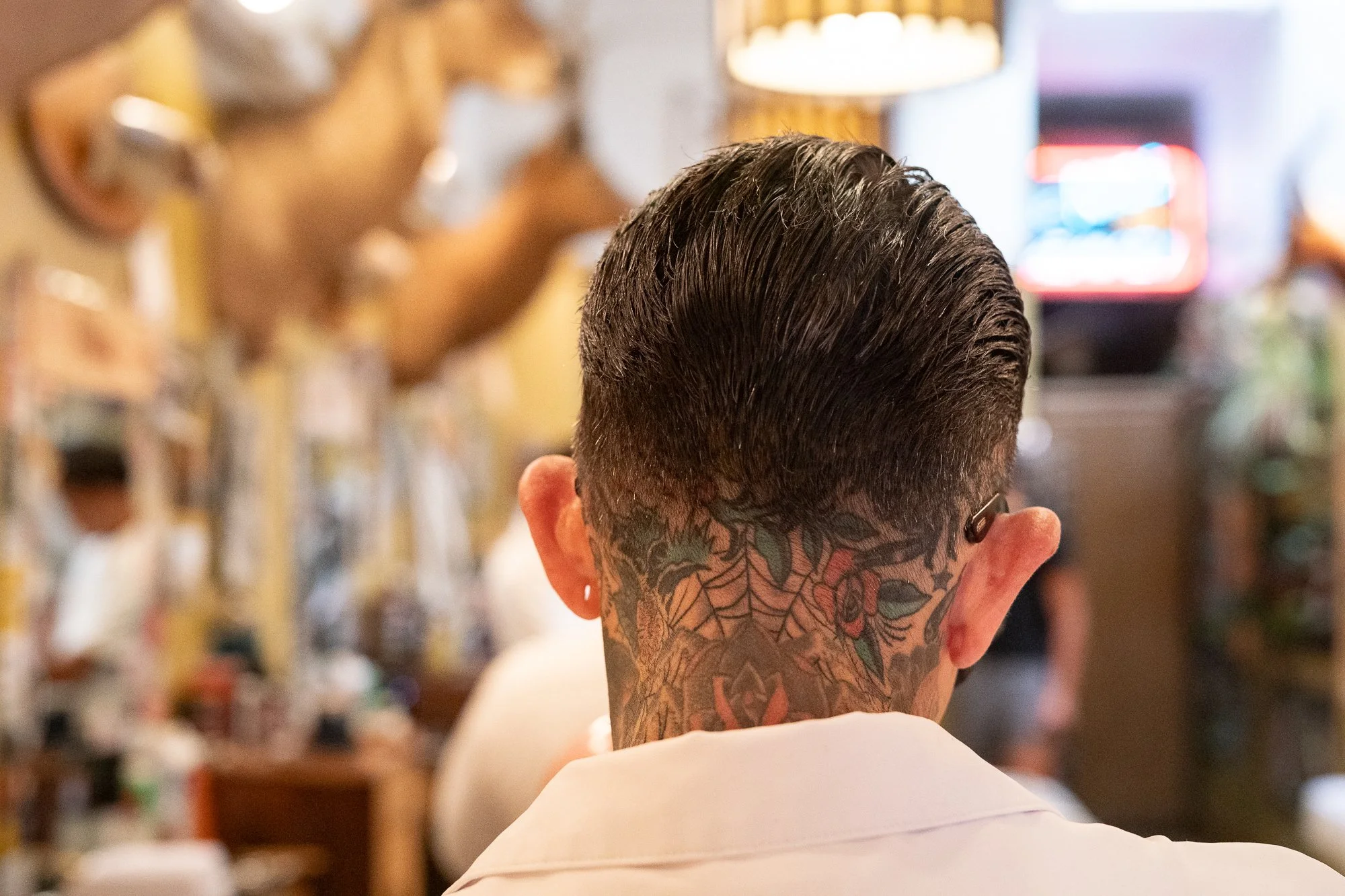
Close-up of a barber’s slicked-back haircut and neck tattoo as he works inside Pugsly’s SideShow Barbershop in Kingston, New York.

Slicked-back hair and a tattooed neck as Pugsly works behind the chair.
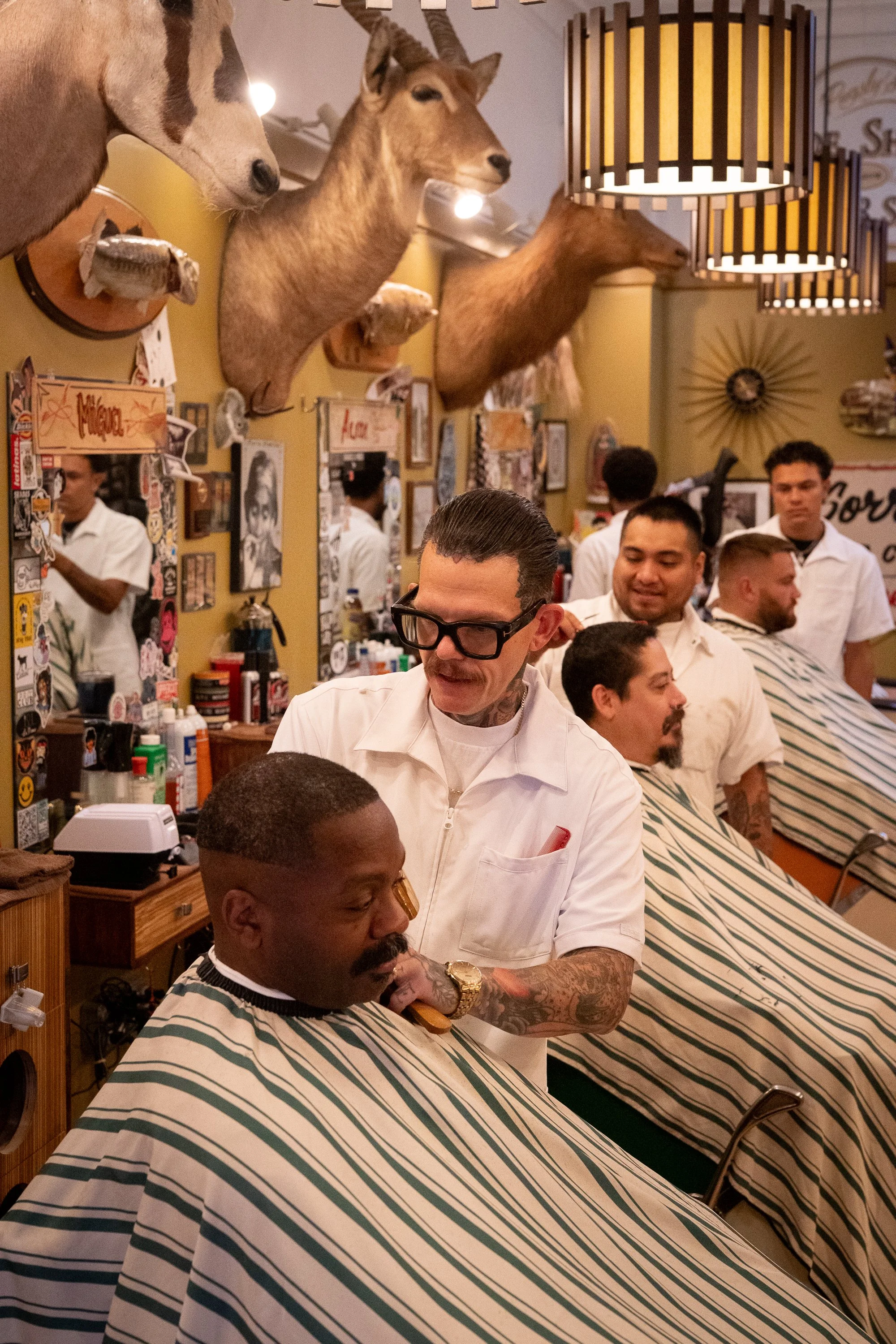
Barbers in white uniforms trim clients’ hair inside Pugsly’s Barbershop.

Haircut underway at Pugsly's as several barbers work throughout the shop.
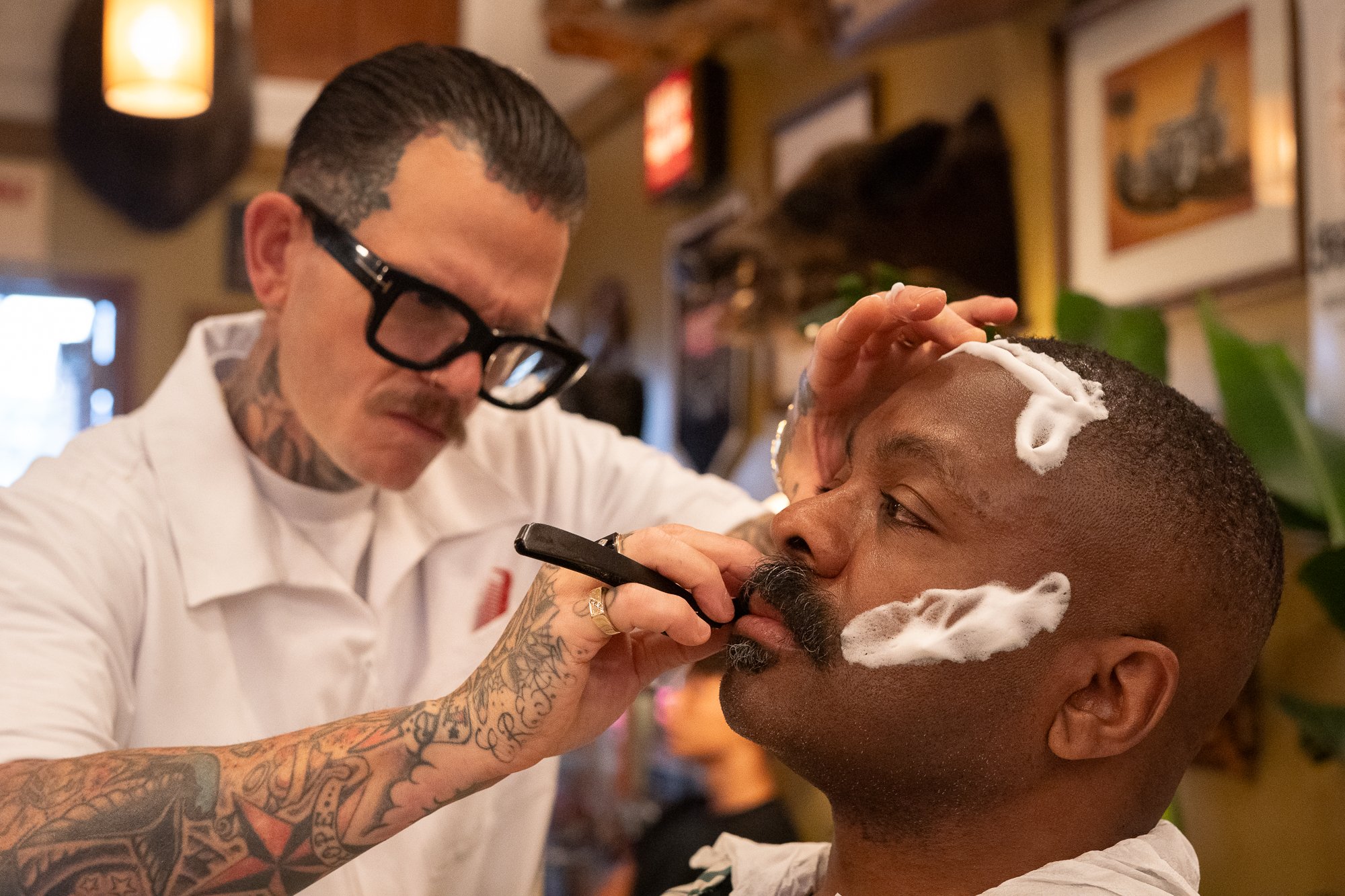
A barber in a white uniform uses a straight razor to shave a client's beard at Pugsly's barbershop.

Straight-razor shaving in progress inside the barbershop.

More Than a Collection of Barbershops

For years I described Barbershops of America as a project about traditional barbershops across the United States.

That's still true, but after 15 years it feels incomplete.

The project has become a photographic record of a particular piece of American culture during a period when that culture has changed dramatically.

Some shops I've photographed have closed. Some barbers have retired or died. Others have expanded, moved, or passed their chairs to another generation. New shops have appeared that borrow heavily from traditions that nearly disappeared a generation earlier.

And a handful of places have allowed me to come back.

Those repeat visits are becoming some of the most valuable photographs in the archive because they allow the project to show something a single photograph can't:

what stayed, what changed, and what disappeared.

Pugsly's is now part of that story.

And hopefully this wasn't the last time I photograph it.
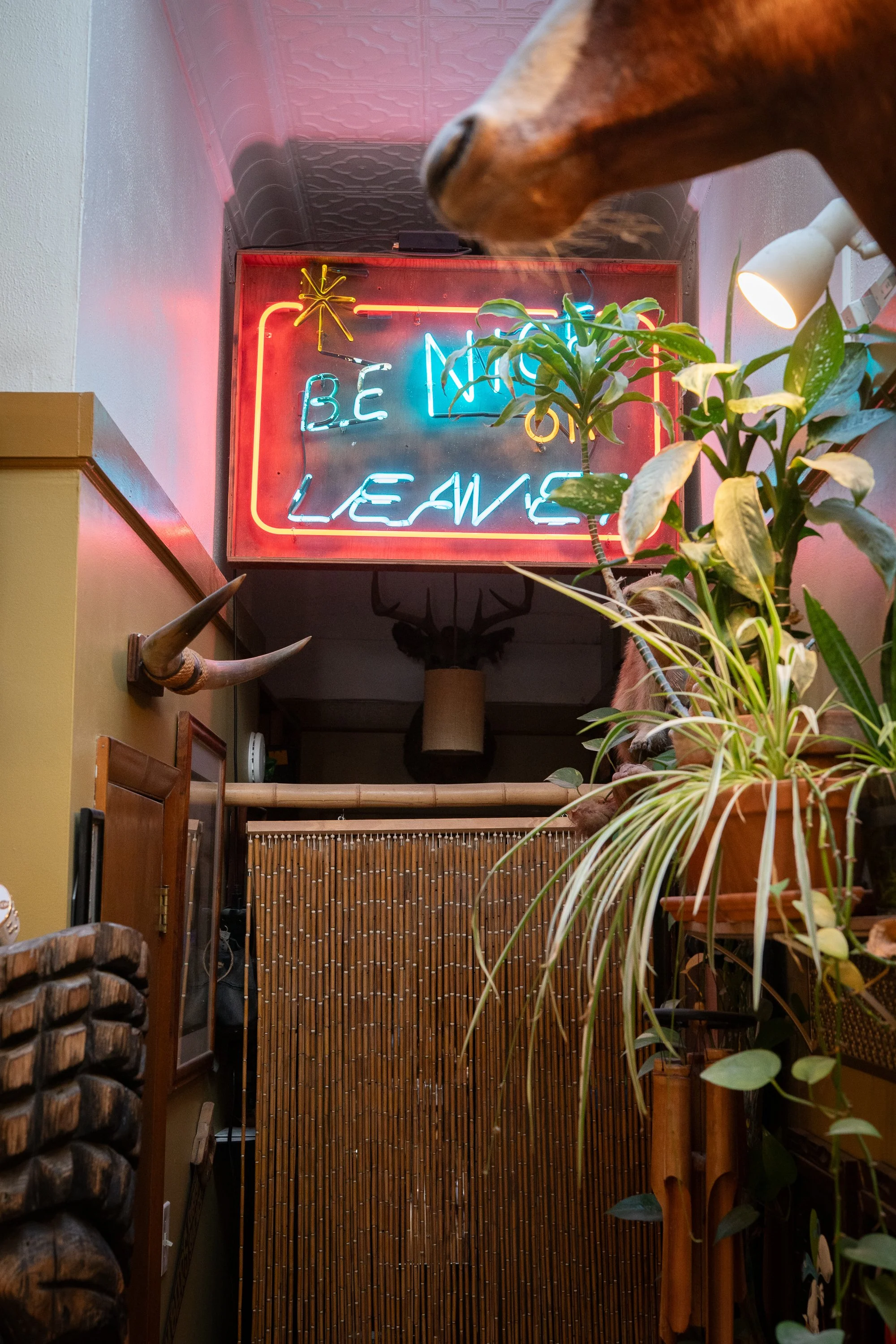
Neon “Be Nice or Leave” sign surrounded by plants and vintage barbershop decor.

The “Be Nice or Leave” neon adds another layer to the shop’s character.
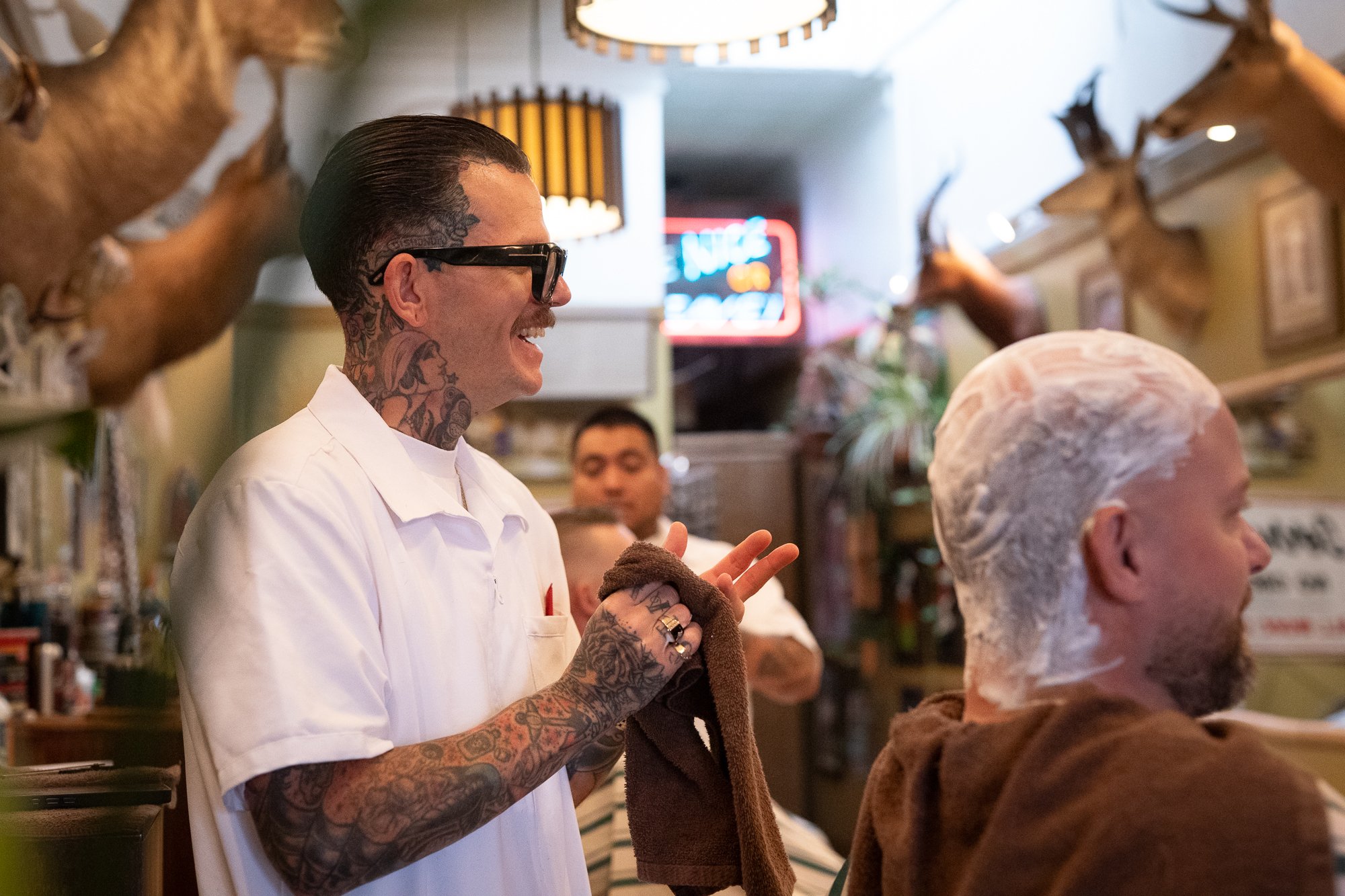
Barber holding a hot towel while working with a client during a grooming service inside the barbershop.

Between haircuts, conversation and laughter keep the shop moving.
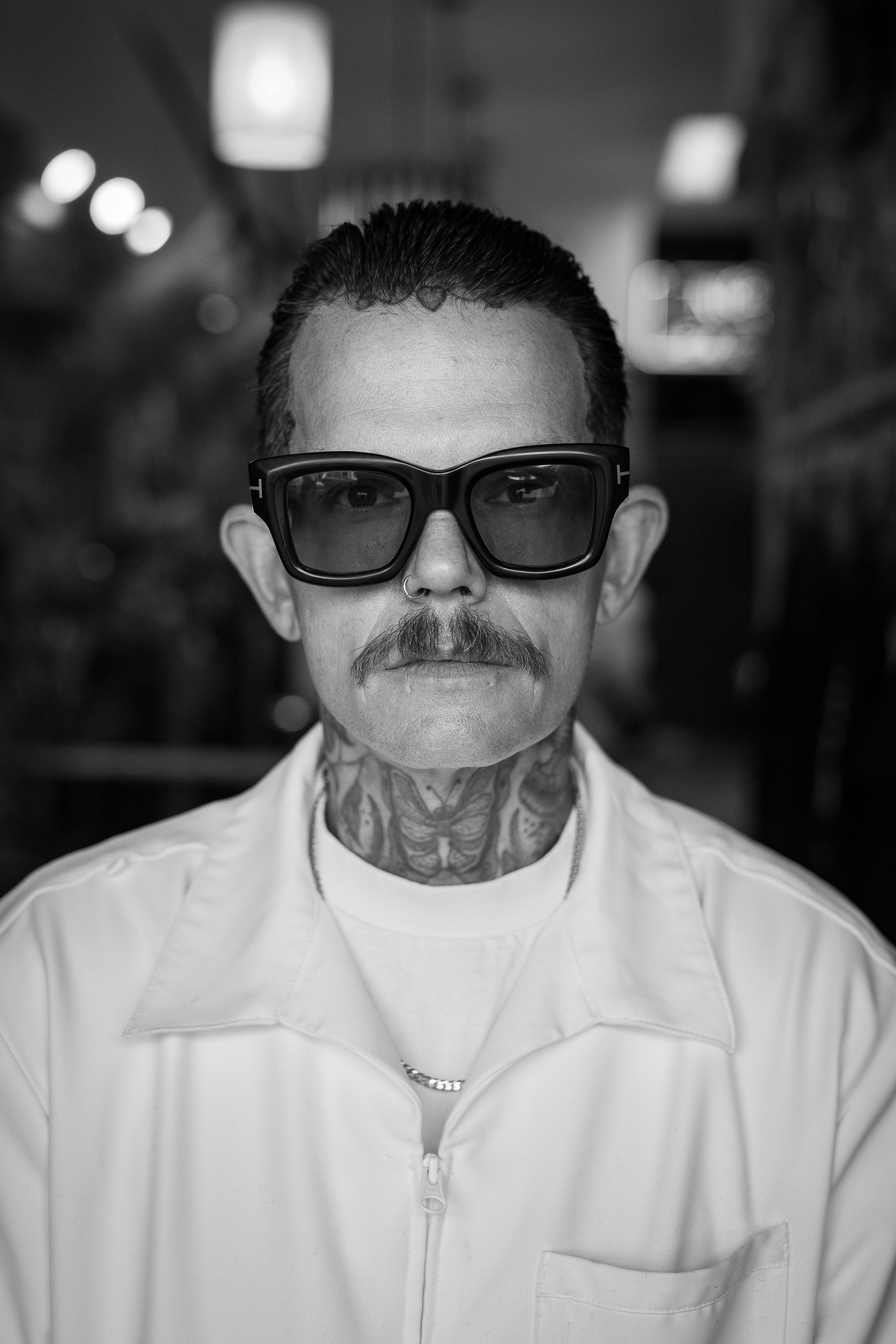
Pugsly, owner and barber at Pugsly’s SideShow Barbershop in Kingston, New York.

Portrait of Pugsly inside his Kingston barbershop.

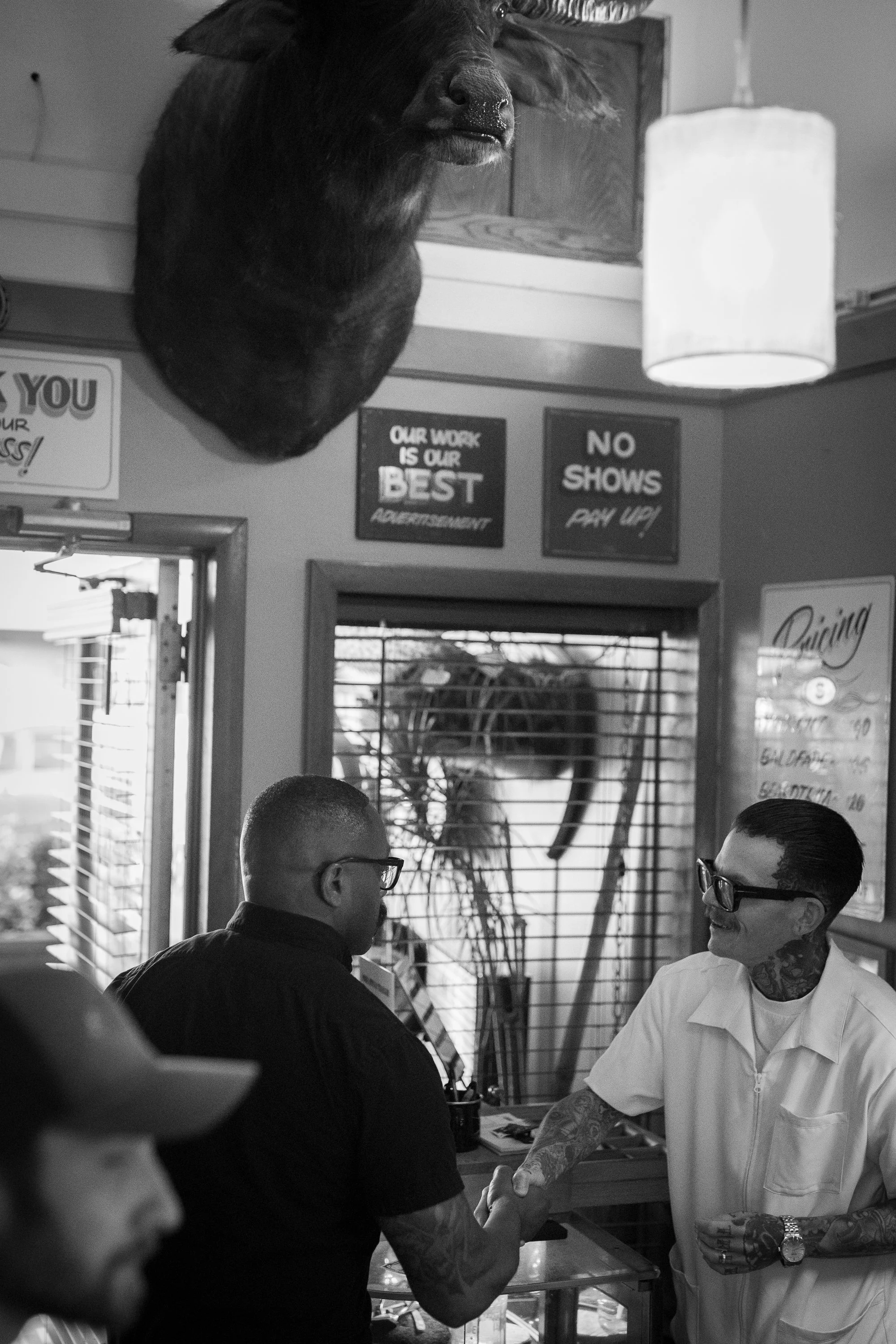
A barber in a white uniform shakes hands with a client inside Pugsly's barbershop.

Signs, displays and a mounted taxidermy fill the background as Pugsly greets his client.
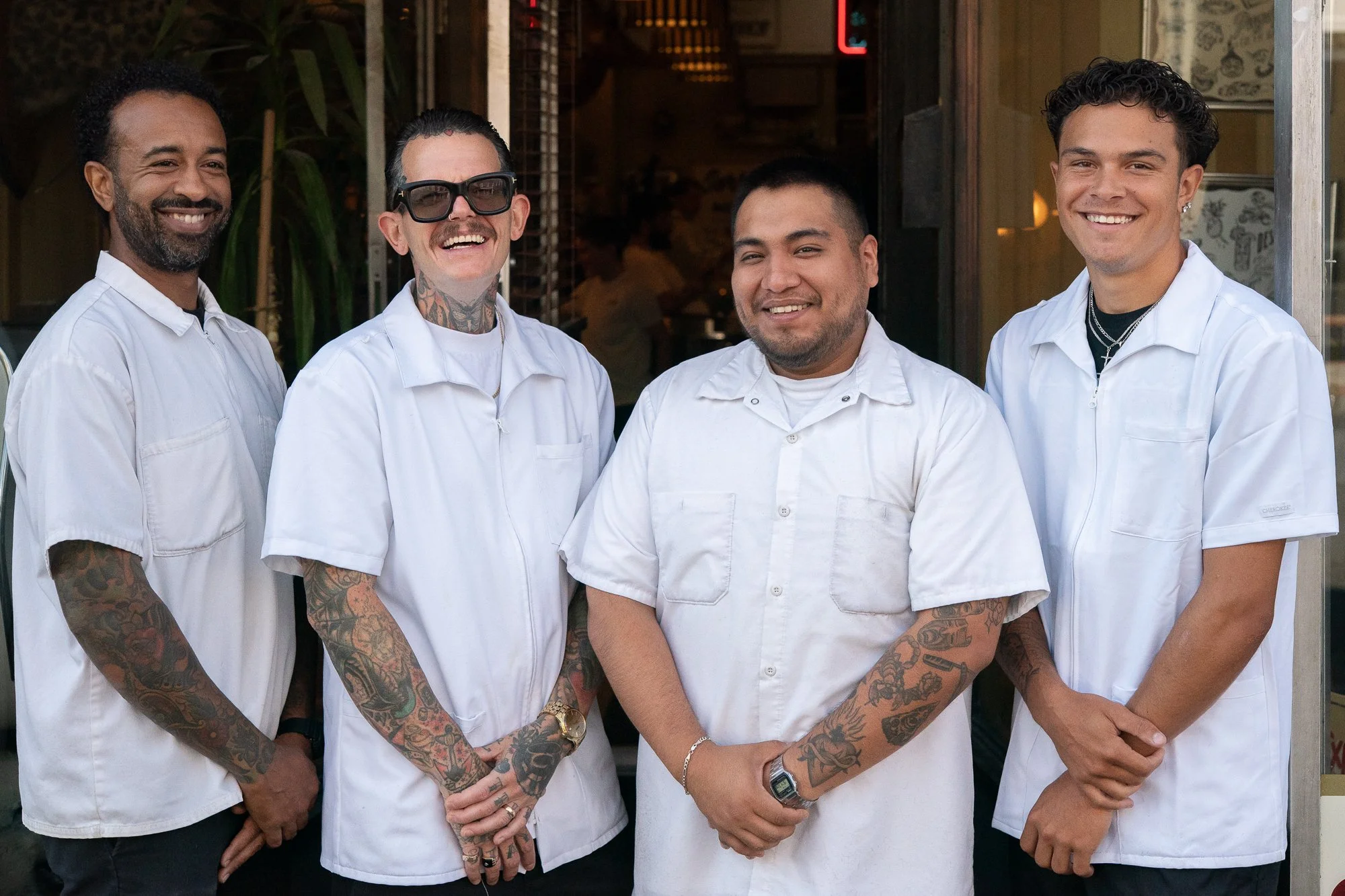
Four barbers standing together in the doorway of Pugsly's barbershop.

Pugsly’s SideShow barbers gather for a portrait in the shop doorway.

Patsy's Barbershop: A Barbershop That Still Feels Like a Barbershop

Inside One of Albany's Most Classic Barbershops

I grew up just outside Albany, New York.

While Albany wasn't technically my hometown, it was where I learned my way around the world beyond the small town where I was raised. For years, I thought I knew the city pretty well.

Yet somehow I never stepped inside Patsy's Barbershop.

By the time I finally photographed the shop, I was already thirteen (2024) years into the Barbershops of America project and had documented hundreds of barbershops across all 50 states. I had photographed shops in major cities, tiny rural towns, and everywhere in between. What I didn't expect was to find one of the most visually striking traditional barbershops in America just a few miles from where I grew up.

That's one of the things I've learned from this project. Some of the most remarkable places aren't found across the country. They're hiding in plain sight.

Patsy's Barbershop is one of those places.

Photograph of a beautiful traditional barbershop in Albany, NY

Traditional barbershop in Albany, NY

A Hidden Institution in Downtown Albany

For generations, Patsy's has served an unusually diverse cross-section of Albany.

Governors and state legislators have sat in the same chairs as construction workers, tradesmen, state employees, lawyers, small business owners, and lifelong residents of New York's capital city. Few businesses naturally bring together people from such different walks of life, but traditional barbershops have always been an exception.

The clientele reflects Albany itself.

As the seat of New York State government, Albany has long been a city where politics, public service, business, and blue-collar work intersect. Patsy's sits comfortably at the center of that world, quietly serving customers without fanfare while becoming part of the daily rhythm of the city.

What makes the shop remarkable, however, isn't just who walks through the door.

It's the space itself.

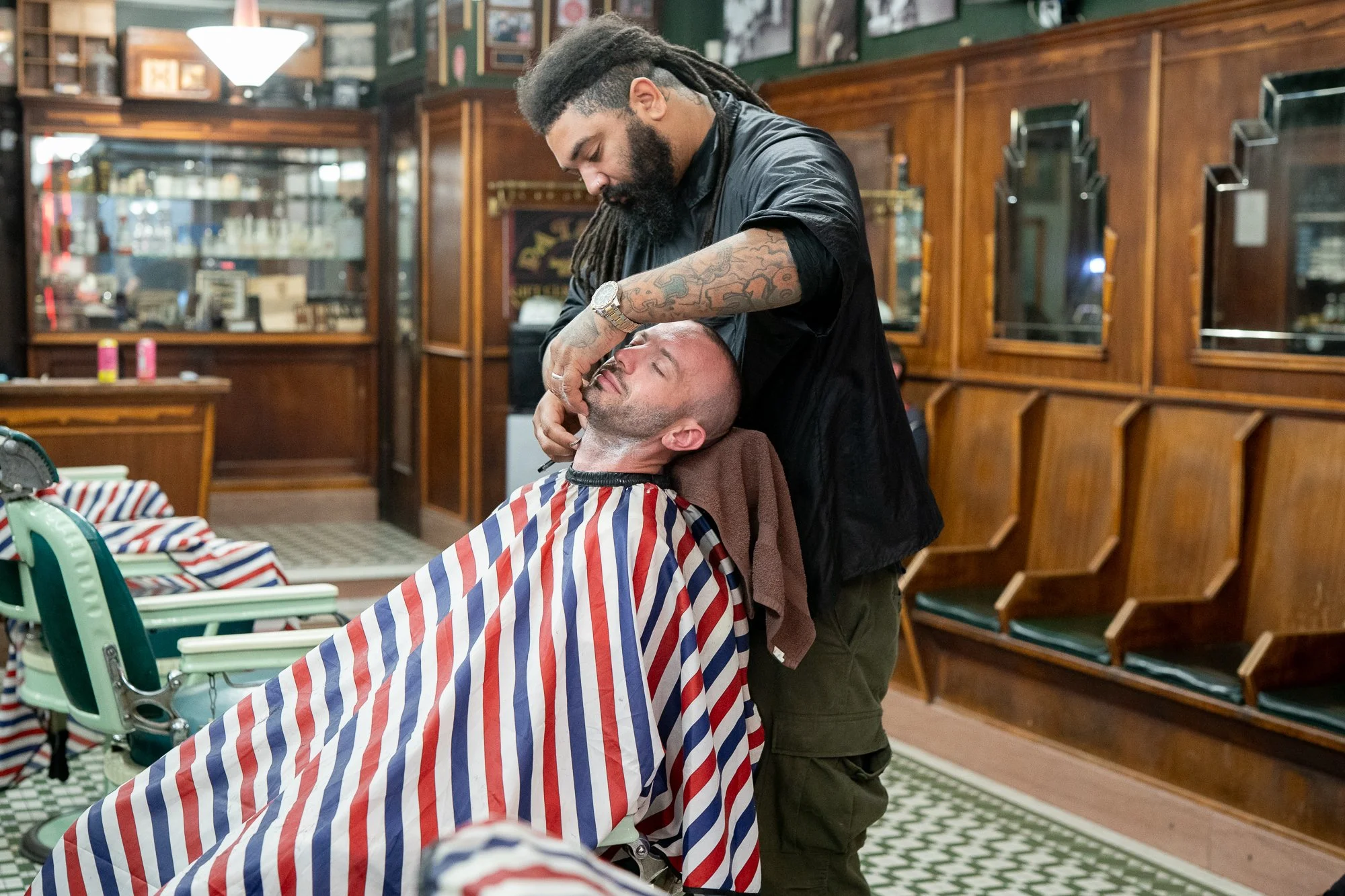
Barber giving a straight razor shave at Patsy’s Barbershop in Albany New York

A straight razor shave takes place inside Patsy’s Barbershop, surrounded by the shop’s preserved interior.

An Interior From Another Era

The moment you step inside Patsy's, it's clear that you're looking at something increasingly rare.

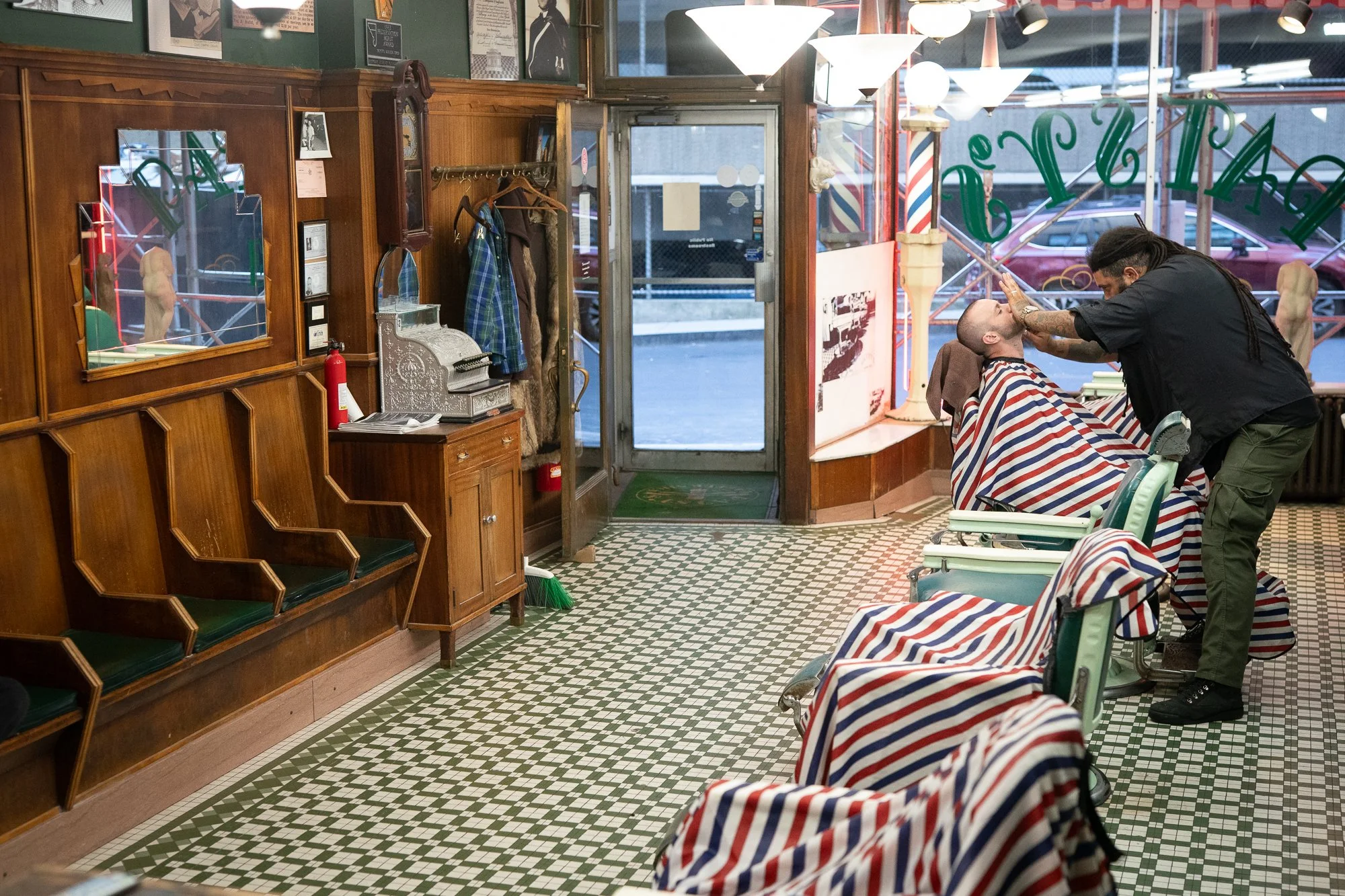
Dark wood paneling stretches the length of the shop. Built-in waiting benches line the walls beneath a series of geometric mirrors that feel lifted from another era of American design. The green-and-white tile floor, vintage barber chairs, old clocks, display cabinets, and original fixtures create an environment that feels almost untouched by time.

Many historic barbershops survive in name only. Over the decades, renovations replace original features, interiors become modernized, and the character that once defined the space slowly disappears.

Patsy's is different.

The shop doesn't feel vintage because someone intentionally recreated the look. It feels authentic because it never stopped being what it was.

The waiting area alone is enough to stop visitors in their tracks. The woodwork, individual seating sections, and Art Deco-inspired mirrors create one of the most distinctive barbershop interiors I've encountered anywhere in the country.

After photographing hundreds of shops, that's not something I say lightly.

Traditional Barbering Still Matters

What makes Patsy's especially compelling is that it isn't a museum.

The shop remains a working business, and the traditions that shaped it continue to play a role in daily life.

Hot towels still find their way across customers' faces. Straight razors are still used with care and precision. Haircuts aren't rushed. Attention to detail still matters.

At the same time, the current generation of barbers has brought its own personality to the shop.

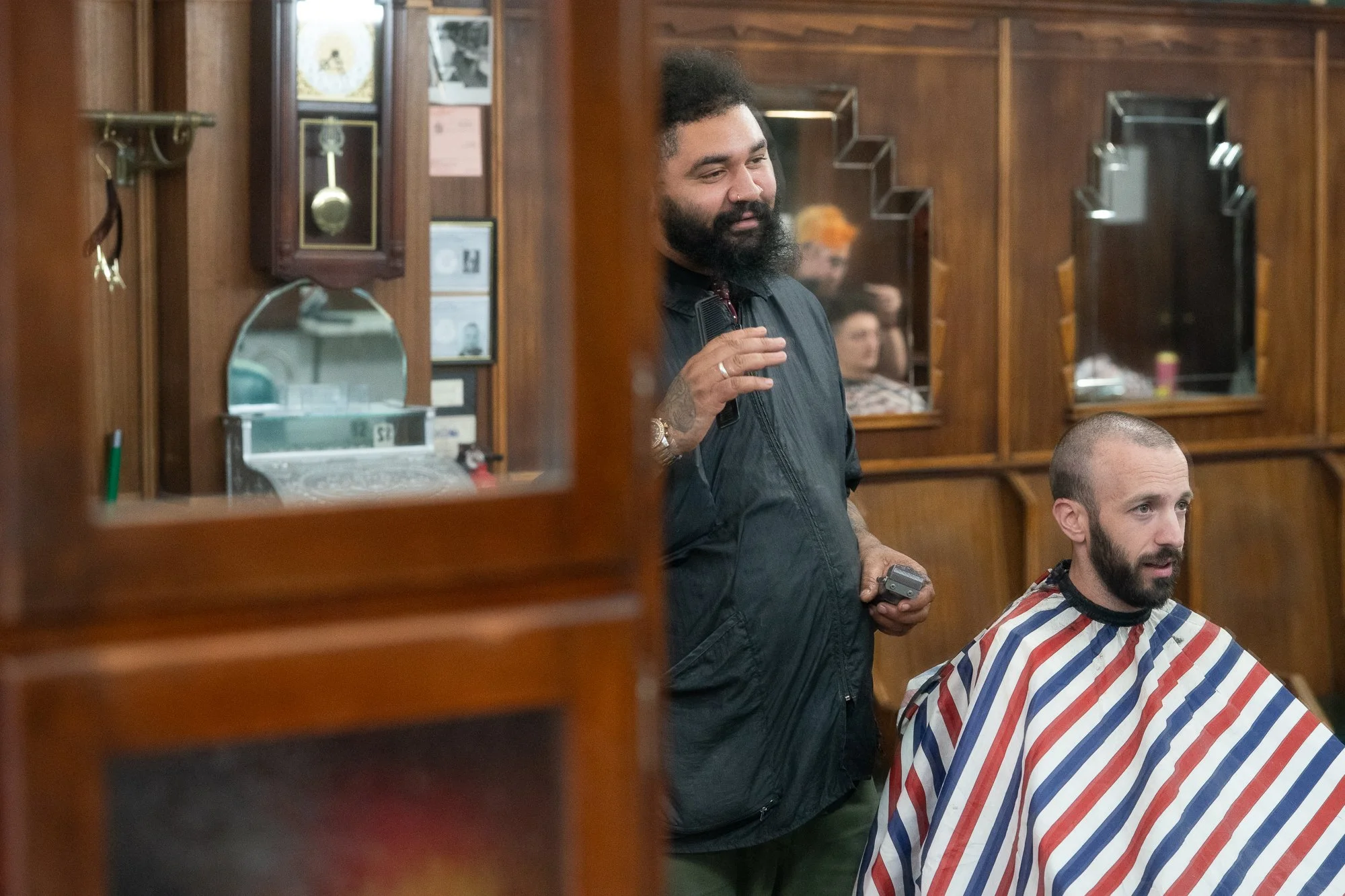
The contrast is striking. A barber with tattoos and a contemporary style works beneath mirrors and woodwork that have been part of the shop for decades. The visual difference between past and present is obvious, yet it never feels out of place.

Instead, it feels like the natural evolution of a healthy business.

The shop respects its history without becoming trapped by it.

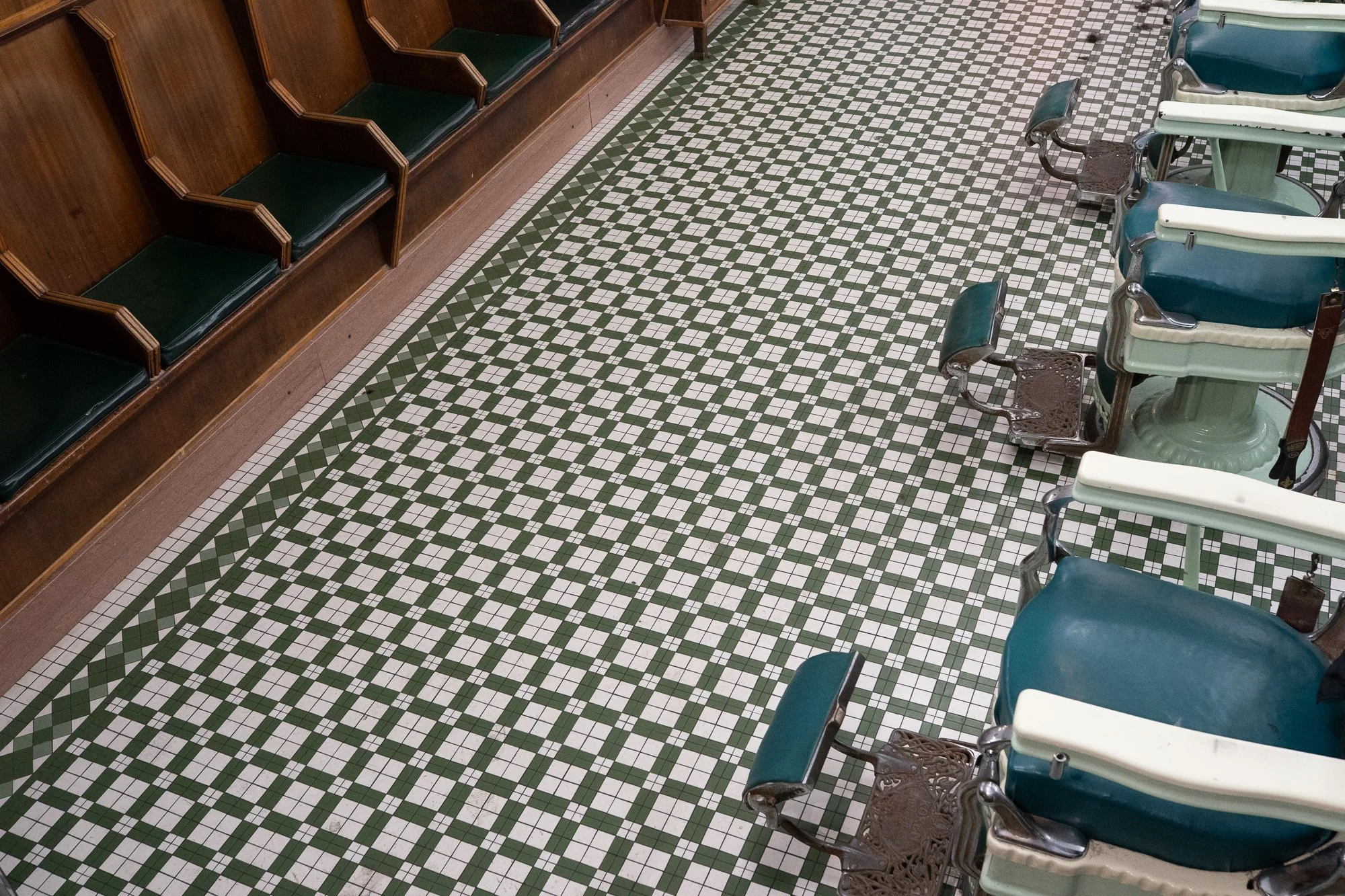
Green and white tile floor with vintage barber chairs at Patsy’s Barbershop in Albany New York

Green-and-white tile, built-in benches, and vintage barber chairs define the preserved interior of Patsy’s Barbershop.

A Barbershop That Still Feels Like a Barbershop

One thing I've noticed while documenting barbershops across America is that the rarest shops aren't necessarily the oldest.

The rarest shops are the ones that have managed to remain useful.

They continue serving their communities. They adapt when necessary. New generations step behind the chairs while preserving the qualities that made the shop important in the first place.

Patsy's embodies that balance.

The woodwork remains. The tile floor remains. The chairs remain. The atmosphere remains.

Most importantly, people still walk through the door every day for the same reason they always have.

To get a haircut.

To sit for a shave.

To take part in a tradition that has quietly connected generations of Americans.

After thirteen years of photographing barbershops across the country, finding a place like Patsy's so close to home was a reminder that remarkable places don't always announce themselves.

Sometimes they've been there all along, waiting for you to notice them.

And sometimes they still feel exactly like a barbershop should.

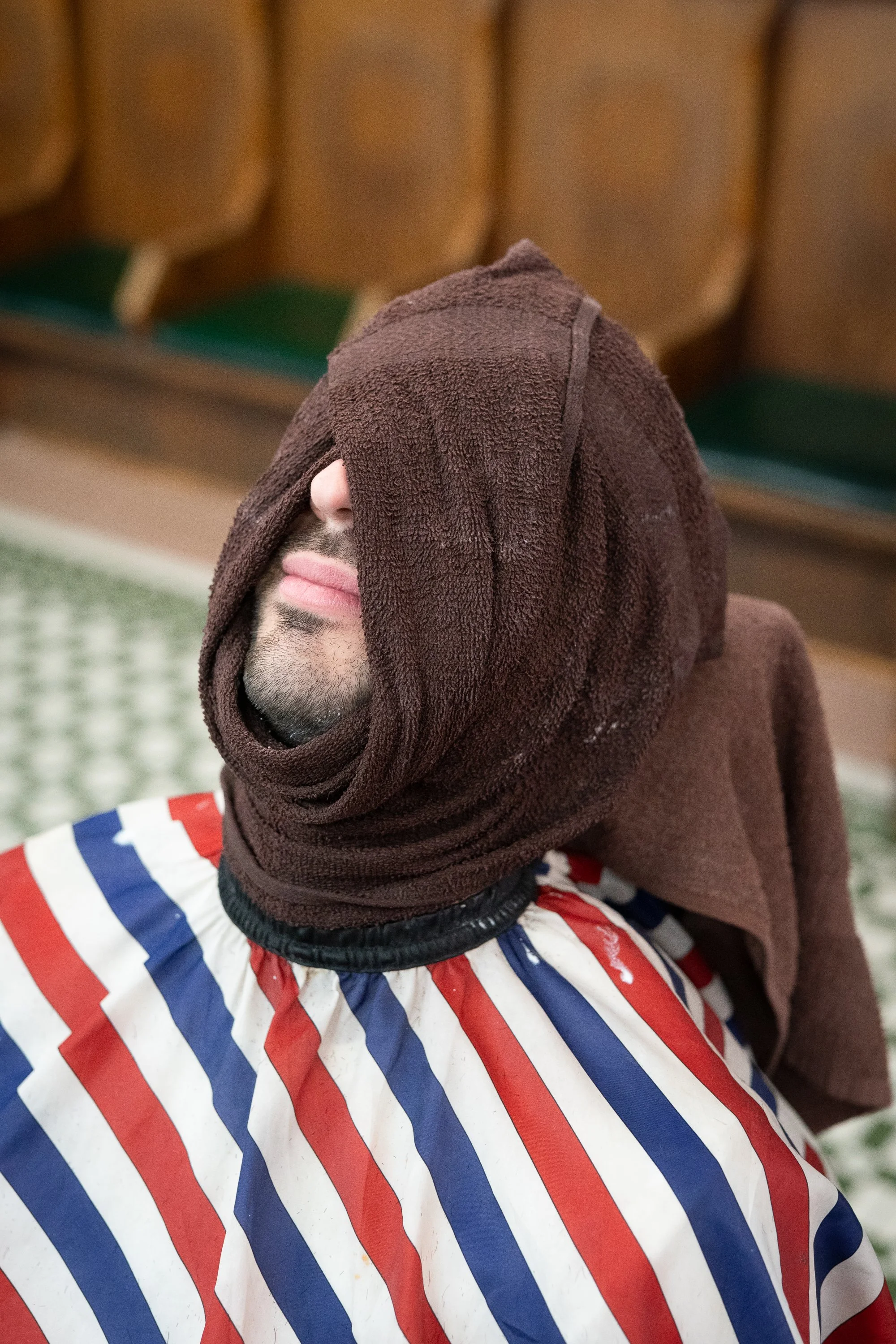
Client reclined with a hot towel over his face at Patsy’s Barbershop in Albany New York

A hot towel rests over a client’s face during a shave at Patsy’s Barbershop in Albany, New York.

Part of the Barbershops of America Project

Patsy's Barbershop is one of hundreds of barbershops photographed for the Barbershops of America project, a long-term documentary effort exploring traditional barbershops and barber culture across all fifty states.

Over the last fifteen years, the project has documented everything from century-old neighborhood shops and Black barbershops to modern traditional shops helping shape a new generation of American barbering. Many of the businesses photographed have since closed, making these images an increasingly valuable record of a disappearing part of American culture.

Patsy's stands out as one of the finest traditional interiors in the entire project—a reminder that some of the country's most remarkable barbershops are often found in unexpected places.

Explore the Barbershops of America photography book + prints

View the full Barbershops of America gallery

Barber standing with clippers beside a client at Patsy’s Barbershop in Albany New York

Inside Patsy’s Barbershop, the barber and client are reflected among the shop’s wood paneling and geometric mirrors.

Barber giving a shave inside the classic interior of Patsy’s Barbershop in Albany New York

Near the front window of Patsy’s Barbershop, a client sits is serviced as the shop’s vintage mirrors, chairs, and patterned tile fill the frame.

More Traditional Barbershop Stories

If you're interested in classic American barbershops, you may also enjoy:

Each shop reflects a different chapter of American barber culture while sharing the traditions that have made barbershops such an enduring part of community life.

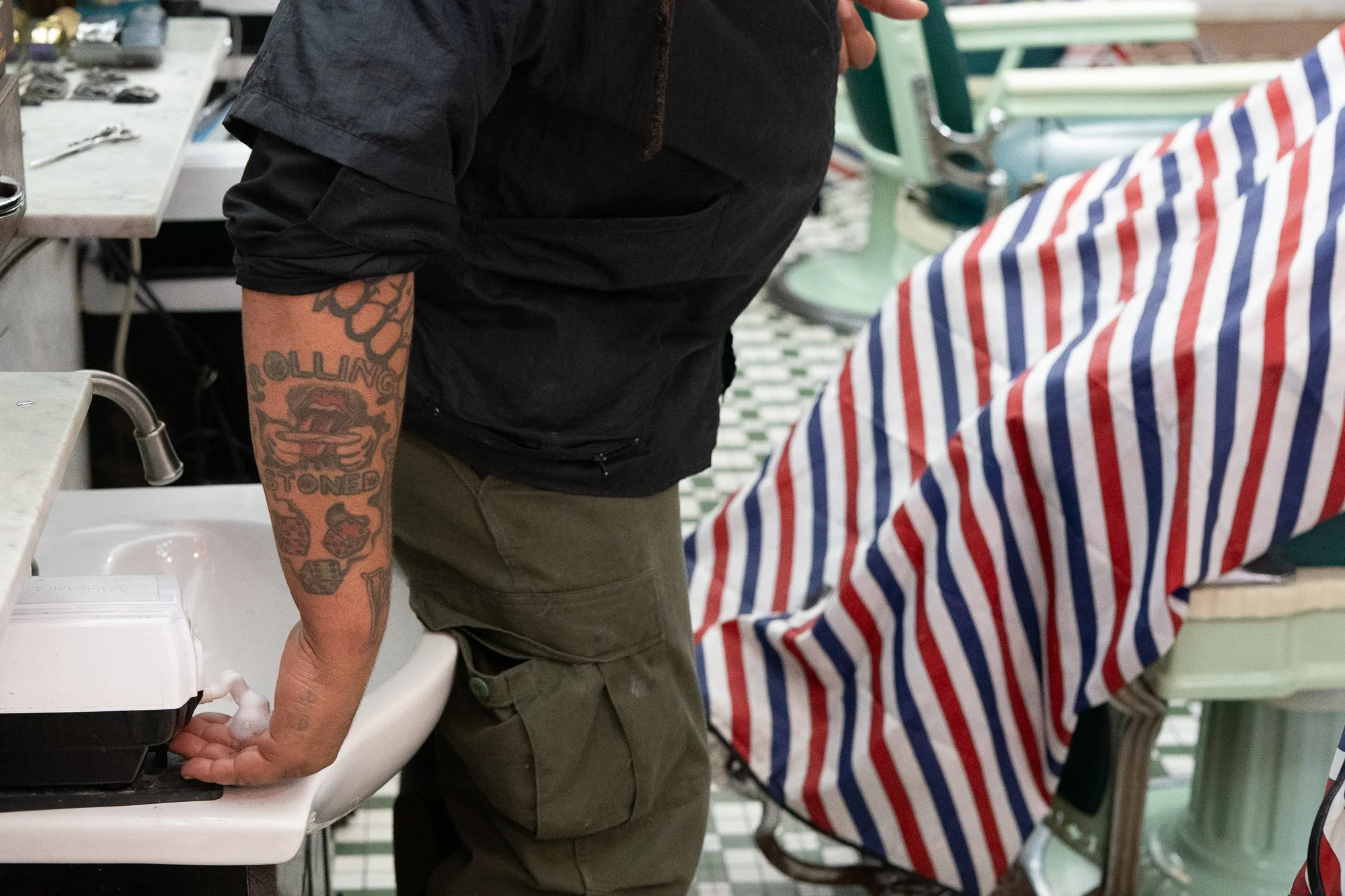
Barber moving between the sink and chair during a service at Patsy’s Barbershop in Albany New York

A barber reaches back to get hot shaving cream during a service at Patsy’s Barbershop.

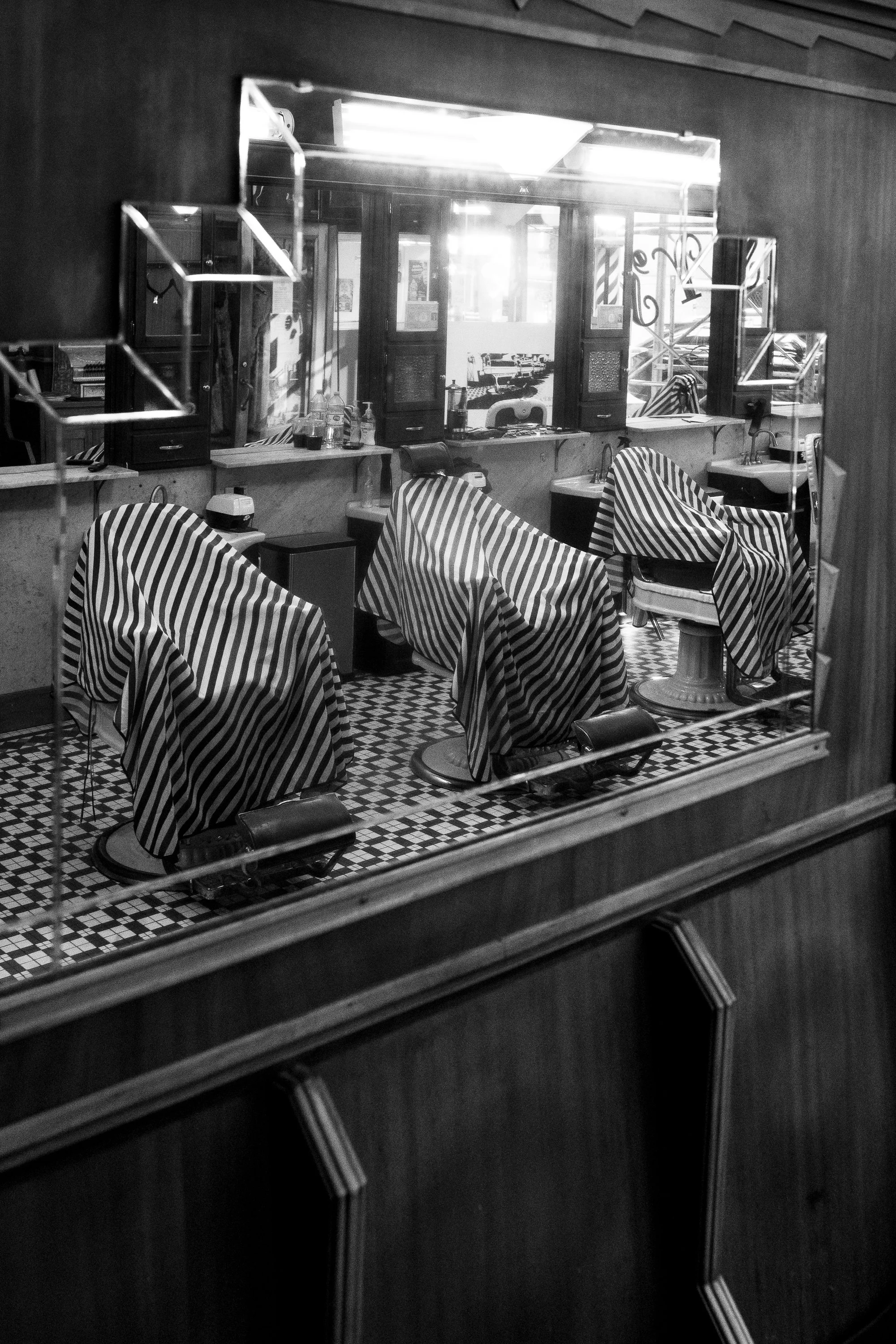
Black and white photograph of Patsy’s Barbershop in Albany, NY

Photographs of Cohoes, New York

Cohoes, New York Street Photography

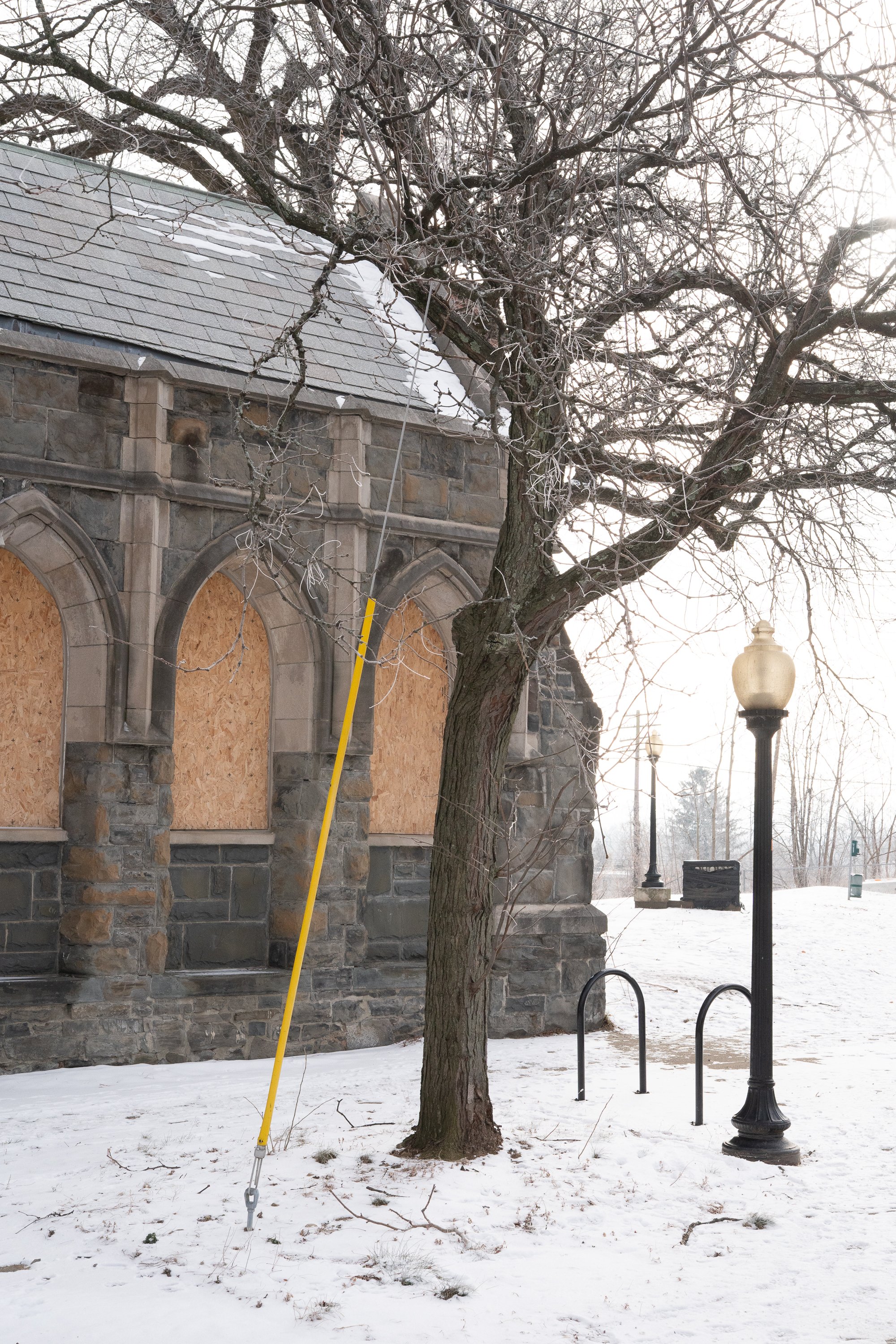
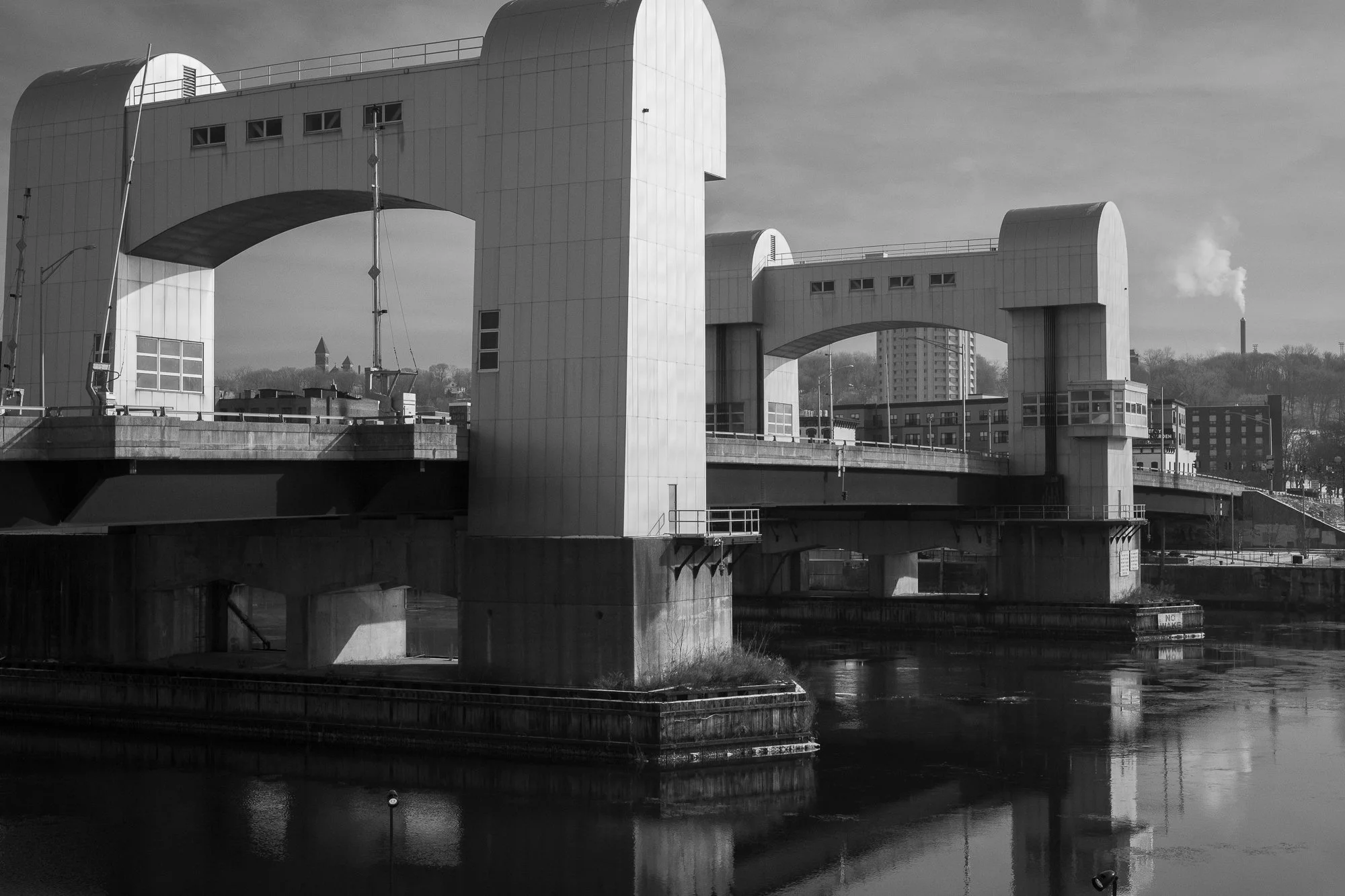
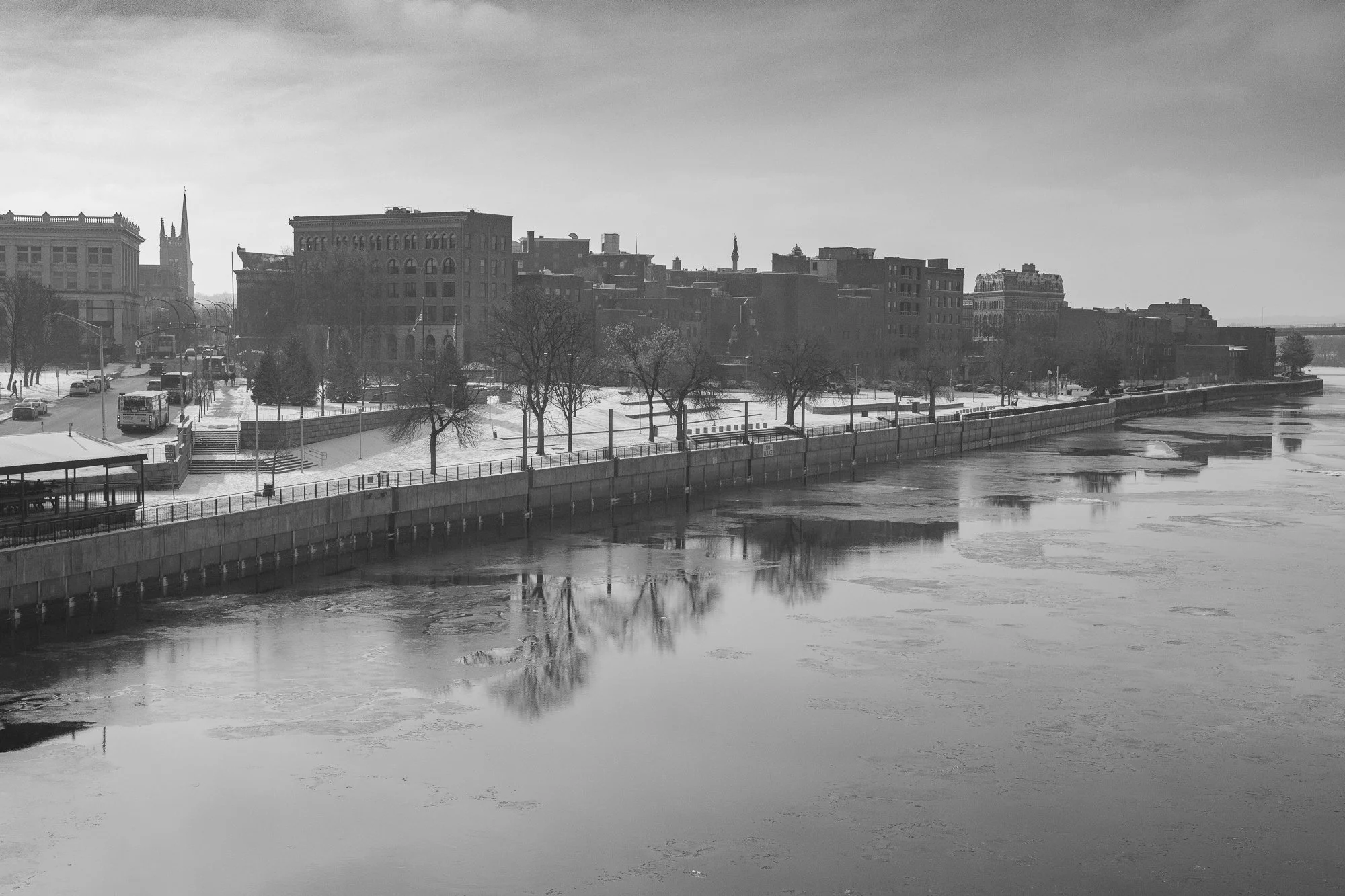
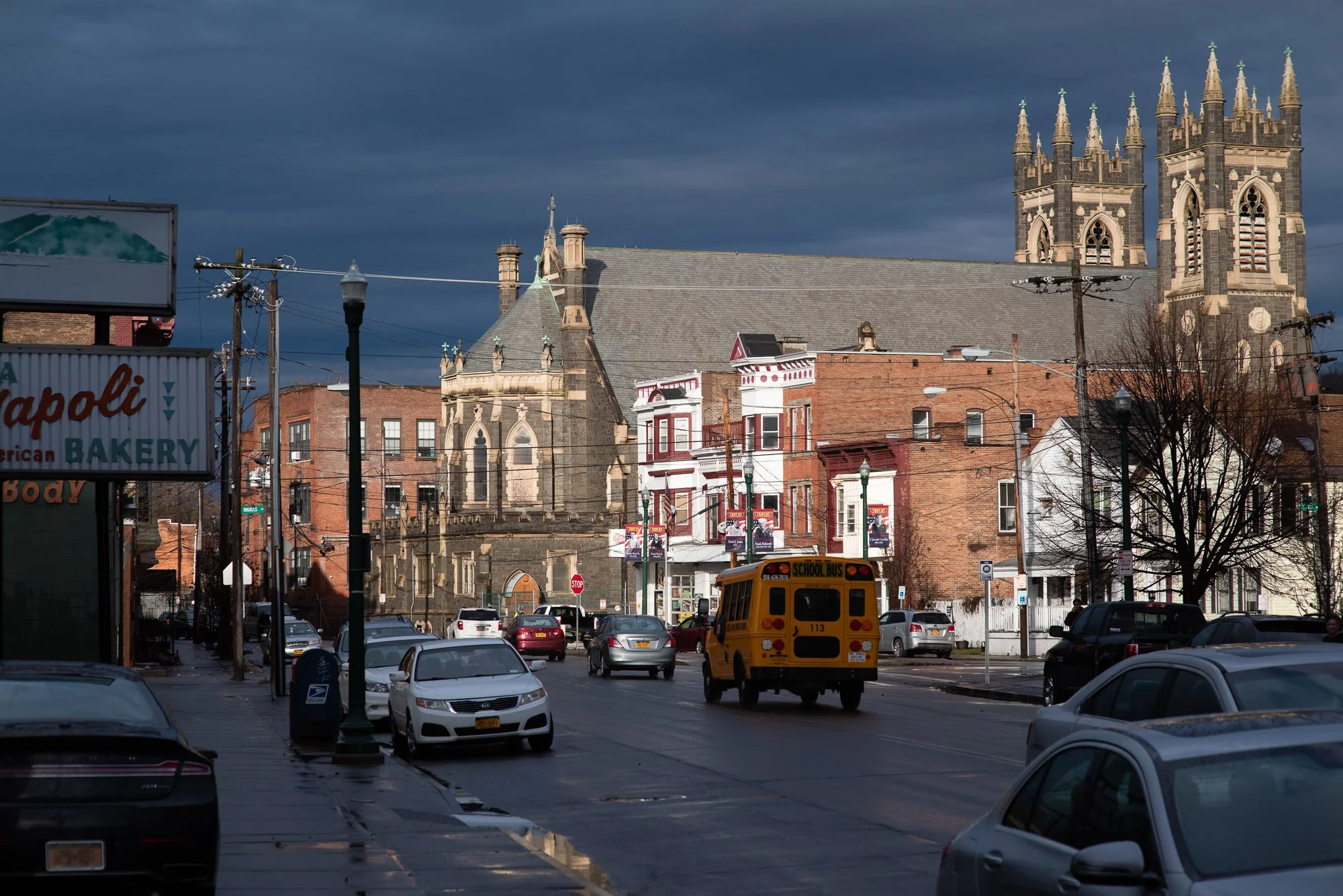
I grew up in the Capital Region, so places like Cohoes have never felt exotic to me. They were just there — part of the background of everyday life. You drove through them. You crossed the river. You passed the mills and brick buildings without thinking much about it. It’s only later, after leaving and coming back, that you realize how much character was hiding in plain sight.

These photographs were made while walking the streets of Cohoes with that perspective in mind — not as a visitor, but as someone familiar with the rhythm of these towns. The work looks at architecture, streets, and surfaces the way they actually exist, without trying to dress them up or turn them into something they’re not.

Street Photography Without the Obvious Moments

When people think of street photography, they often imagine crowds or dramatic interactions. That’s never really been what draws me to places like Cohoes. Here, the streets are quieter. The interest comes from buildings, sidewalks, old industrial remnants, and the way light moves across structures that have been standing for generations.

In that sense, this is street photography rooted more in observation than action. Many of the images are absent of people altogether, letting the town speak through its architecture and physical presence. The results feel more honest to how Cohoes actually exists day to day.

Growing Up Around These Streets

If you grew up anywhere near Albany, Troy, or the surrounding river towns, Cohoes probably feels familiar even if you’ve never spent much time there. The brick mills. The modest houses. The industrial bones that once supported entire communities. These places were built to work, not to impress.

That shared history runs throughout the Capital Region. Towns like Cohoes, Troy, and parts of Albany all carry similar visual DNA — shaped by industry, proximity to the Hudson and Mohawk Rivers, and a kind of quiet resilience that doesn’t announce itself. Photographing Cohoes feels less like documenting a single town and more like documenting a piece of a much larger regional story.

Architecture, Texture, and Time

What interests me most in Cohoes is how time shows itself. Paint peels. Brick softens. Windows reflect newer structures nearby. There’s a layering that happens naturally when places are allowed to age instead of being erased.

Walking these streets with a camera feels less about finding moments and more about paying attention. The photographs come from slowing down and noticing how light hits a wall, how a street curves past an old building, or how a neighborhood quietly carries its past forward.

Part of a Larger Capital Region Project

This post focuses on Cohoes, but it’s part of a broader effort to photograph the Capital Region with the same restraint and familiarity. These towns don’t need to be explained or romanticized — they just need to be looked at carefully.

Seen together, photographs from Cohoes, Troy, and Albany begin to form a more complete picture of this part of New York: interconnected, working-class, architectural, and often overlooked.

Explore More from the Capital Region

If you’re interested in how this work extends beyond Cohoes, you can explore related posts from nearby cities:

Photograph of homes in Cohoes, New York

Old homes in Cohoes, New York

Photograph of a hair salon in Cohoes, New York

Danielle’s House of Hair - Cohoes, New York

Photograph of the National Bank of Cohoes

Cohoes, New York Photography

Historic photograph of Cohoes, New York

Train track running by St. John’s Church in Cohoes, New York

Photograph of Remsen St. in Cohoes, New York

Photograph of the business’ on Remsen St. in Cohoes, New York

Photograph of a flower shop in Cohoes, New York

Flower shop - Cohoes, New York

Photograph of Dennis Holzman Antiques in Cohoes, New York

Antique shop in Cohoes, NY

Photograph of the Cohoes Armory in Cohoes, New York

Cohoes Armory

Photograph of an old church in Cohoes, New York

Old church in Cohoes, NY

Photograph of beautiful old brick homes in Cohoes, NY

Cohoes, NY architecture

Photograph of Cohoes in Upstate New York

Cohoes, New York Photography

Troy, New York Photographs

Troy, NY Photography — Documentary Prints & Editorial Licensing

Why Troy Still Feels Like Home

Troy, NY is an industrial city that’s been through a lot of change and it shows. I grew up about 20 minutes from Troy and spent a lot of sinful nights there with a bad Fake ID at bars that have long been shut down or turned into pawnshops. At 4am we always ended up at I love New York Pizza soaking up the booze with dollar slices while waiting for the inevitable fight to erupt on 4th St. I love is still there but they shut down at 1am. Just a few of the many changes that have taken place in the Collar City. Visiting now, 20 years later with different eyes, it’s a whole new experience. You can see why the locals have so much pride. Not just for what Troy has become, but also for the history that is written all over the architecture of it’s many historic buildings. You can feel what Troy was in it’s heyday and that almost makes you want to experience the city at that time. Sure it was rough, and still is in parts, but the Italian food alone would be worth the experience. It’s not all gone though. There are still long running institutions like Bella Napoli, DeFazio’s Pizza, and the iconic Famous Lunch Hot Dogs. It’s even got good beer now - Brown’s Brewing Company is well worth the stop for any connoisseur. I never bothered to look deeply at Troy back in the day, but it’s become a favorite place to photograph every time I return home to visit family and friends. The city has a lot of character that deserves to be documented.

Photographing the History and Architecture of Troy, New York

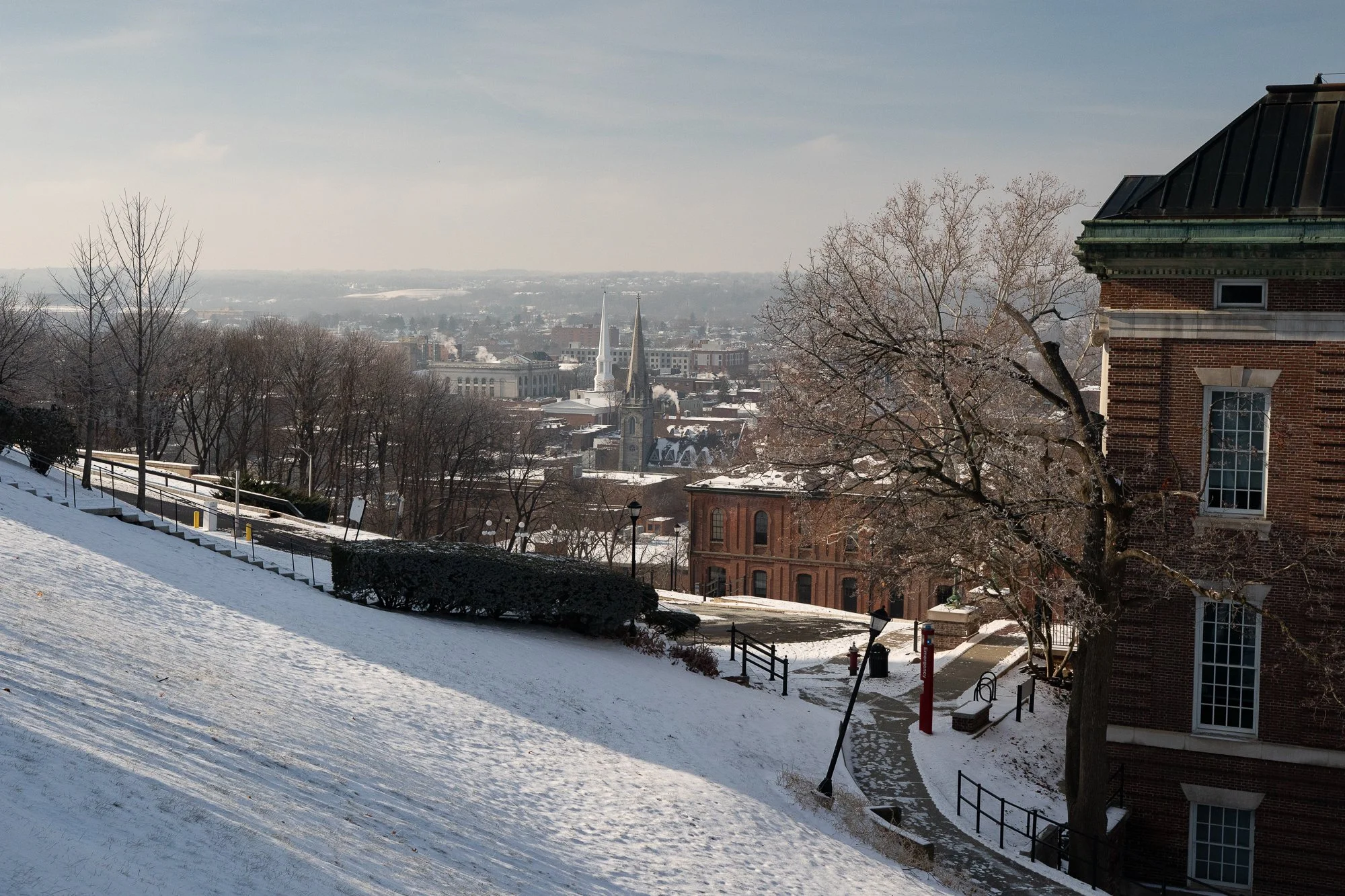
Troy’s nickname, the “Collar City,” comes from its industrial past - but what stands out today is the mix of preservation and grit. The Central Troy Historic District is lined with 19th-century rowhouses, St. Patrick’s Church rises in Gothic stone, and the Sycaway Water Tower still watches from the hillside. From the hill at RPI, you can see the entire city stacked against the Hudson, with the Green Island Bridge tying it all together. These are the scenes that made their way into my prints - quiet, weathered, and timeless.

Fine Art Prints: Sizes, Editions, and Pricing

Every photograph of Troy in this collection is available as a fine art print, made on museum-grade archival paper. Open edition prints start around $50 for smaller sizes (8×10"), while large limited edition prints are signed, numbered, and produced at sizes up to 65". Each piece is crafted to last a lifetime and can be framed to fit your space. Whether it’s for a living room, office, or gallery wall, these prints bring a piece of Troy’s story into your everyday environment.

Licensing Troy Photographs for Editorial & Commercial Use

For businesses, publishers, or art directors looking to license Troy imagery, these photographs are available for editorial and commercial licensing. From historic architecture to atmospheric black-and-white cityscapes, the images can work for magazines, marketing campaigns, and creative projects. Licensing terms are flexible depending on your needs—just reach out directly to start the conversation.

Troy has always been a mix of nostalgia and resilience for me. These photographs hold on to that character, offering more than just a view—they carry the texture of a city that built its name on hard work and history. Contact me directly if you’d like to discuss licensing or to purchase a photography print of Troy, NY for your home, office, or commercial space - rob@robhammerphotography.com

See My Albany, New York Photography Prints →

Green Island Bridge spanning the Hudson River in Troy, New York, documentary photography

The Green Island Bridge over the Hudson River in Troy, New York

Historic Troy, New York cityscape showing 19th-century architecture in black and white

Historic architecture in Troy, New York

St. Patrick’s Church in Troy, New York, Gothic Revival architecture photograph

St. Patrick’s Church - Troy, NY

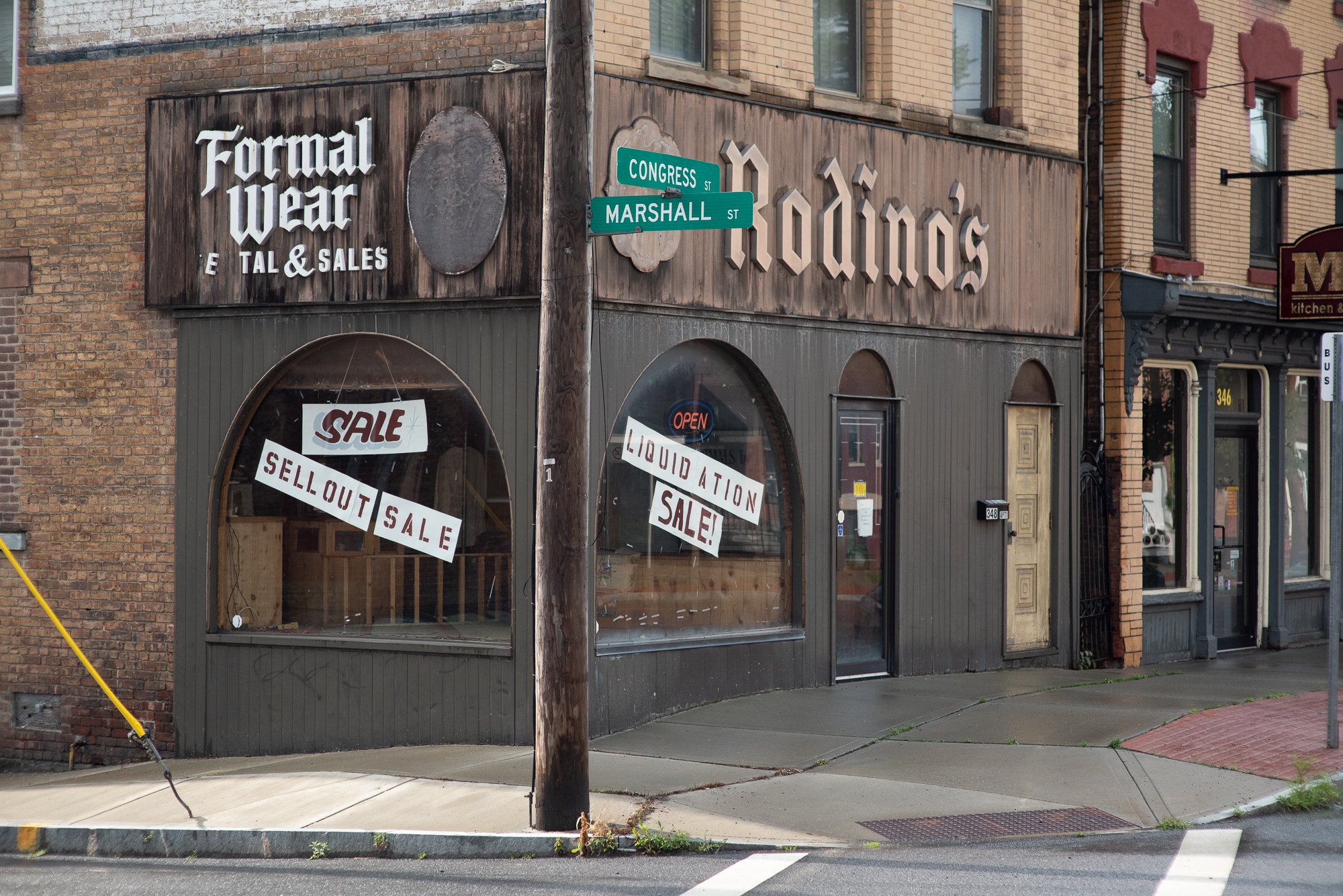
Rodino’s Tuxedo Shop storefront in Troy, New York, vintage downtown scene

Rodino’s Tuxedo Shop - Troy, NY

Photograph of the Sycaway Water Tower in Troy, NY

Sycaway Water Tower

Black and white historical photograph of Troy, NY

Church spires in Troy, NY

Photograph of the Famous Lunch hot dog restaurant in Troy, NY

Famous Lunch Hot Dogs - Troy, NY

Photograph of soda cans for sale hanging up at Famous Lunch Hot Dogs in Troy, NY

Soda for sale at Famous Lunch in Troy, NY

Photograph of a man working inside Famous Lunch Hot Dogs in Troy, NY

World Famous Hot Dogs since 1932

Photograph of a train bridge along the Hudson River near Troy, NY

Train bridge on the Hudson River in Upstate New York

Photograph of Uncle Sam Lanes bowling alley in Troy, NY

Uncle Sam Lanes

The view of Troy from the campus of RPI

Overlooking the city of Troy from the Renssalaer Polytechnic Institute

Black and white photograph of a basketball hoop under a bridge in Troy, NY

Troy Basketball

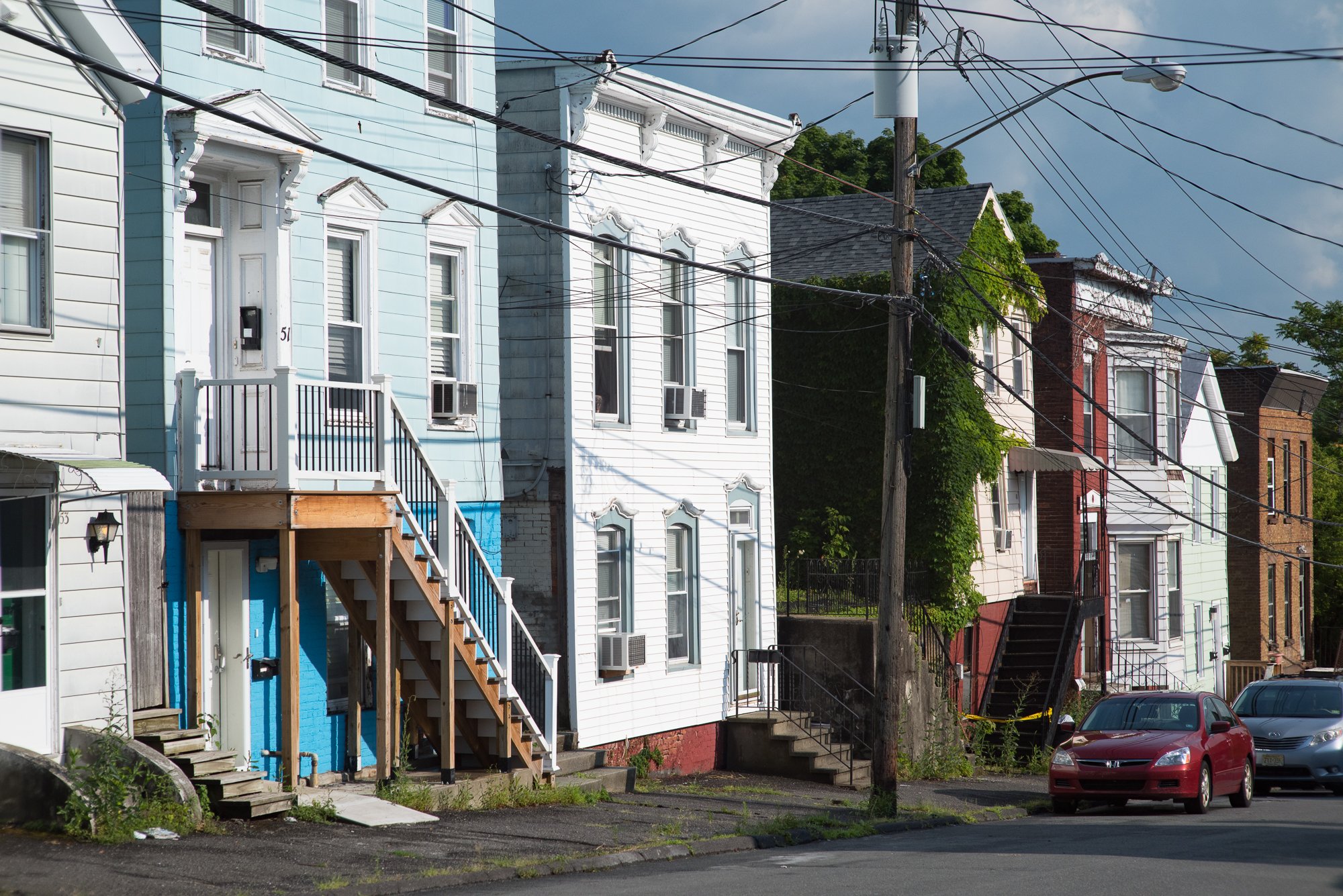
Photograph of homes in the typical architectural style of Troy, NY

Homes in the city of Troy, NY

Tree shadows on the beautiful architecture of an old church in Troy, NY

Architecture of an old church in Troy, NY

The best barbershop in Troy, NY

Barbershop - Troy, NY

Photograph of a girl writing on a typewriter at Yellow Lab Vintage and Books in Troy, NY

Used book store in Troy, NY

Photograph of the Livingston Avenue Bridge on the Hudson River

Livingston Avenue Bridge

Black and white photograph of an iconic bride in Troy, NY

Troy, NY


Photographs of Albany, New York - Historical Landmarks & Architecture

ALBANY, NEW YORK PHOTOGRAPHS

Growing Up Around Albany, New York

I grew up in the Albany area, and my relationship with the city has always been shaped by familiarity rather than novelty. It’s a place I knew long before I ever photographed it—through daily routines, changing neighborhoods, and the quiet rhythms of a city that rarely tries to impress anyone.

That familiarity is what eventually pulled me back with a camera. Photographing Albany wasn’t about rediscovery so much as paying closer attention. I wasn’t looking for defining moments or iconic views. I was interested in the spaces that felt ordinary enough to be overlooked, yet permanent enough to hold memory.

Photographing Albany as a Lived-In City

This photography series is rooted in observation rather than spectacle. Albany is a city layered with history—Federal and Victorian architecture, civic buildings, industrial remnants, and residential streets shaped by decades of quiet change. Much of that history lives in plain sight.

I gravitated toward scenes that reflect that lived-in quality: empty streets, weathered facades, winter light, and moments where architecture and atmosphere intersect. These photographs are intentionally restrained. They aren’t meant to dramatize the city, but to reflect it honestly.

The goal is not to explain Albany, but to let it exist as it is.

Architecture, Atmosphere, and the In-Between

Many of the photographs in this series focus on architecture, but not in a formal or celebratory way. I’m less interested in buildings as symbols than as backdrops for daily life—structures shaped by use, time, and weather.

Light plays an important role. Fog, snow, and low winter sun soften edges and slow the pace of looking. These conditions reveal details that might otherwise go unnoticed, and they echo how the city often feels to move through: quiet, deliberate, and grounded.

This approach mirrors how I work across my broader documentary projects—allowing place to speak without forcing a narrative.

A Long-Term Documentary Project

This Albany photography project is ongoing. The city continues to change, and my relationship to it continues to evolve as well. Returning with a camera allows me to see familiar spaces with fresh attention, while still photographing from a position of understanding rather than distance.

The photographs aren’t meant to define Albany, but to contribute to a broader visual record of American cities—particularly those that exist outside the usual spotlight.

From the Project to the Prints

While this page focuses on the documentary work itself, many of these photographs are available as fine art prints. The prints are produced with the same care and intention as the photographs, emphasizing longevity, material quality, and thoughtful presentation.

If you’re interested in viewing available work from this series, you can explore the print collection below.

View available Albany photography prints

Click HERE to view my photographs of Troy, NY

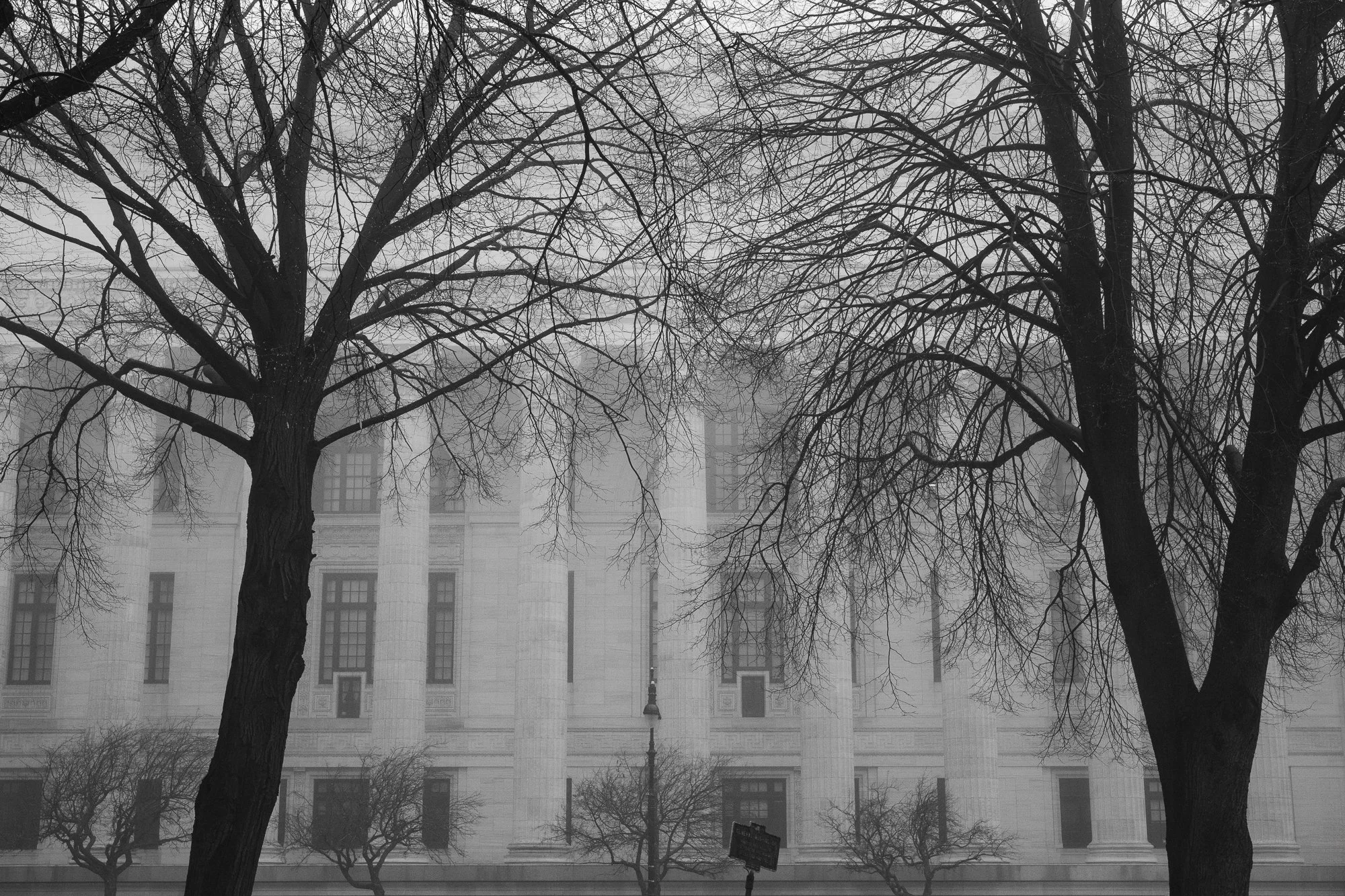
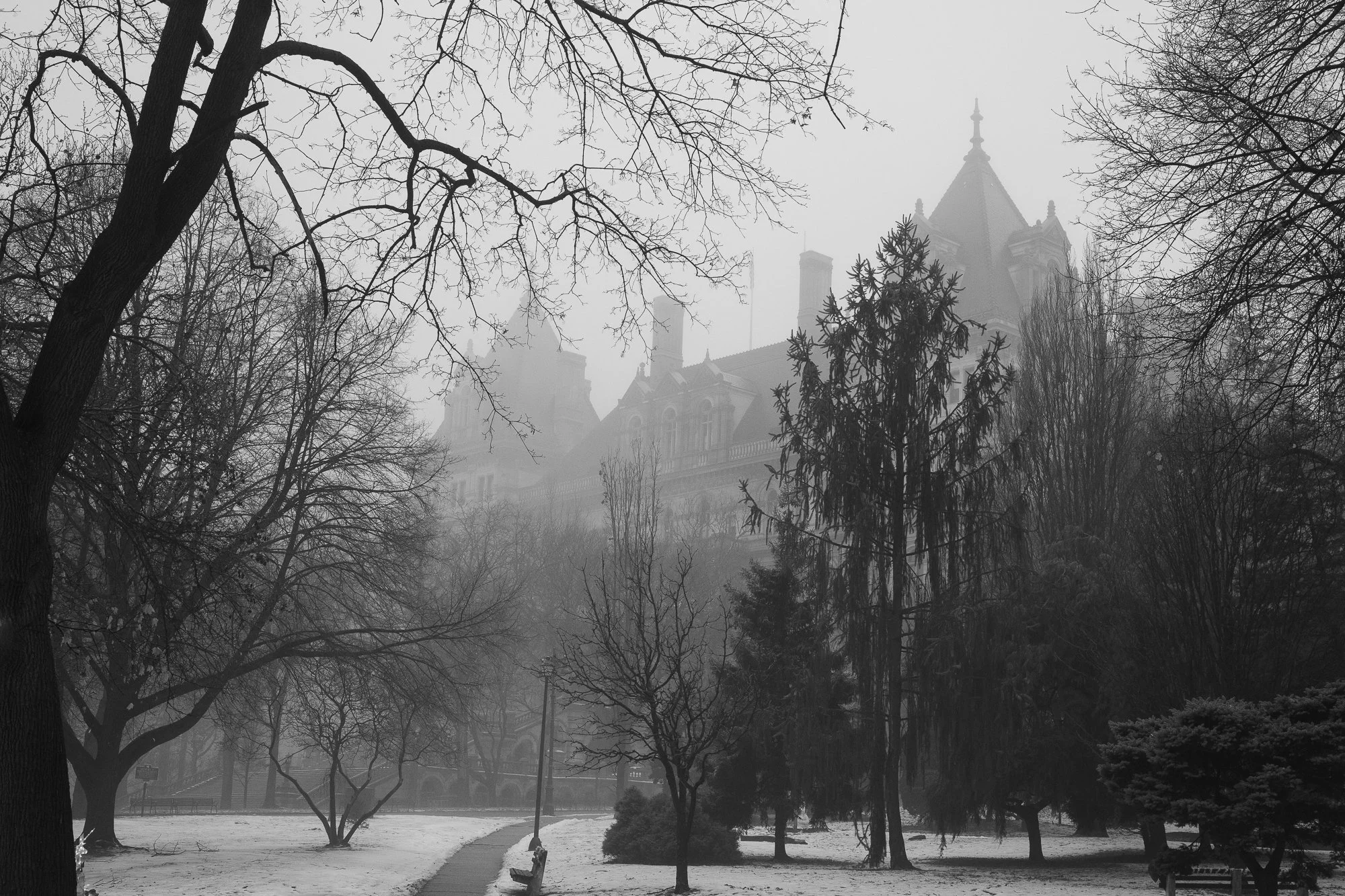
Black and white photograph of the New York State Capitol partially obscured by winter trees in Albany

The New York State Capitol recedes behind bare winter trees as fog softens its presence in Albany, NY

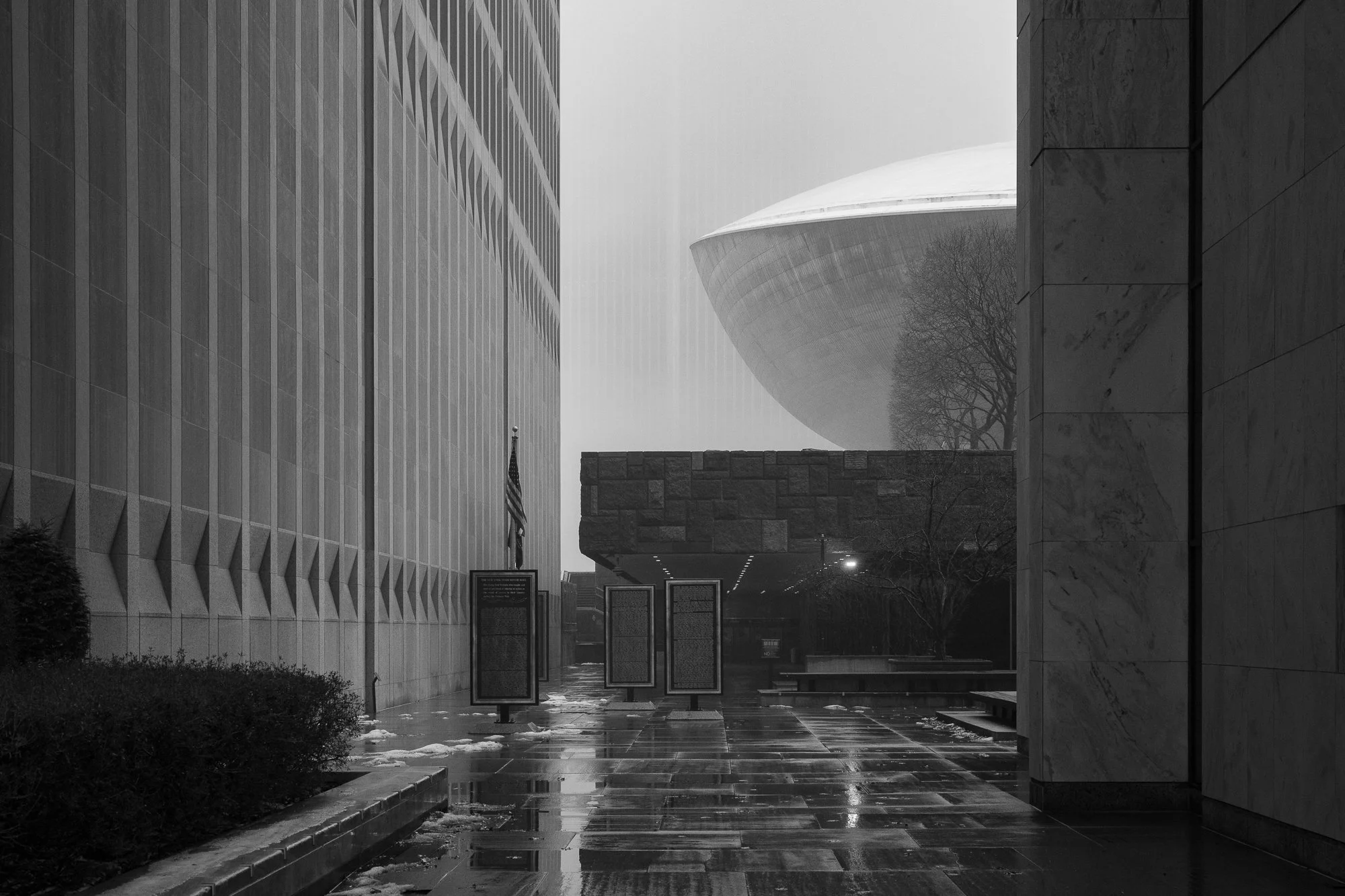
Black and white architectural photograph of Empire State Plaza buildings in Albany, New York

Empire State Plaza emerges through fog, emphasizing clean lines, scale, and negative space.

Timeless black and white photograph of Albany, New York

Classic black and white photograph of Albany, NY

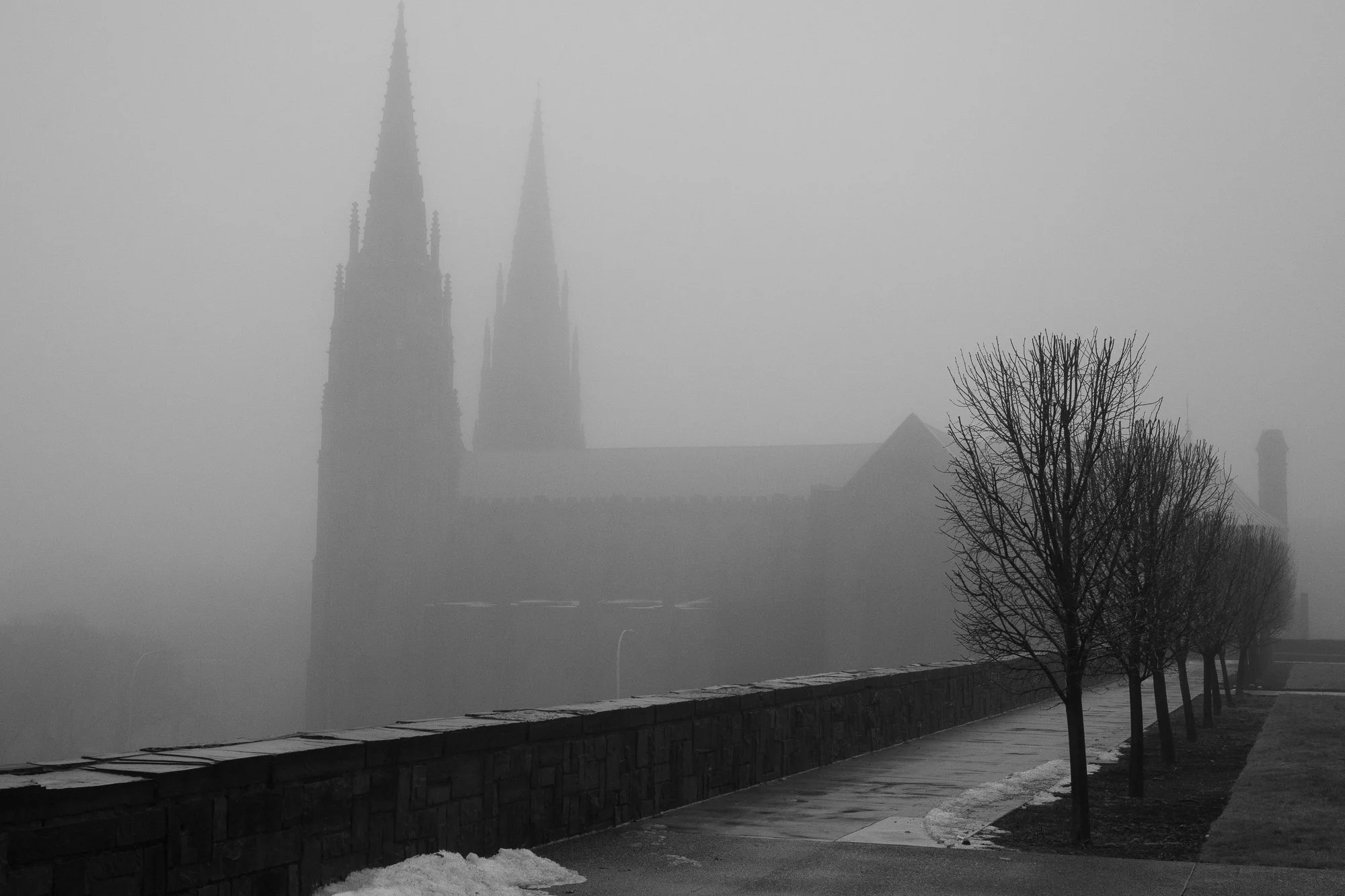
Black and white photograph of cathedral spires emerging through fog in Albany, New York

Cathedral spires of the Church of the Immaculate Conception in Albany, NY rise quietly through dense fog, reducing the city to silhouette and form.

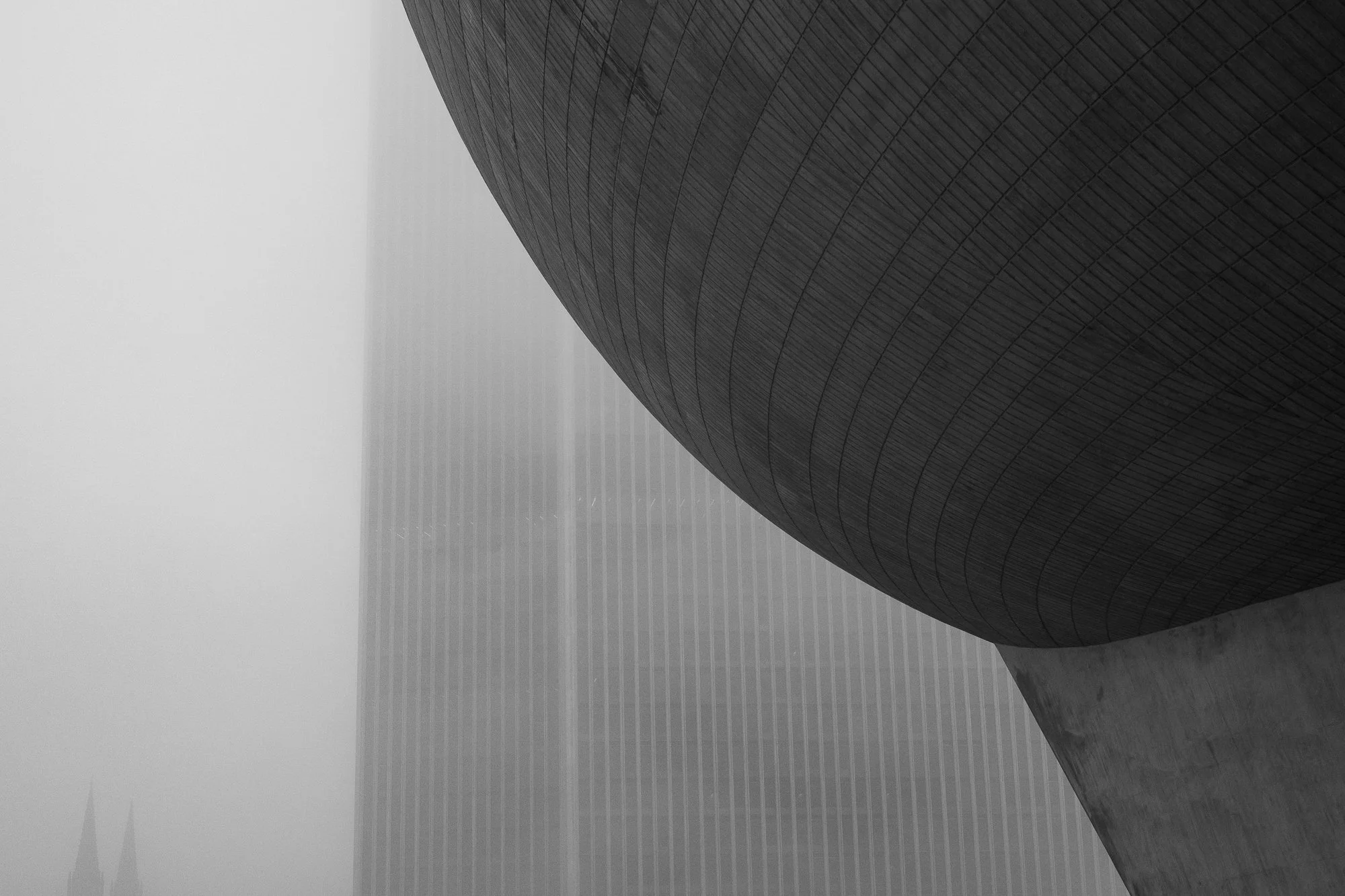
Black and white photograph of The Egg performing arts center in Albany, New York

Empire State Plaza - A close architectural study of The Egg, where curve and concrete dominate the frame.

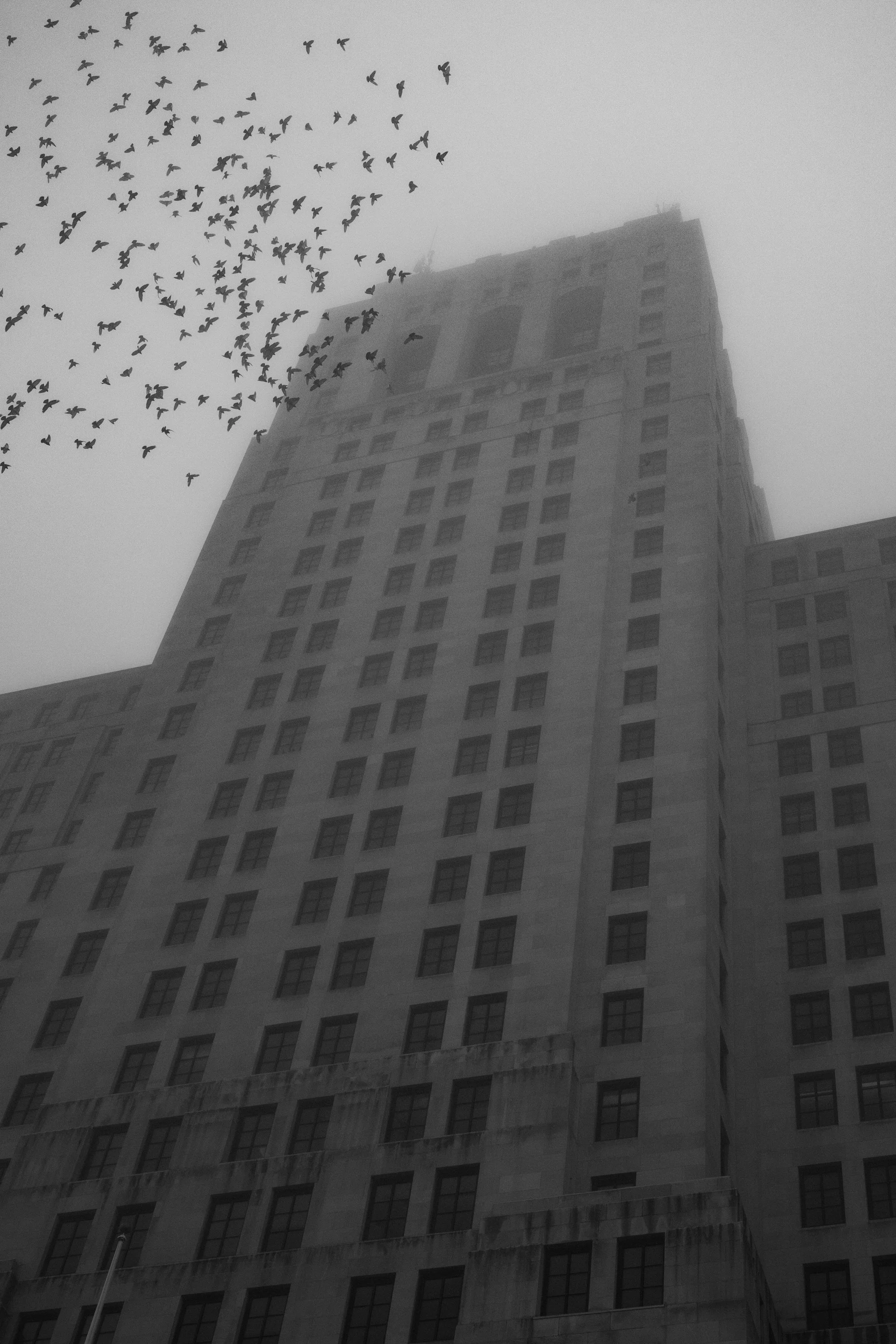
Black and white photograph of birds flying past a tall government building in Albany, New York

A flock of birds breaks the stillness above the Alfred E. Smith building, adding movement to an otherwise rigid form.

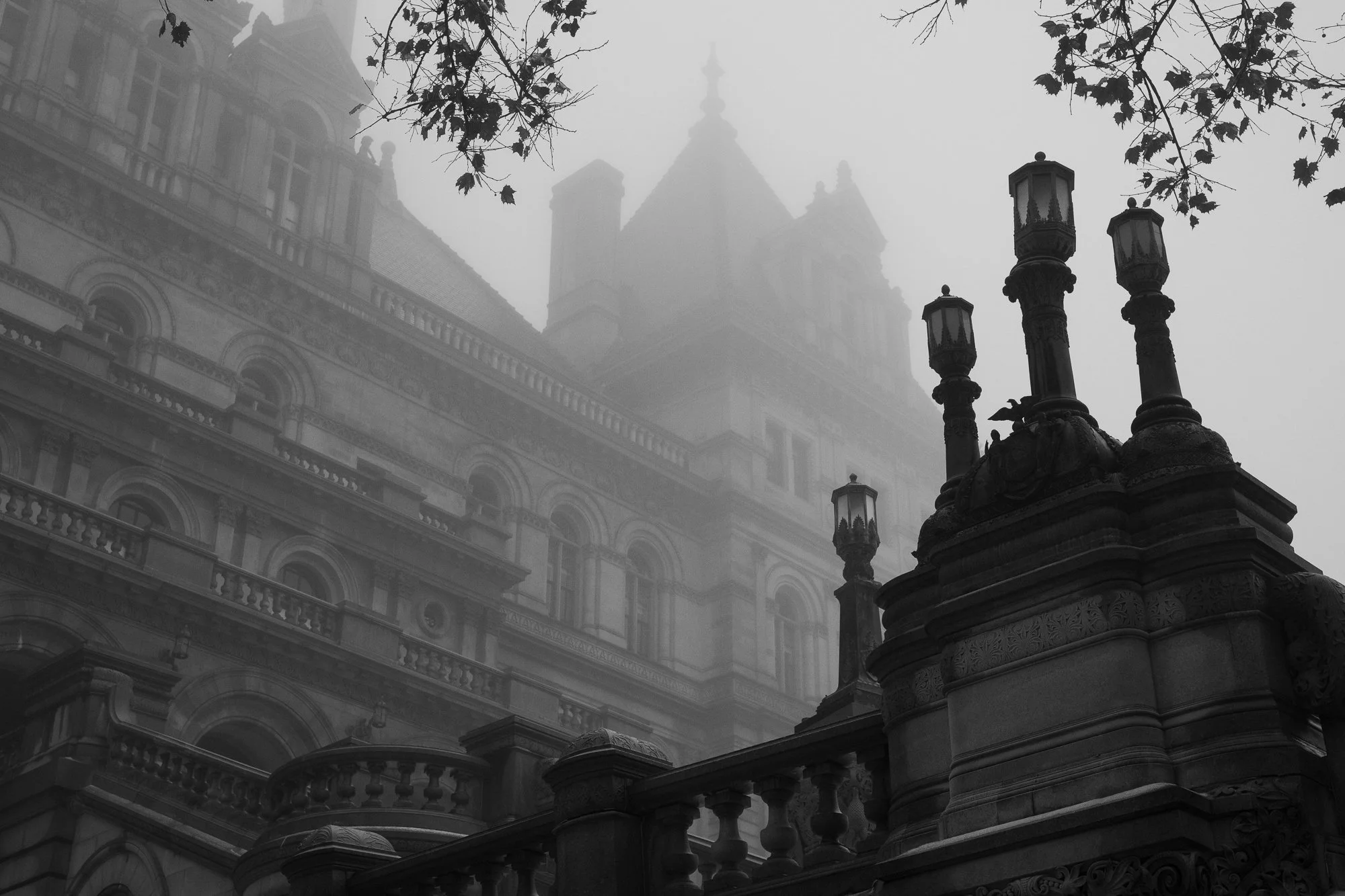
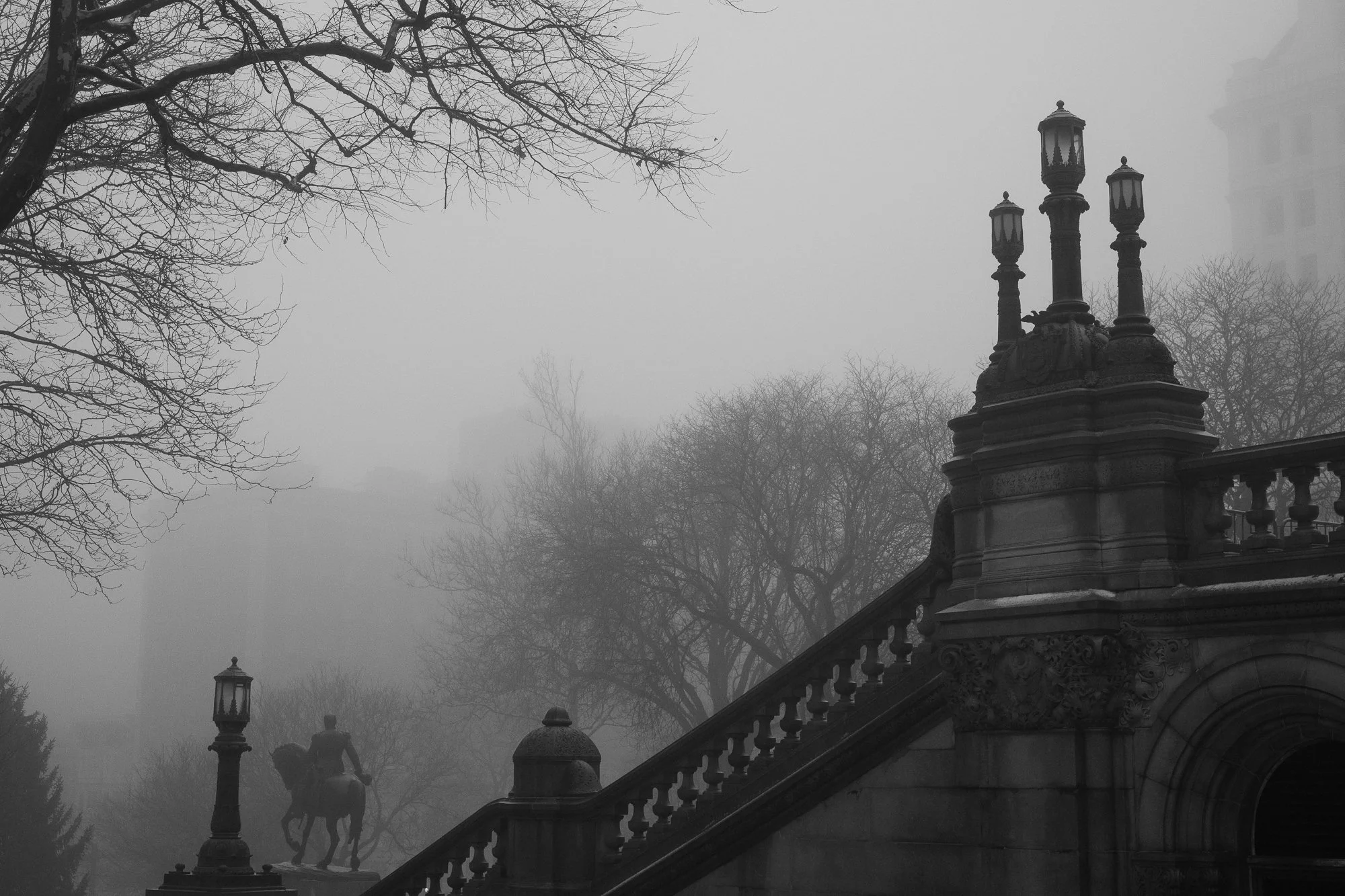
Black and white photograph of decorative balustrades and lampposts at the New York State Capitol in fog

Decorative stonework and lampposts lead the eye toward the Capitol as fog softens the background.

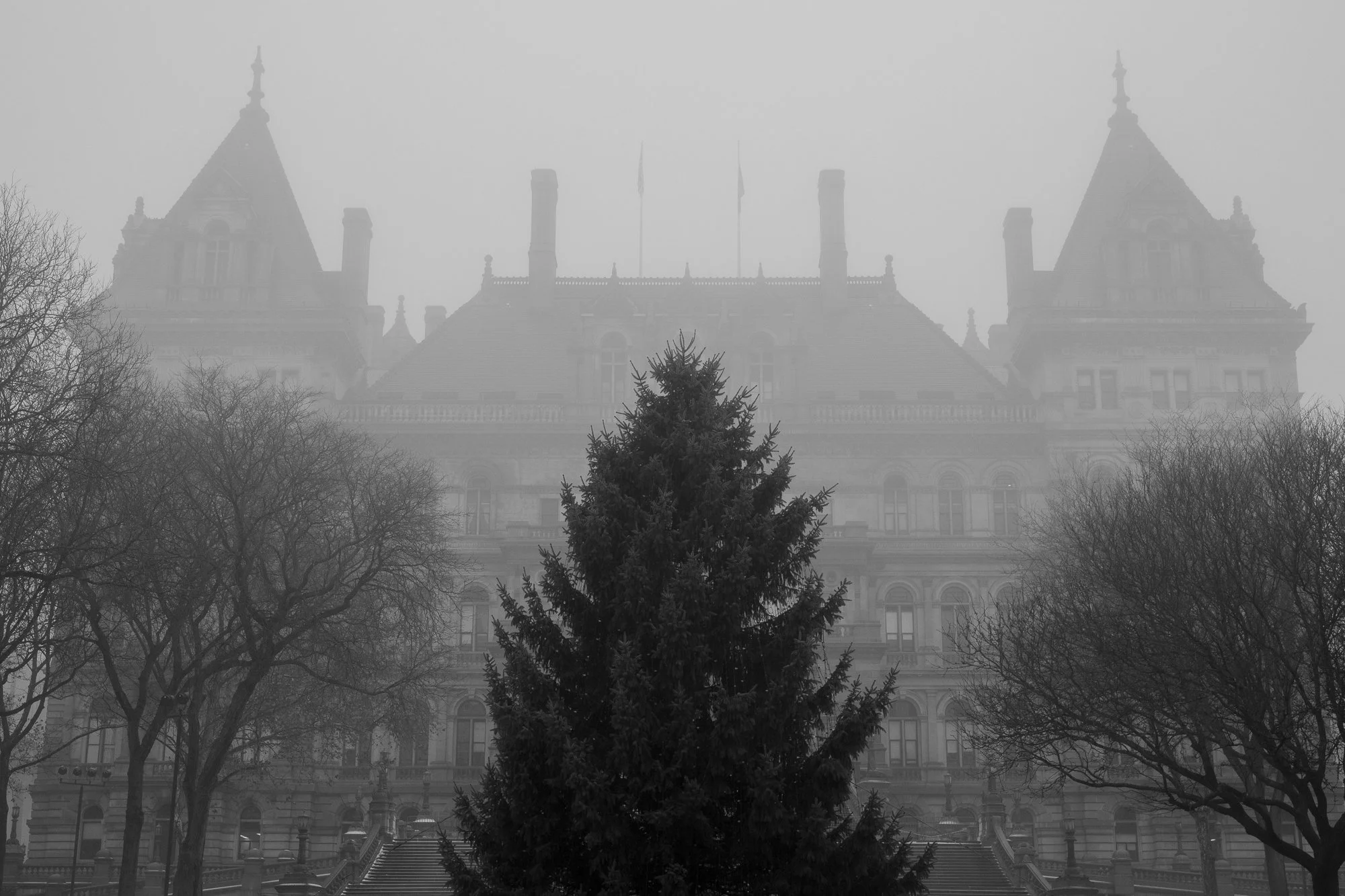
Black and white photograph of the New York State Capitol with symmetrical towers and a central evergreen

Symmetry, fog, and restrained contrast reduce the the New York Sate Capitol building to pure form. This photograph is offered as a fine art print that works especially well in offices and interiors where quiet authority matters.

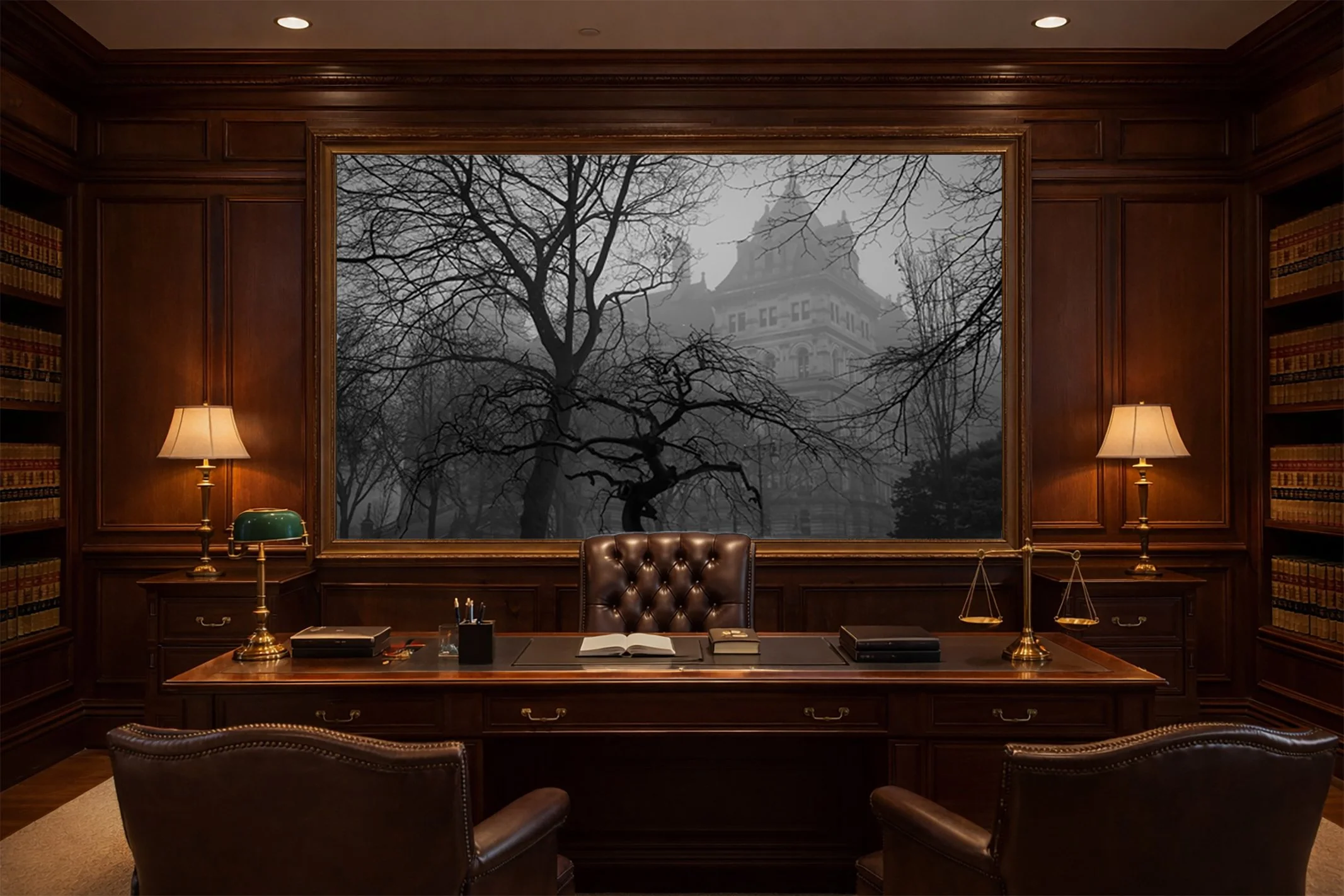
Black and white architectural photograph of an Albany, New York landmark displayed in a high-end attorney’s office with dark wood paneling and classic furnishings

A black and white architectural photograph of Albany, New York, shown here installed in a high-end attorney’s office. The fog-softened historic architecture and bare winter trees bring a quiet sense of permanence and authority to a refined professional space.

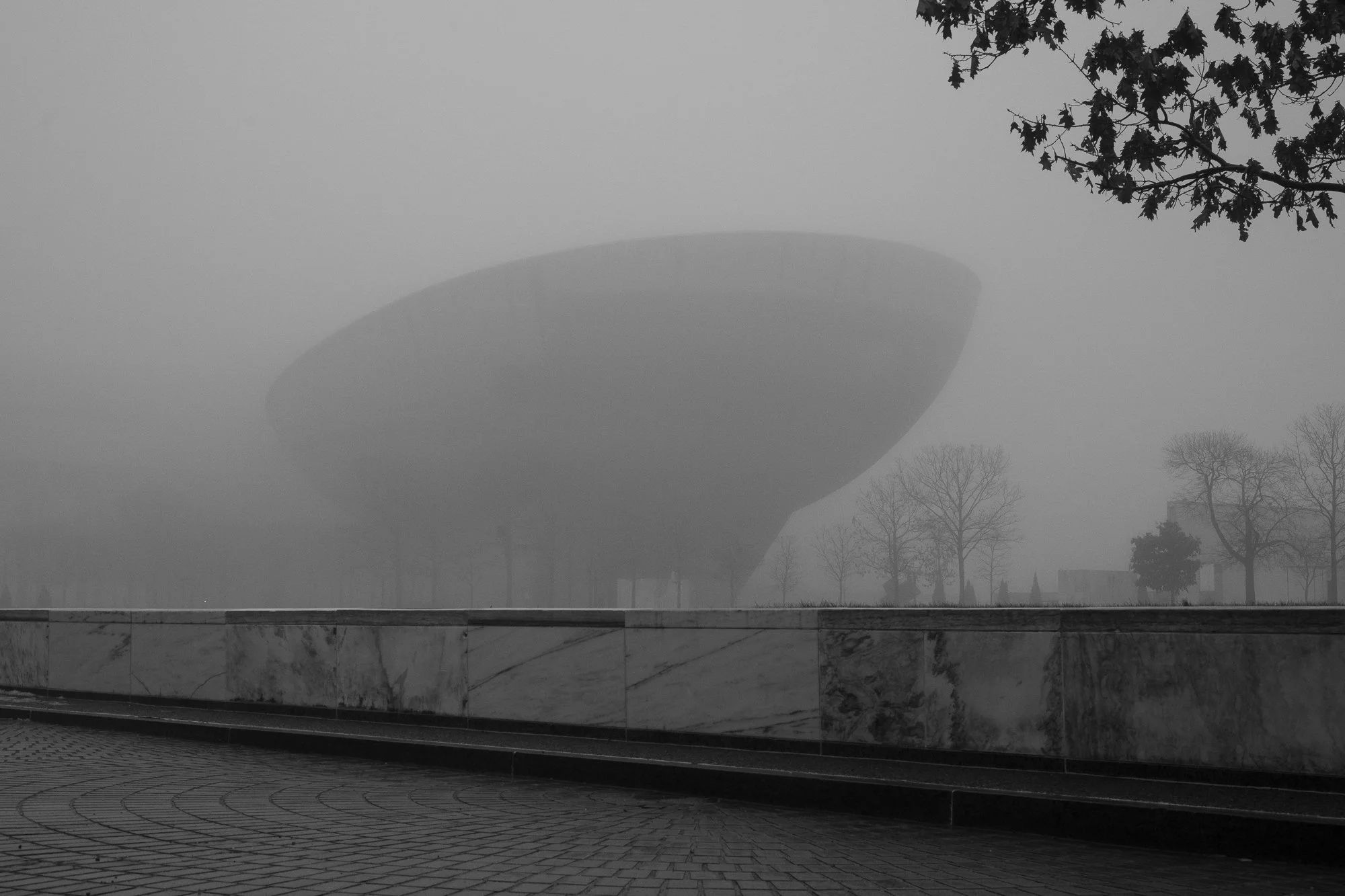
Black and white photograph of The Egg performing arts center partially obscured by fog in Albany

The Egg appears as a softened form within heavy fog, emphasizing scale and negative space.

Black and white photography print of historic Albany, NY architecture

Photograph of the New York State Education Department building in Albany, NY

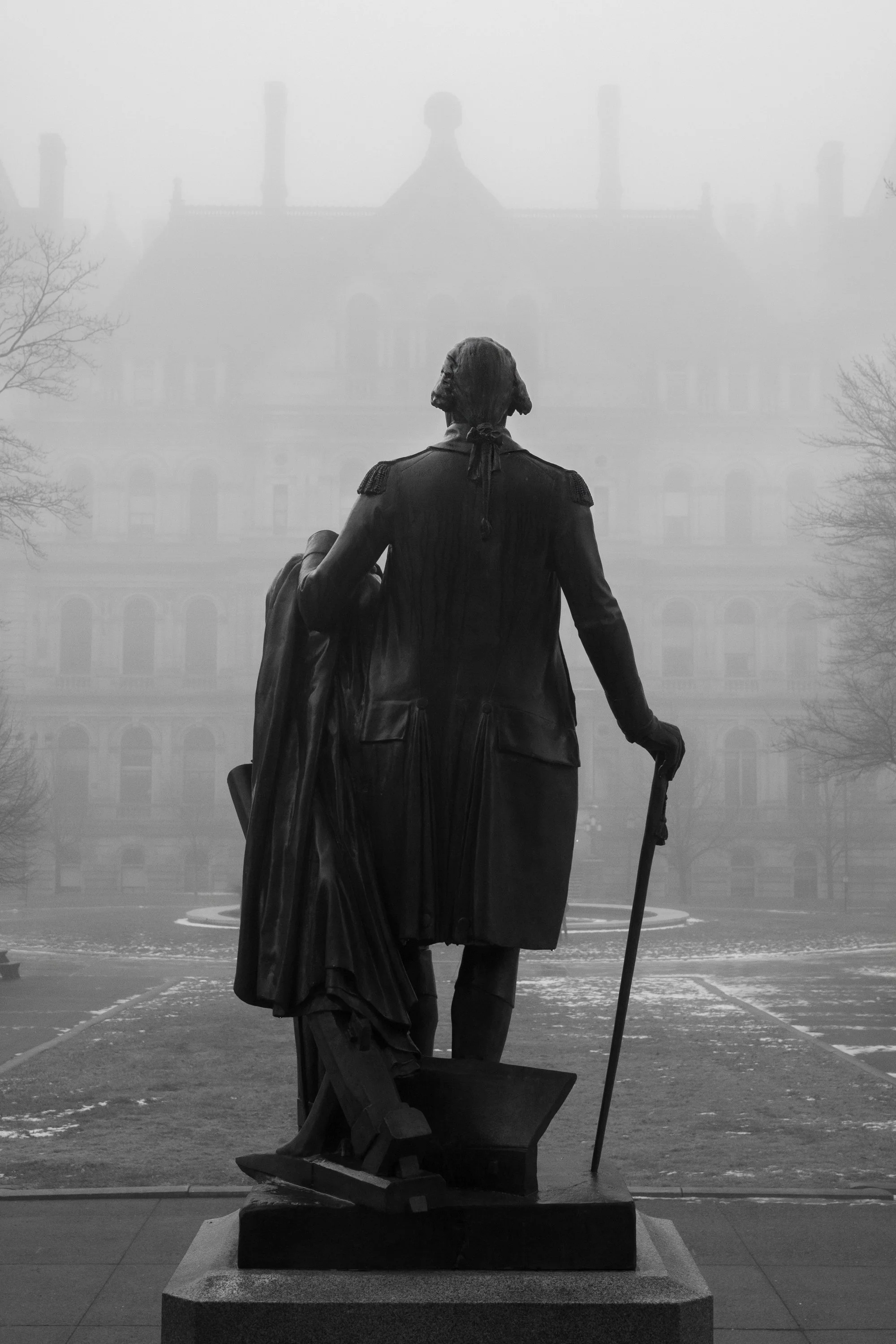
Black and white photograph of a statue in Washington Park framed by bare tree branches in Albany

A statue of George Washington stands quietly framed by winter branches and softened by fog.

Black and white photography print of the statue and staircase in front of the Capital building in Albany, NY

Timeless black and white photograph of Albany, NY architecture

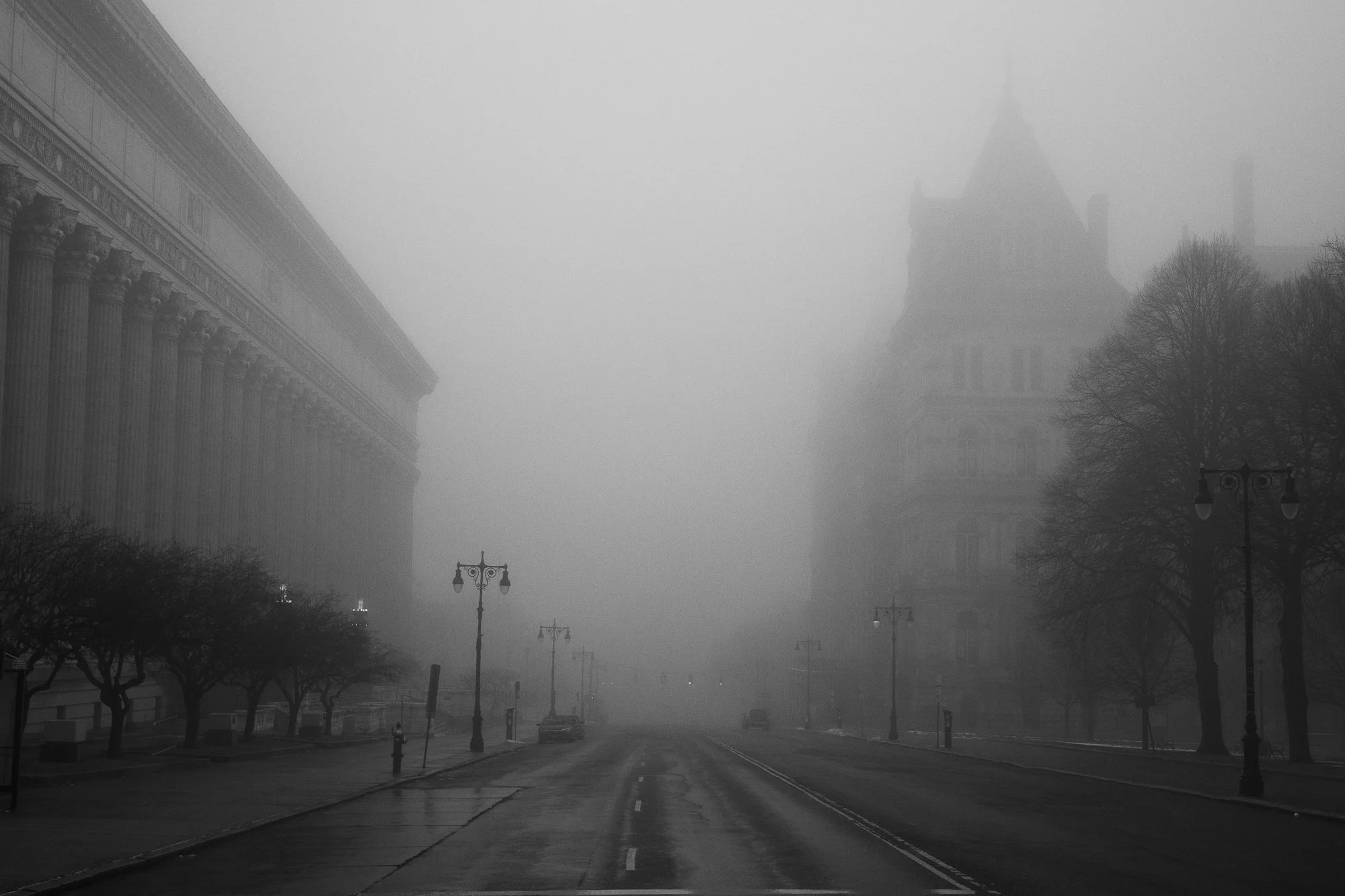
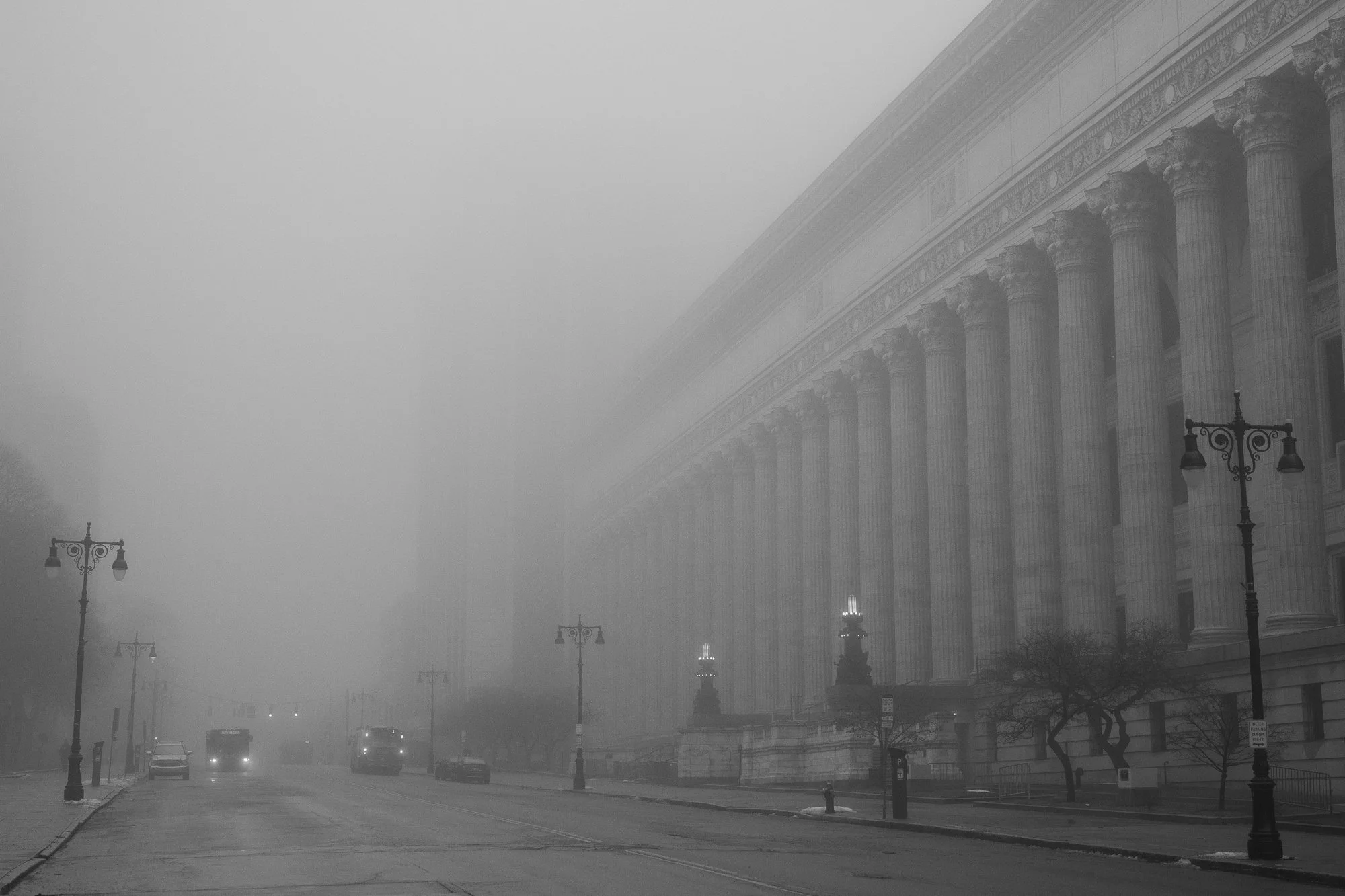
Black and white photograph of a columned government building along an empty street in Albany

A long row of columns fades into fog along a quiet Albany street, emphasizing repetition and scale.

Black and white photograph of Albany, NY architecture

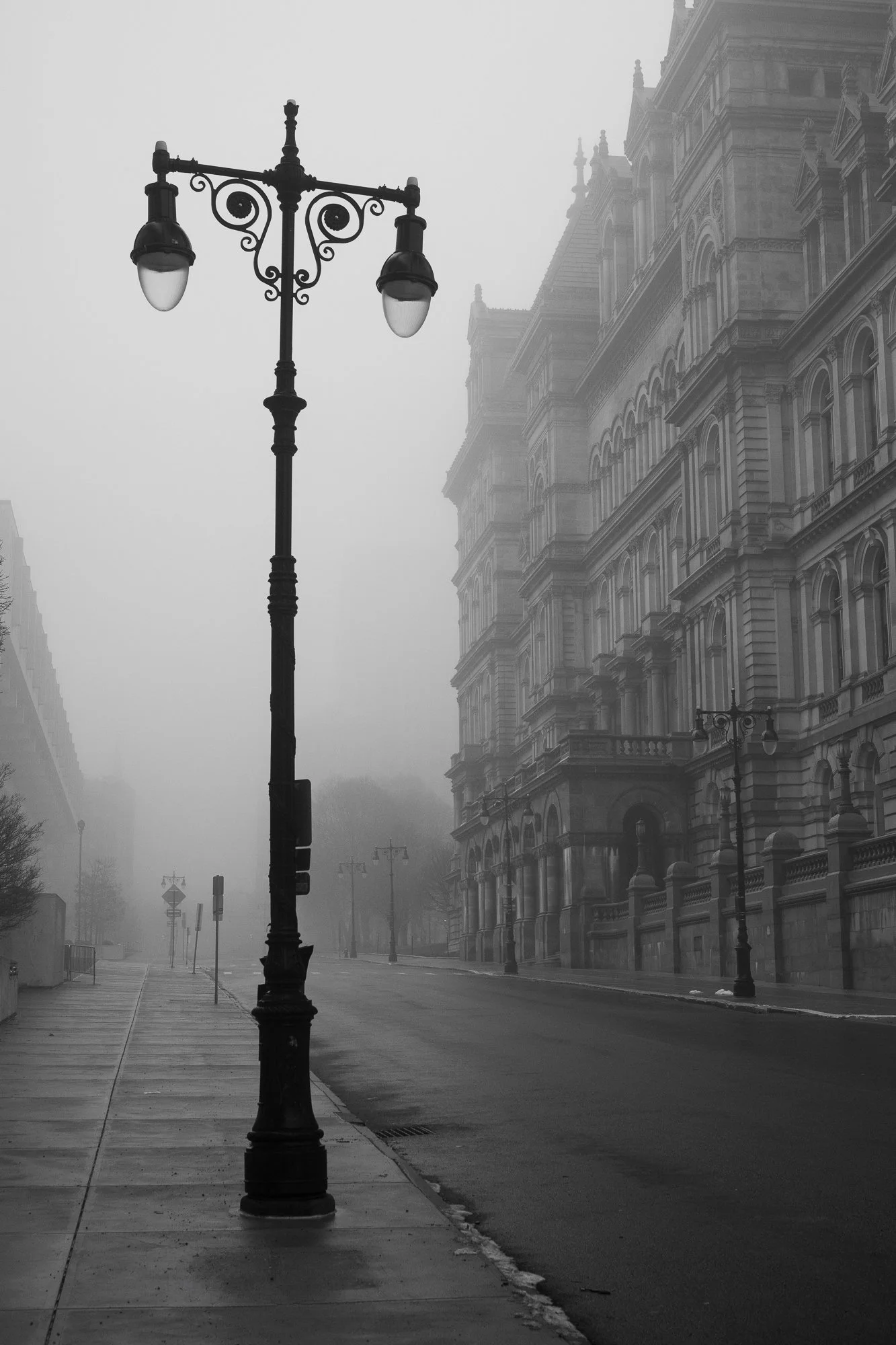
A single lamppost anchors an empty Albany street as fog dissolves the surrounding architecture.

Black and white fine art photograph of The Egg and architecture in Albany, NY

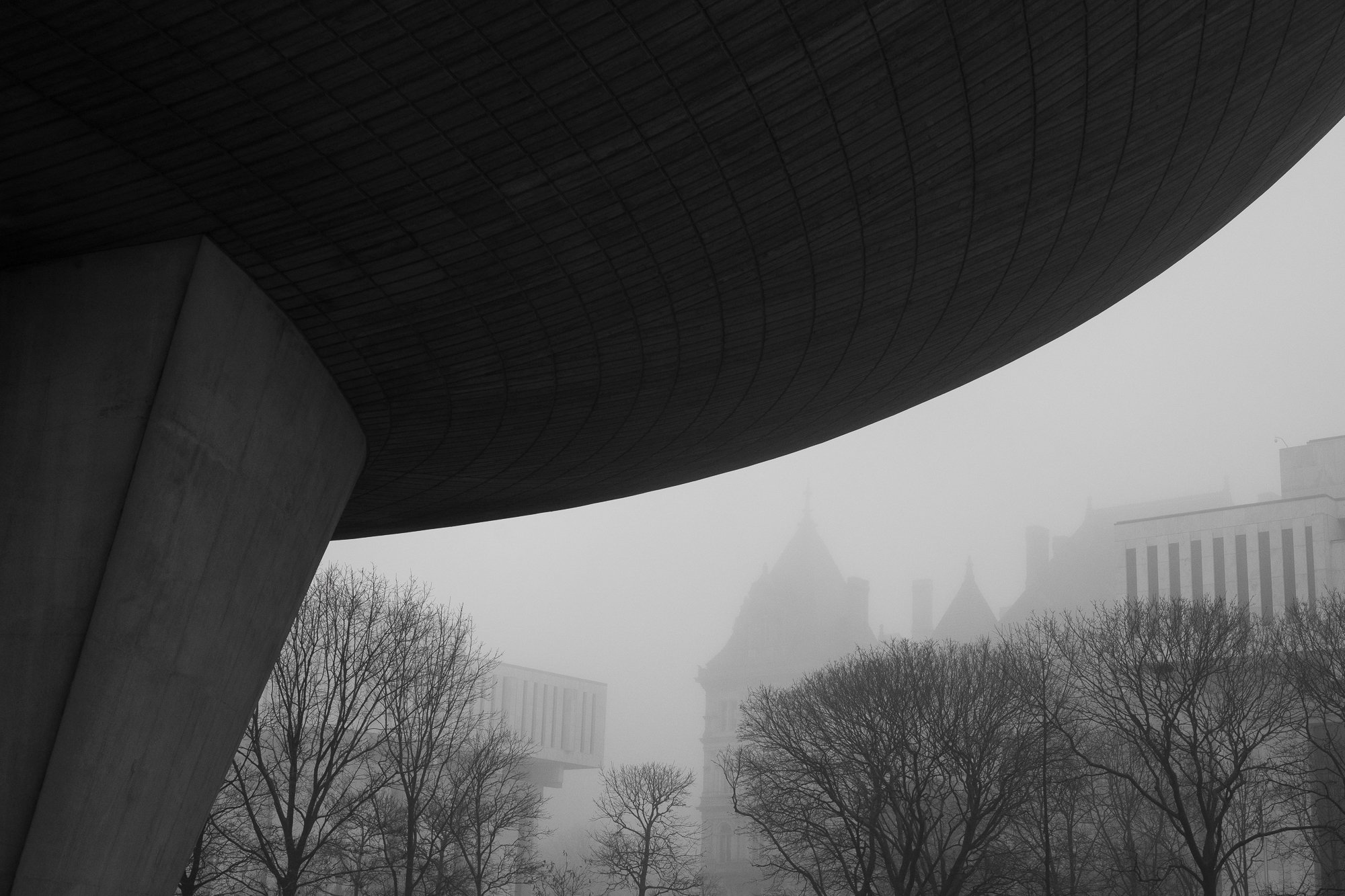
The sweeping curve of The Egg floats above Albany’s softened skyline as fog reduces detail and scale.

Lake George Nature Photography

Lake George Landscape Wall Art

Adirondacks in the Fall - Prints

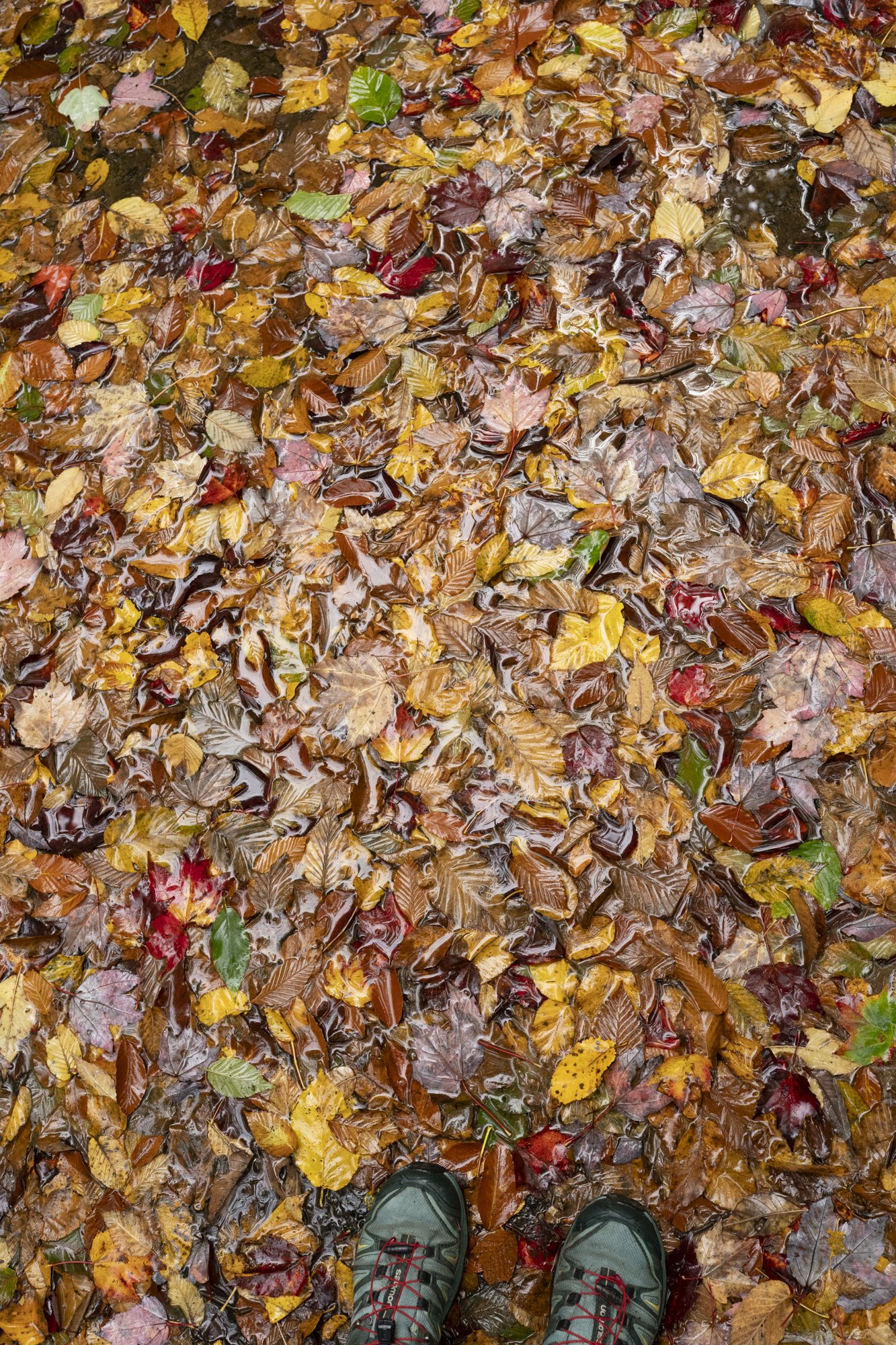
Feeling very grateful after spending the entire month of October in the Adirondacks, more specifically in Lake George, NY. And what a time it was to be there with the fall foliage in all it’s glory. After living in a place essentially without seasons (San Diego), it was refreshing to be around all that color. I did some shooting for a regional magazine which required a lot of hiking around the lake up Pilot Knob Trail, Black Mountain Trail, and Cat Mountain Trail. The main focus was to shoot hiking, but of course the surroundings were so inspiring that I had to make some landscape photographs along the way. Can you call these landscapes?? I suppose they are more abstract nature photographs.

Contact me directly about Lake George wall art. All of my images are available as prints in varying sizes for your home, office, or commercial space.

Black and white photograph of a forest in Lake George, NY

Fine art nature photograph in Lake George, NY - Adirondacks

Lake George, New York landscape photography

Lake George Nature Photography - Adirondacks

Photography print of the fall foliage in Lake George, NY

Lake George Nature Photography Prints

Photograph of a hike in Lake George, NY during the fall foliage

Fall foliage in Lake George, NY - Nature Photography

Landscape photography of a forest in Lake, George, NY during fall foliage

Nature Photography - Lake George, NY - Adirondack Prints

Black and white nature photograph of the forest in Lake George, NY

Black and white nature photography - Lake George, NY

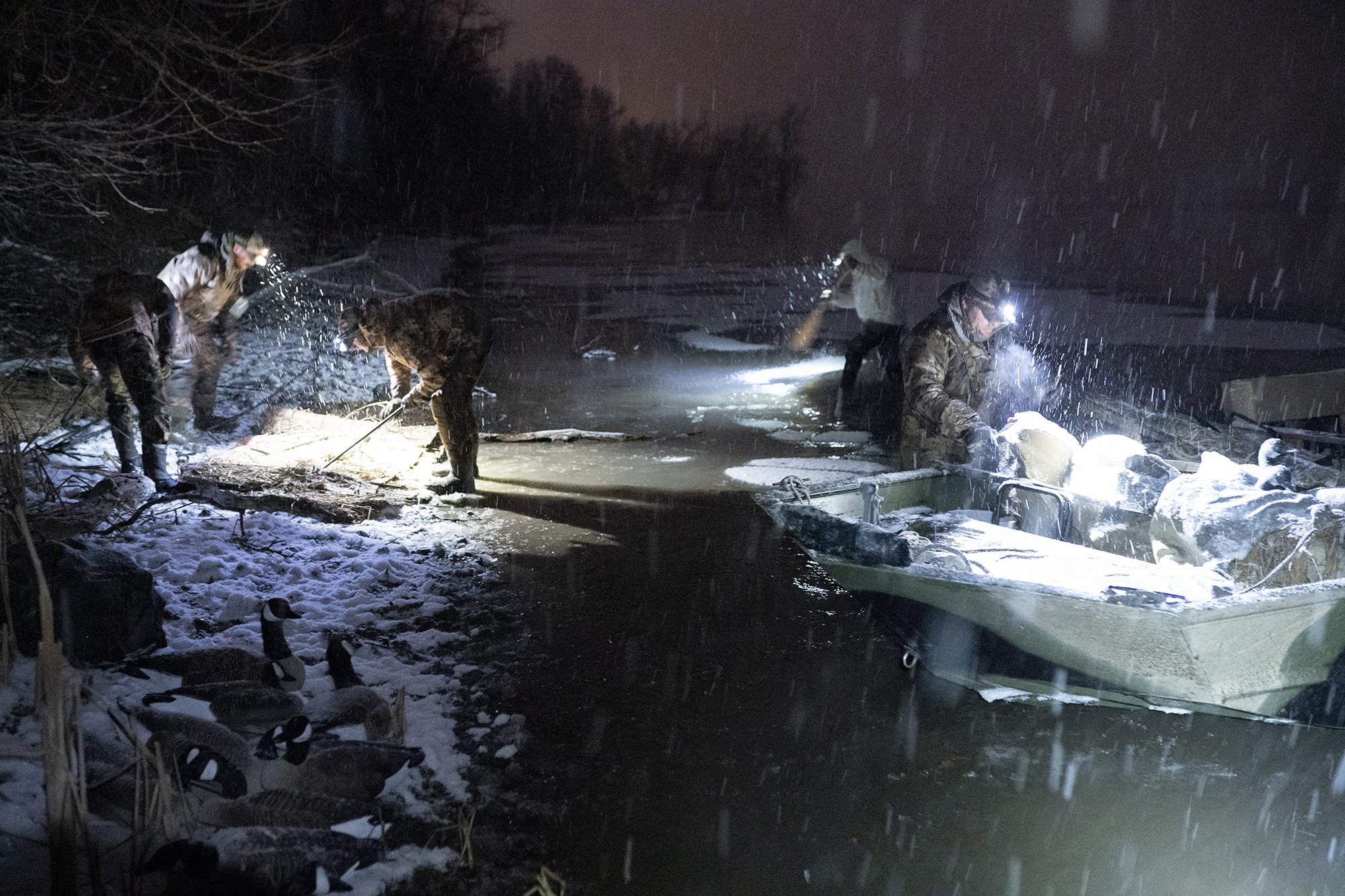
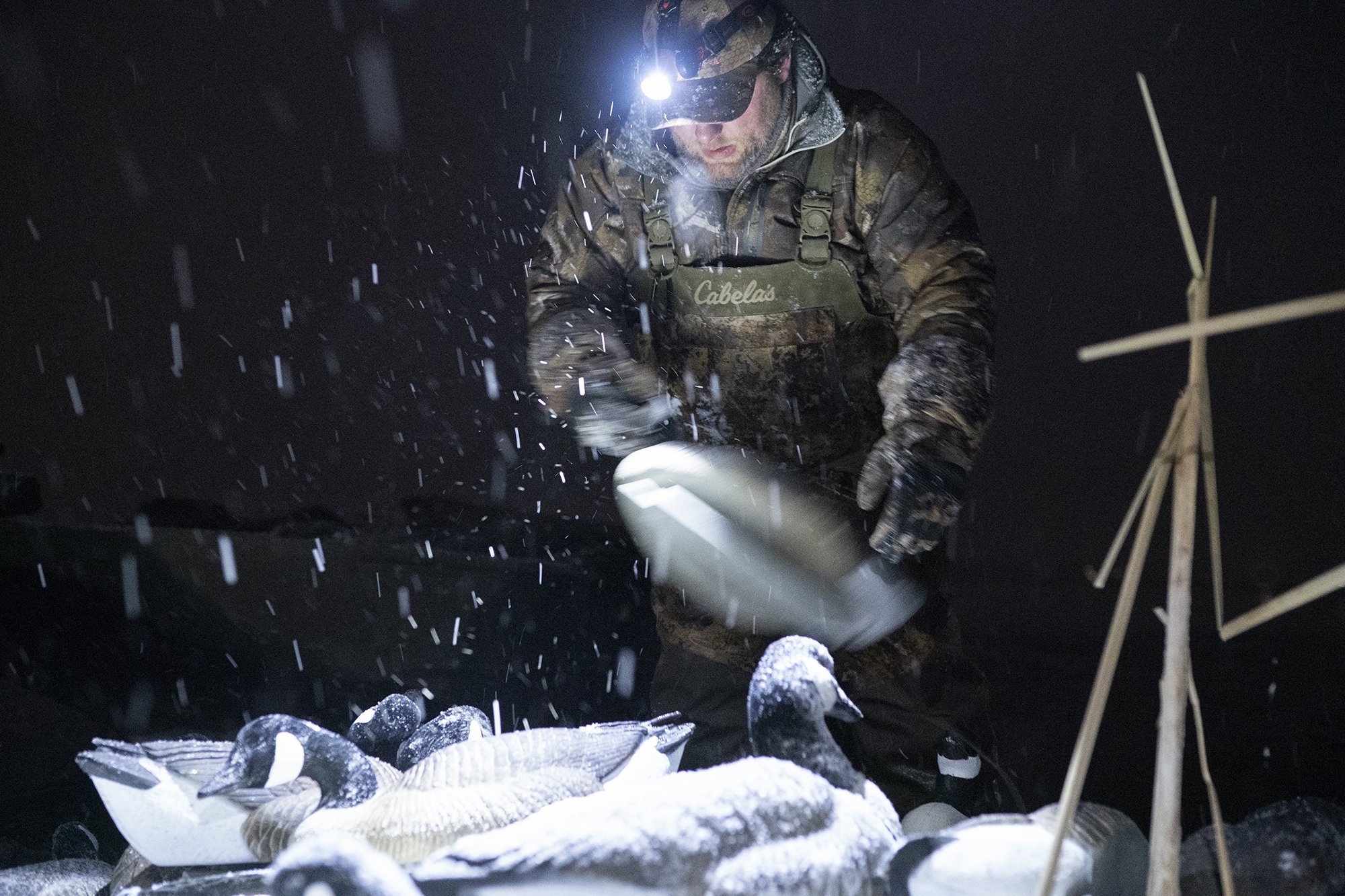
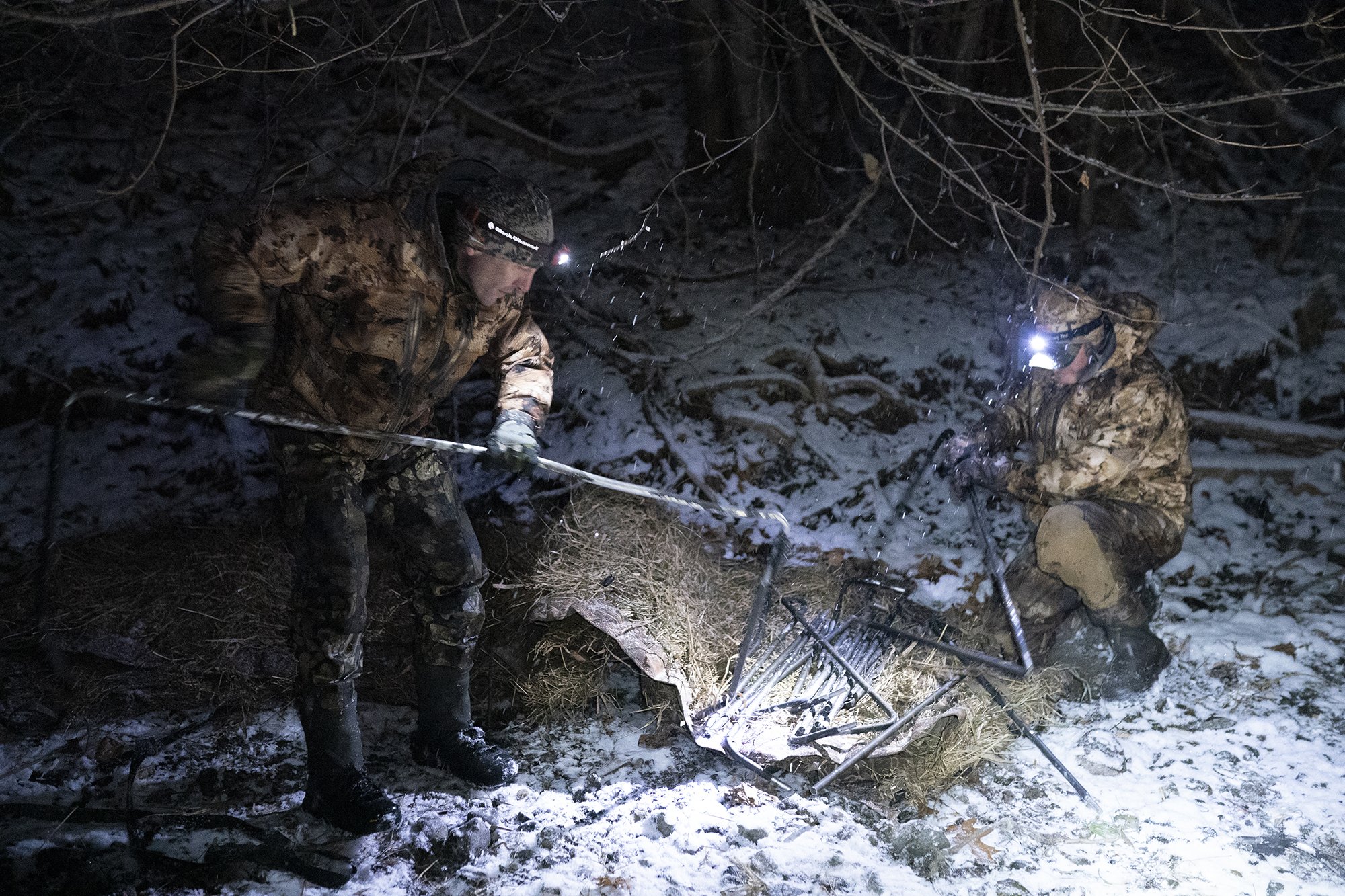
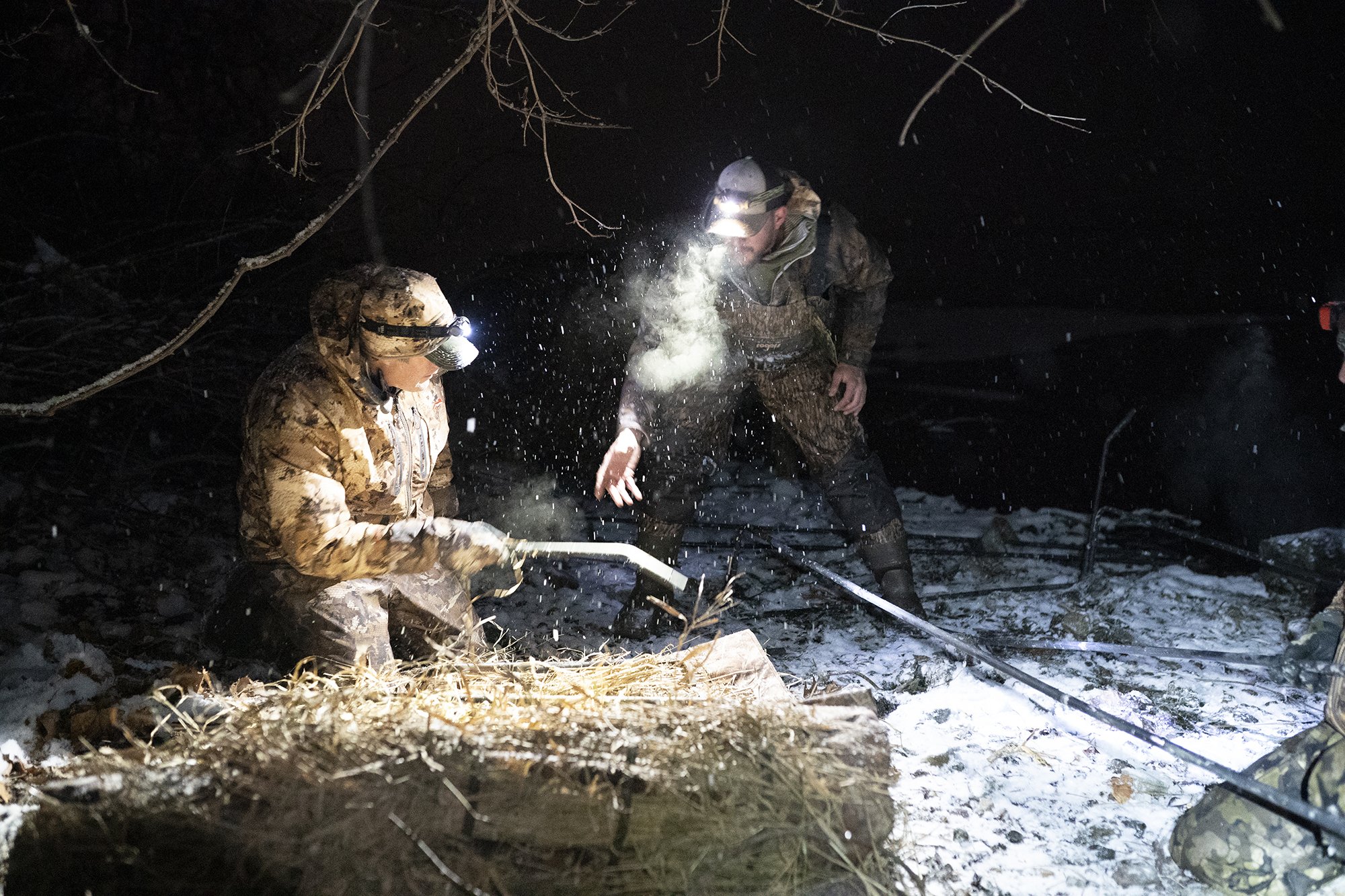
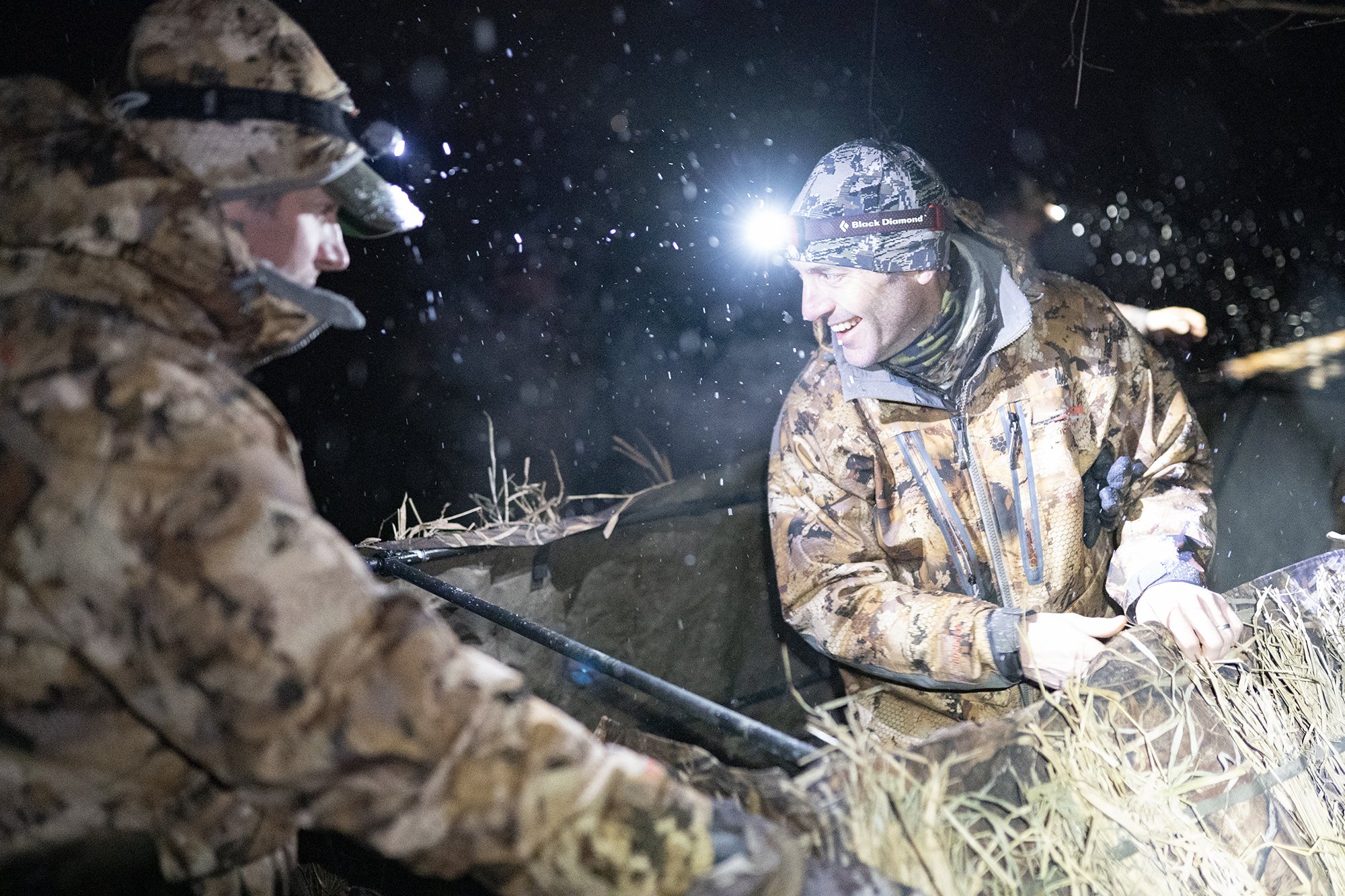
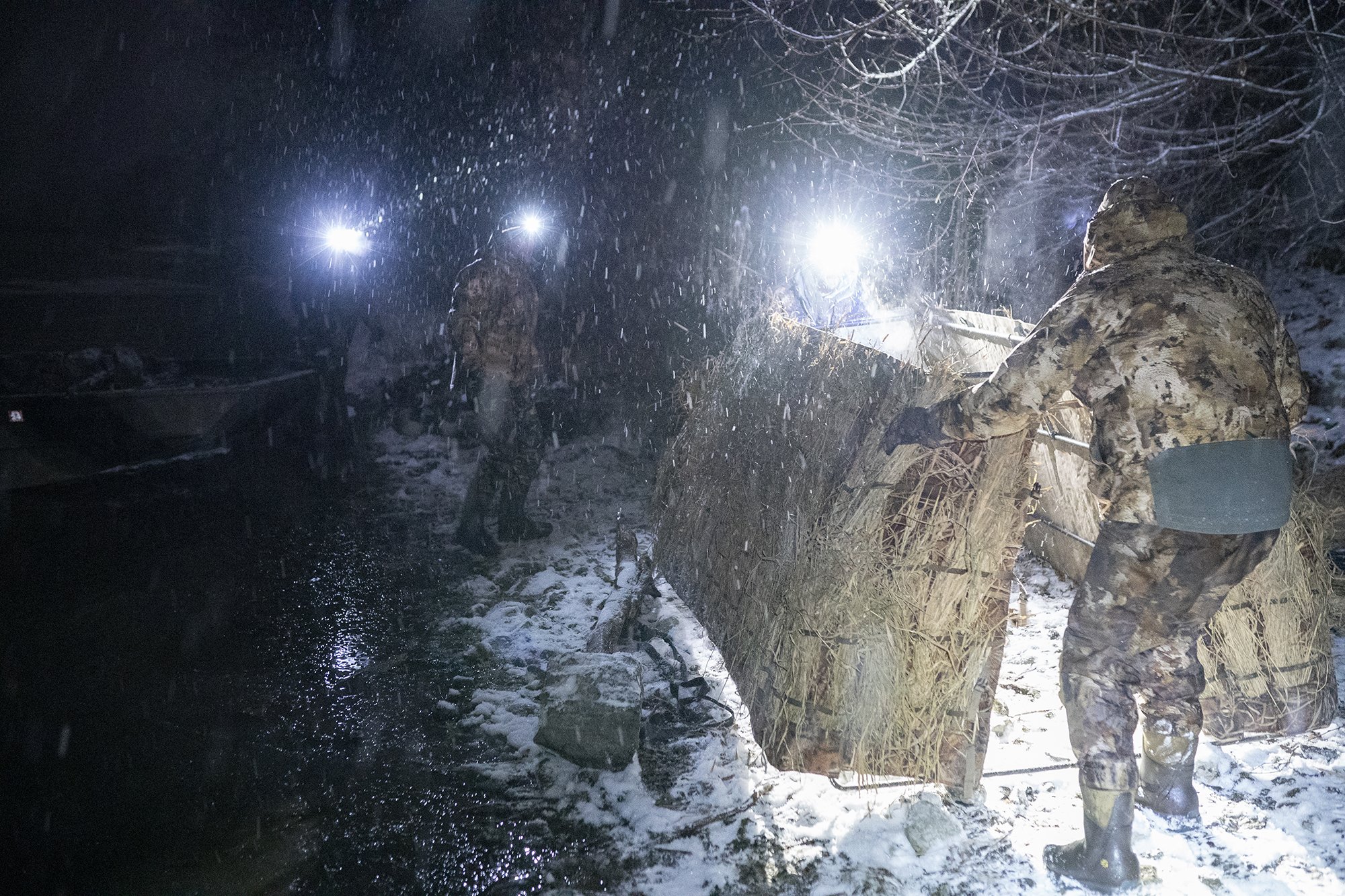
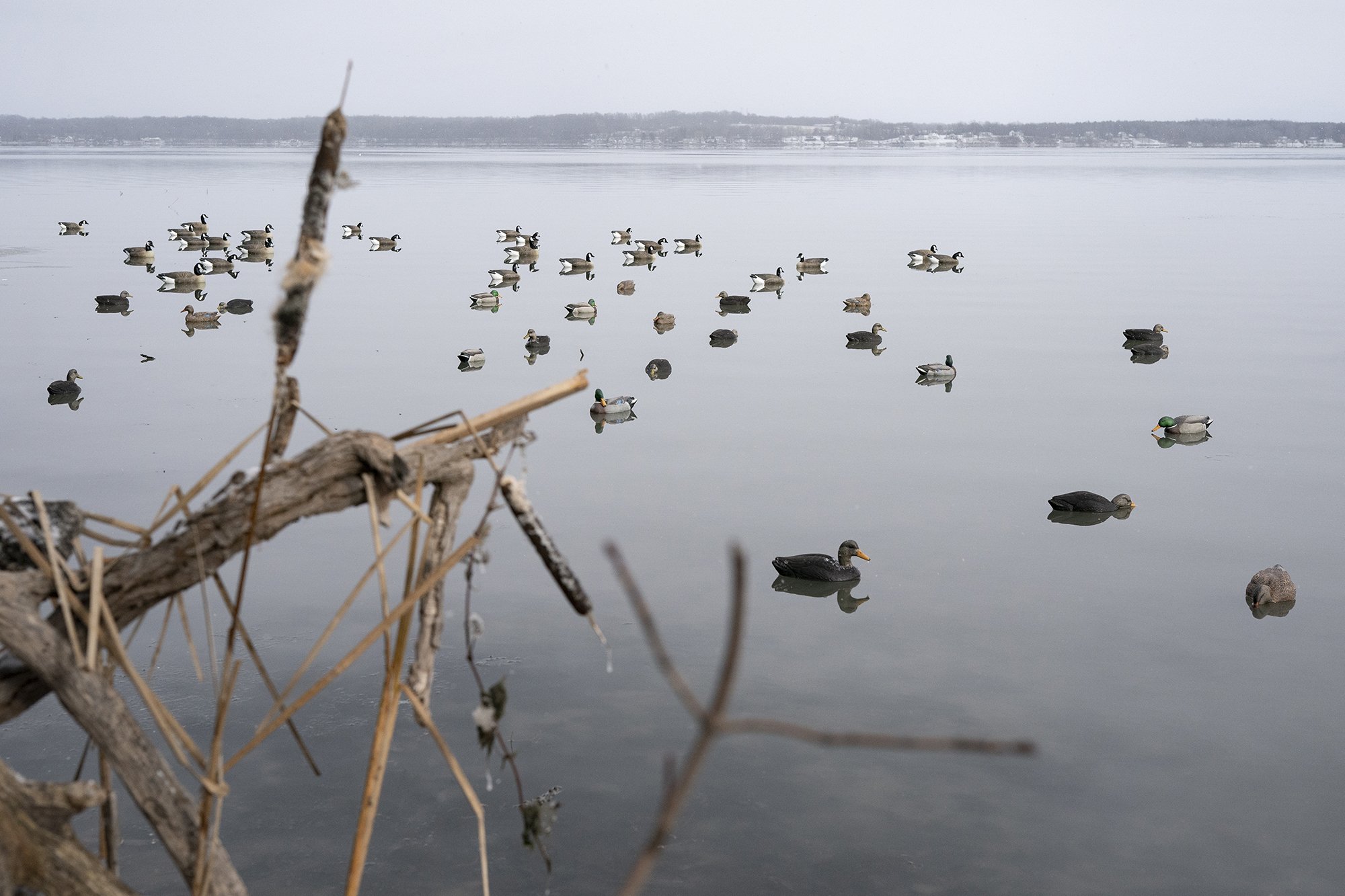
Duck Hunting the New York Finger Lakes

Experience the Grit of Duck Hunting - Photography - Real Hunts, Real Gear, Real Moments

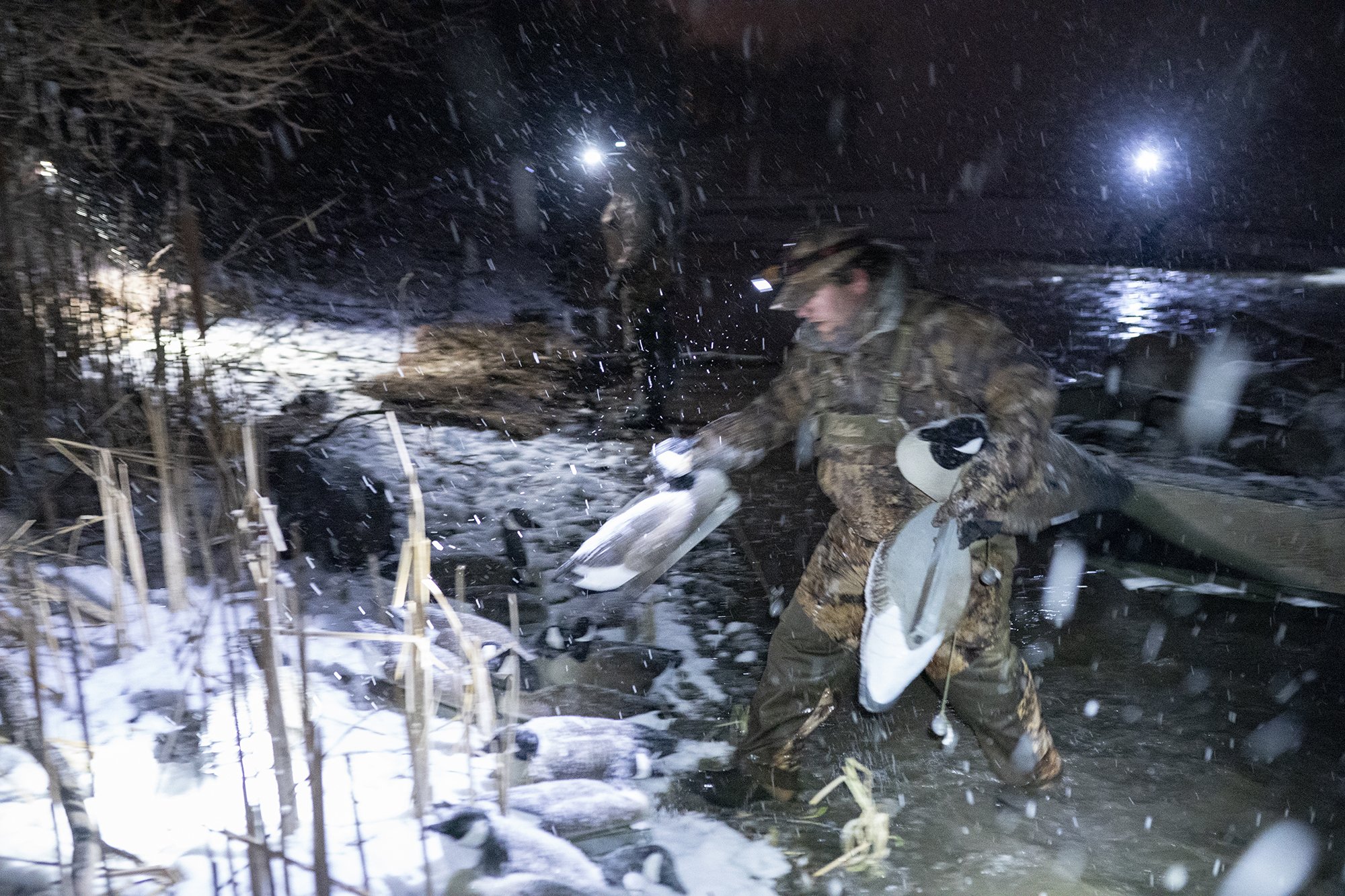
Duck hunting on the Finger Lakes in New York is an experience unlike any other—one that tests both hunters and their gear against the harsh conditions of early mornings, biting winds, and unpredictable weather. As a duck hunting photographer, I specialize in capturing these authentic, candid moments from real hunts, where the true spirit of the chase is laid bare. From the first light of dawn to the final shot of the day, my photographs document the rugged beauty of this experience, showcasing not just the action but the challenges and camaraderie that define it.

The Finger Lakes region offers a stunning backdrop for hunting, but the conditions can be grueling. The cold, icy waters and the need for quick reflexes require hunters to be prepared for anything. It’s in these raw, unpredictable moments—whether a hunter battling the chill, adjusting gear in a boat, or watching the horizon for a duck’s silhouette—that the true essence of duck hunting comes alive. My focus is to document these moments with authenticity, highlighting the grit and determination needed to thrive in such harsh conditions.

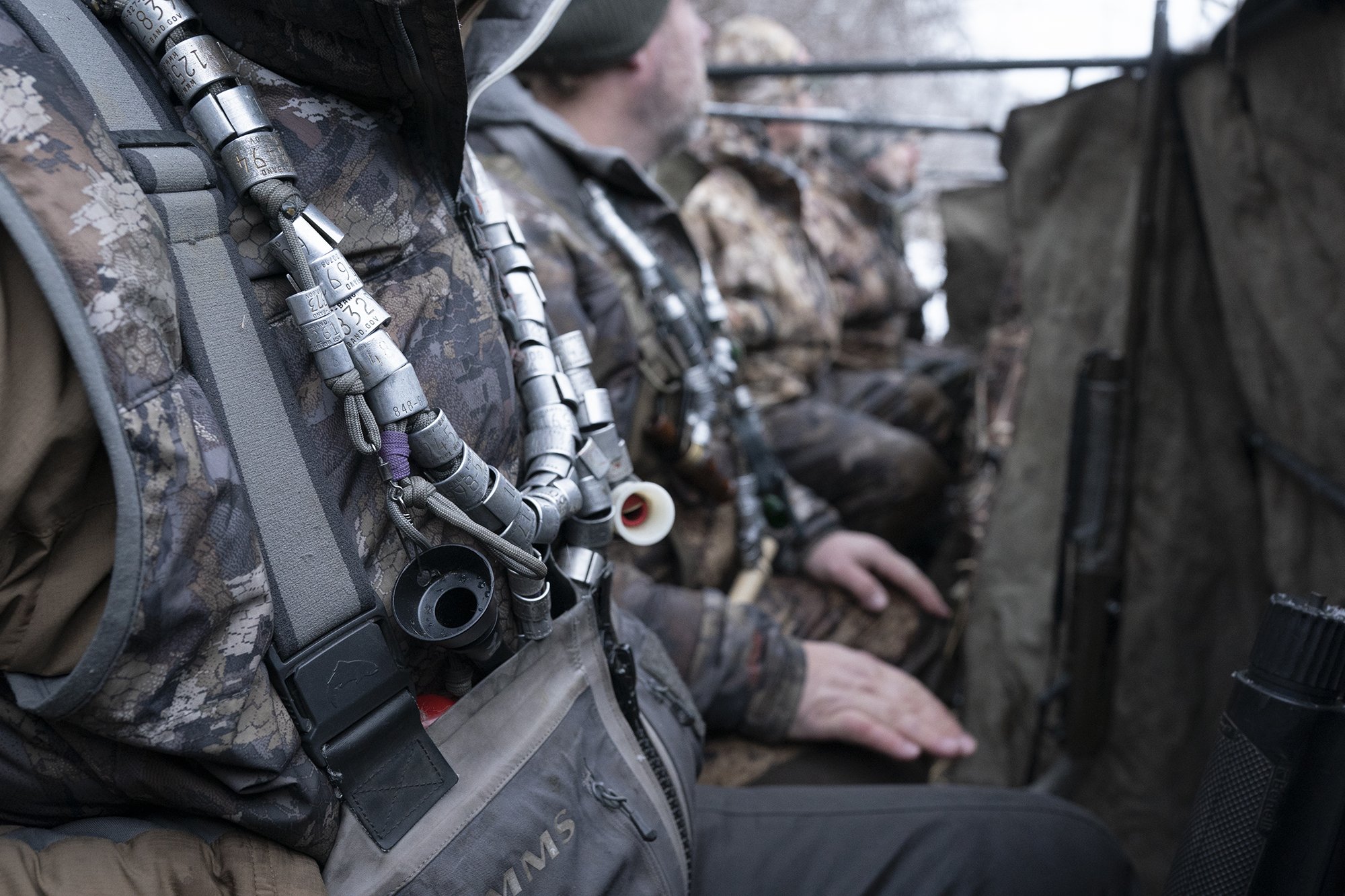
In my duck hunting photography, I capture more than just the gear; I aim to tell a story of perseverance and passion. Whether it’s the intense concentration as a hunter scans the water, the quick motion of retrieving a fallen bird, or the subtle details of weathered gear, my images reflect the heart of what it means to hunt on the Finger Lakes. These candid shots are perfect for those who want to immortalize their hunting experience, showcasing their gear in the context of real, demanding hunts.

If you’re looking to showcase your hunting gear in its most authentic form, capturing the true spirit of a hunt on the Finger Lakes, I invite you to work with me. My photography is not just about equipment—it’s about the experience, the dedication, and the beauty of duck hunting in one of the most challenging environments. rob@robhammerphotography.com

Buffalo, NY

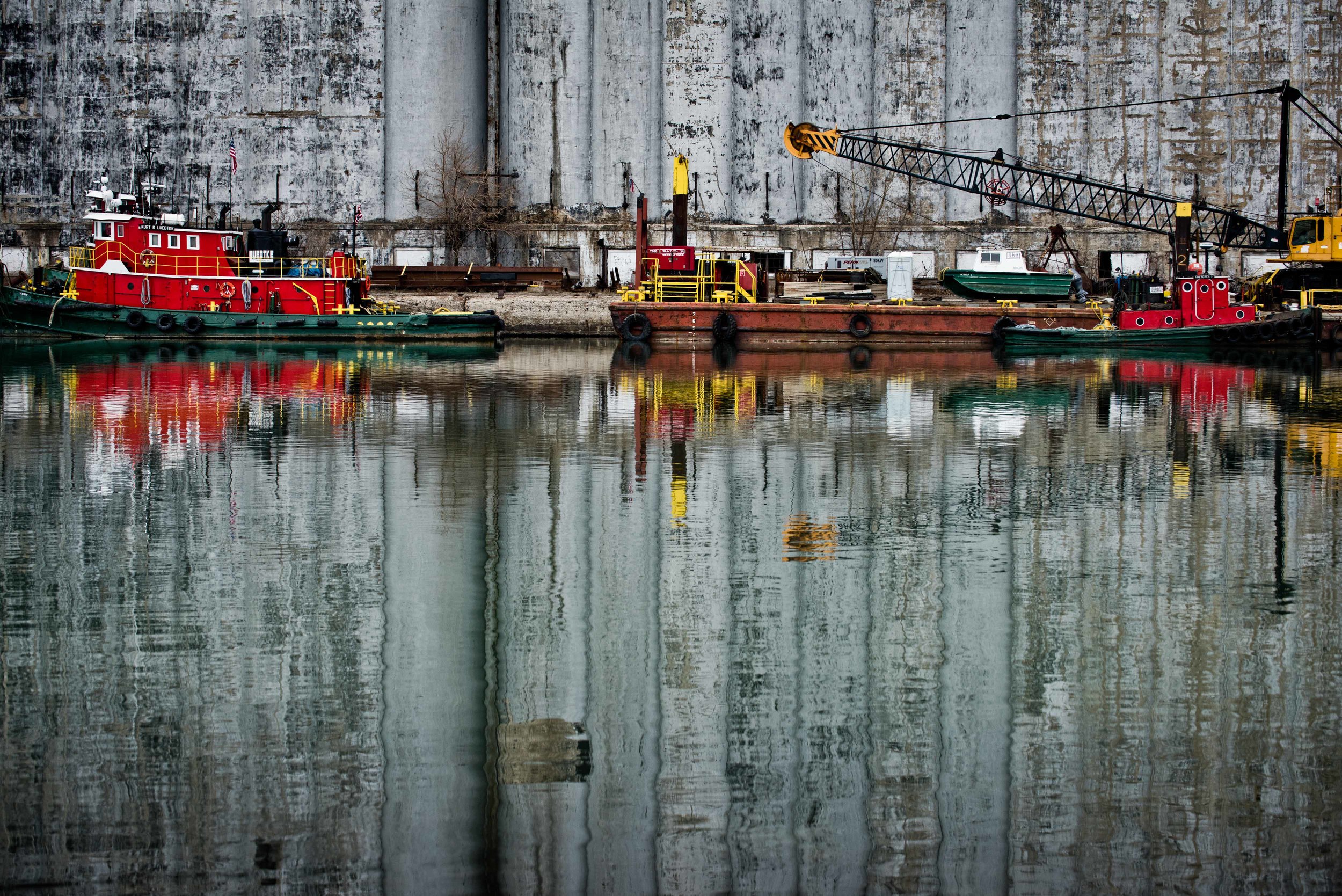
One of the many great things about road trips is the food you can find along your way. Some of it is totally random. And then there are places which are obviously known for a certain kind of food. Buffalo, NY is one of those places. Birthplace of the chicken wing. I'm originally from NY, so naturally have a deep appreciation for the chicken wing. Now living out in San Diego, it's hard to find a proper wing. So while traveling through western NY, I thought it only fitting to try the best. I'd never been to Buffalo before, and it seemed like a good enough excuse? Buffalo itself was a pretty cool place. Has a very "neighborhood" feel to it. Like everything is friendly and local. The outskirts though, were much different. Lots of deserted old factories. Great for shooting. And had it not been for the chicken wing, I never would have stumbled on this scene. Sometimes it pays to eat. 
TRAVEL.MORE. 

Rob Hammer