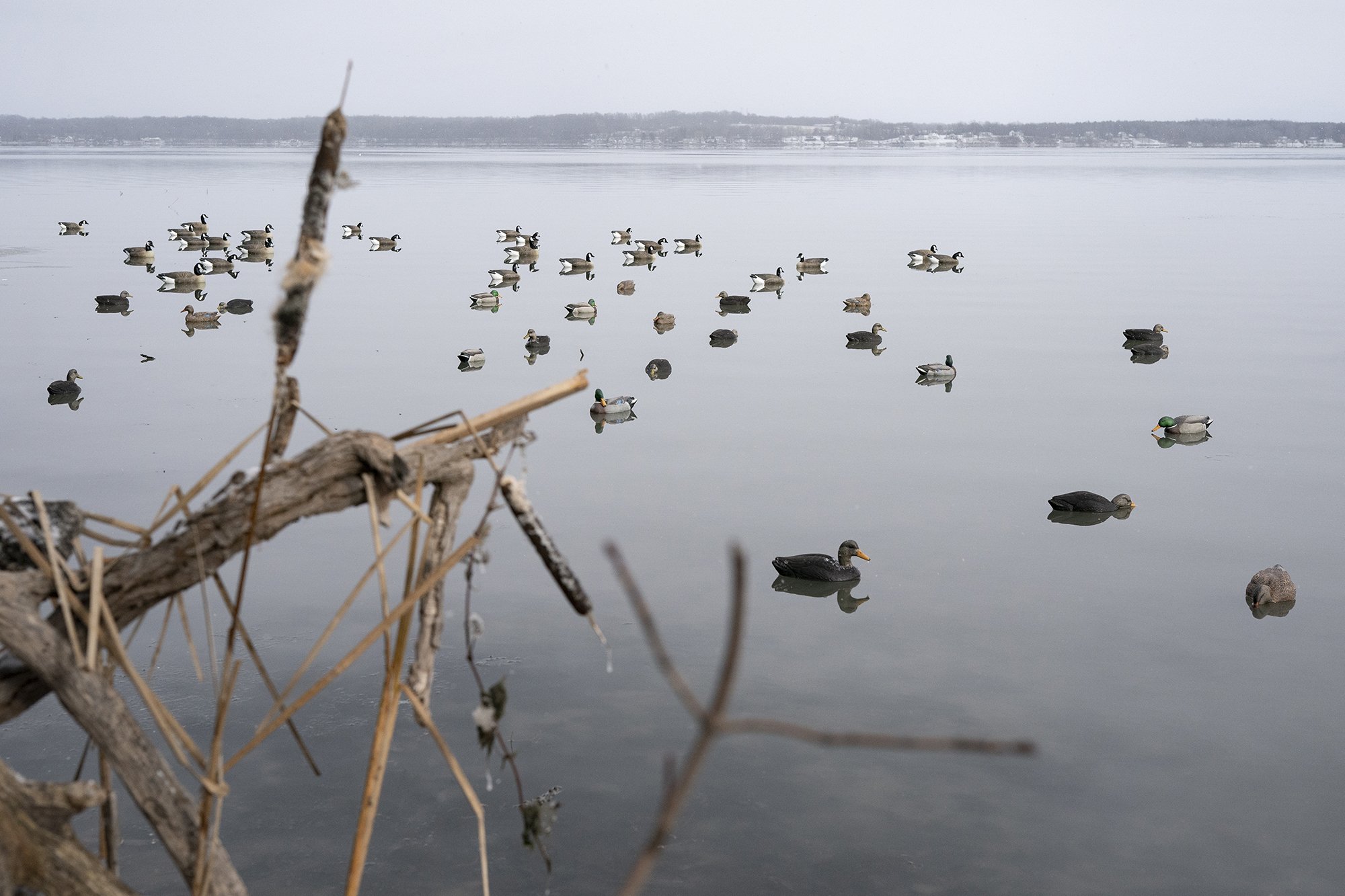
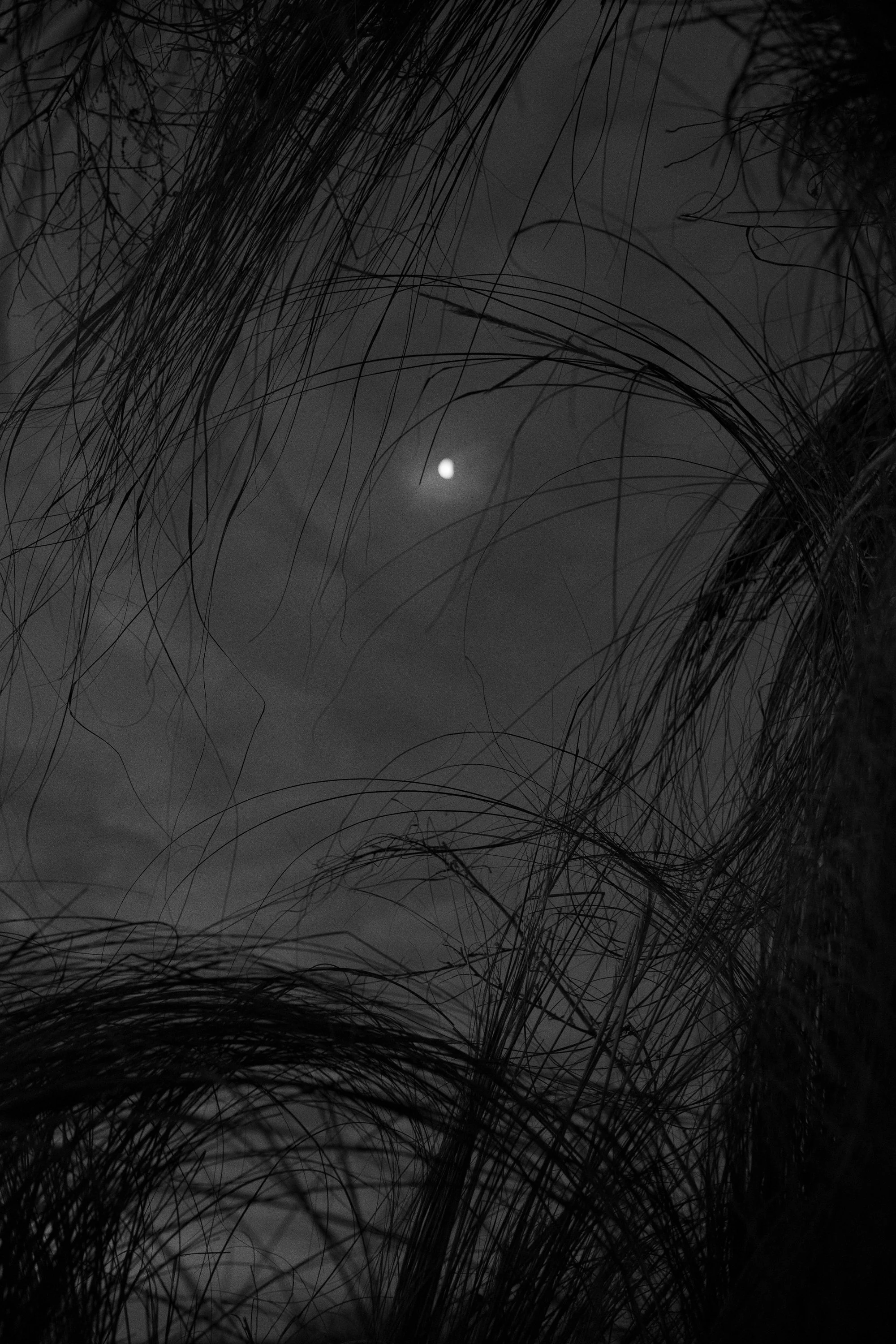
Duck Hunting in Nebraska: A Morning with Twin Branch Hunt Co.
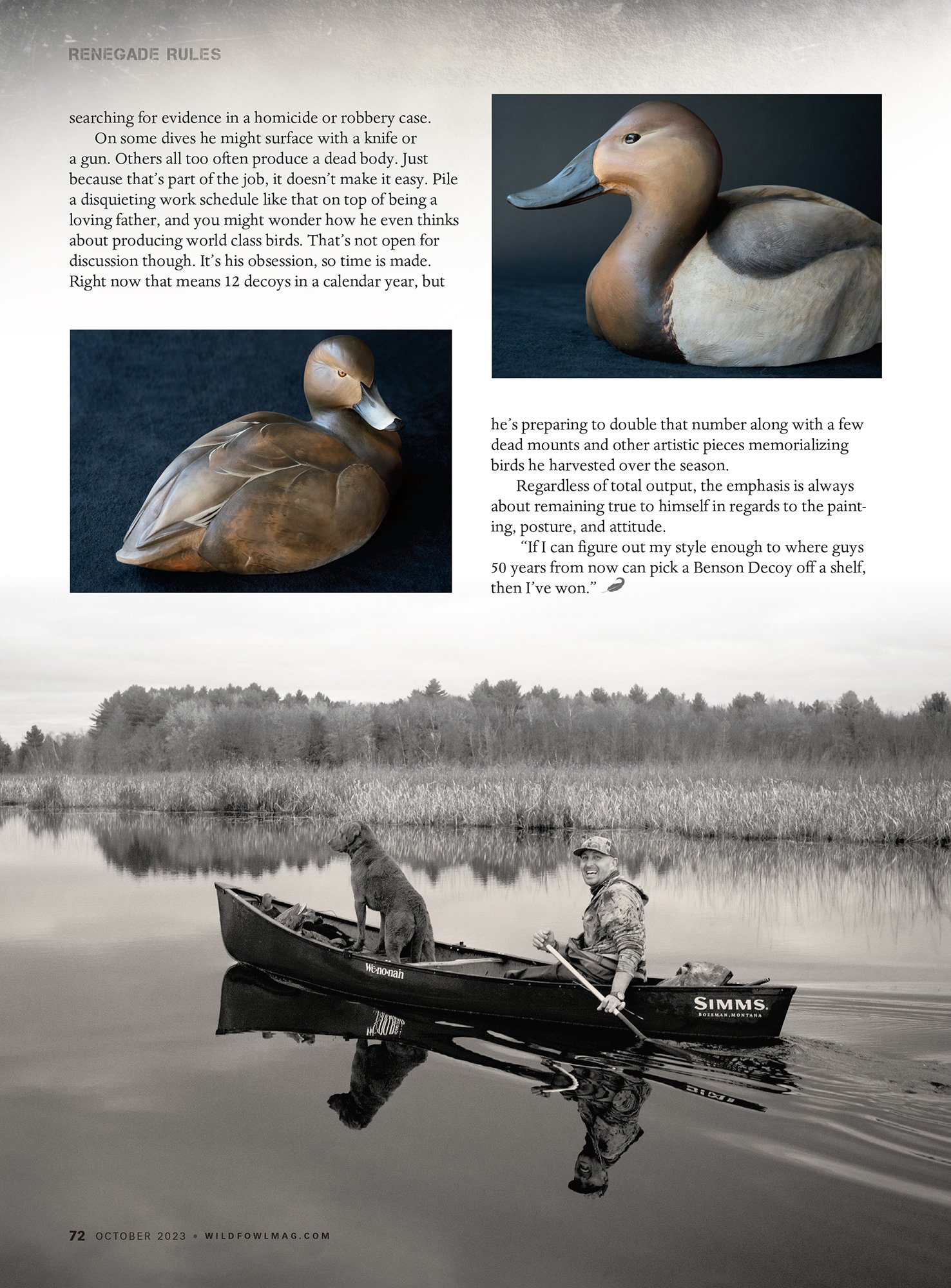
There’s a point in the morning where everything goes quiet in a way that only happens in a duck blind.
Not silent—just still. The kind of stillness where you can hear wings somewhere out in the dark, but you can’t see a thing yet. Breath hangs in the air. Hands are cold before the sun even thinks about coming up. Nobody’s talking much. You’re just waiting, anxiously.
That’s how the morning started in west-central Nebraska with Twin Branch Hunt Co.—no rush, no staging, just getting into the marsh and letting it unfold the way it always does.
**These photographs were not made for a client. Just for fun on a personal hunting trip.
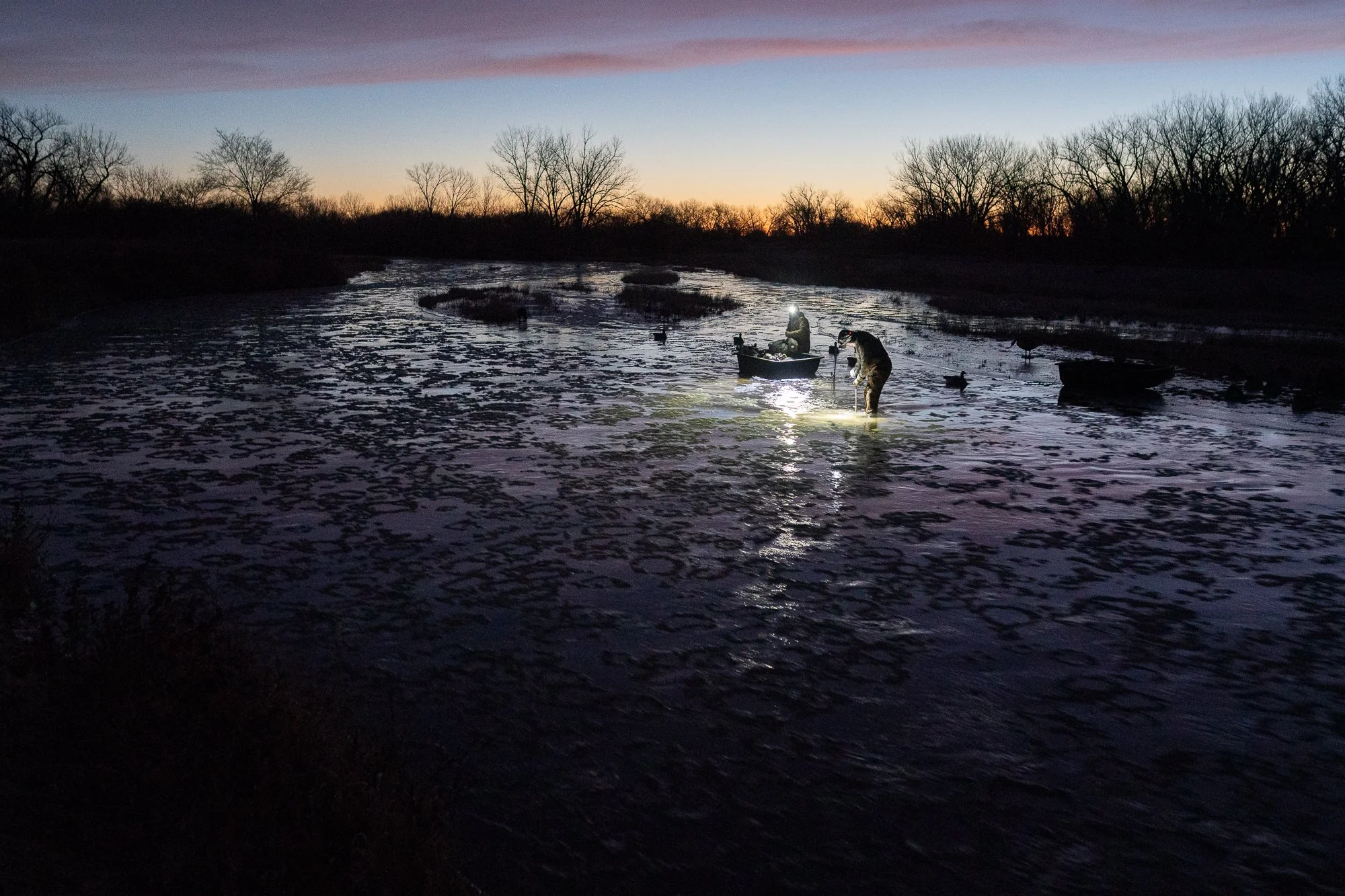
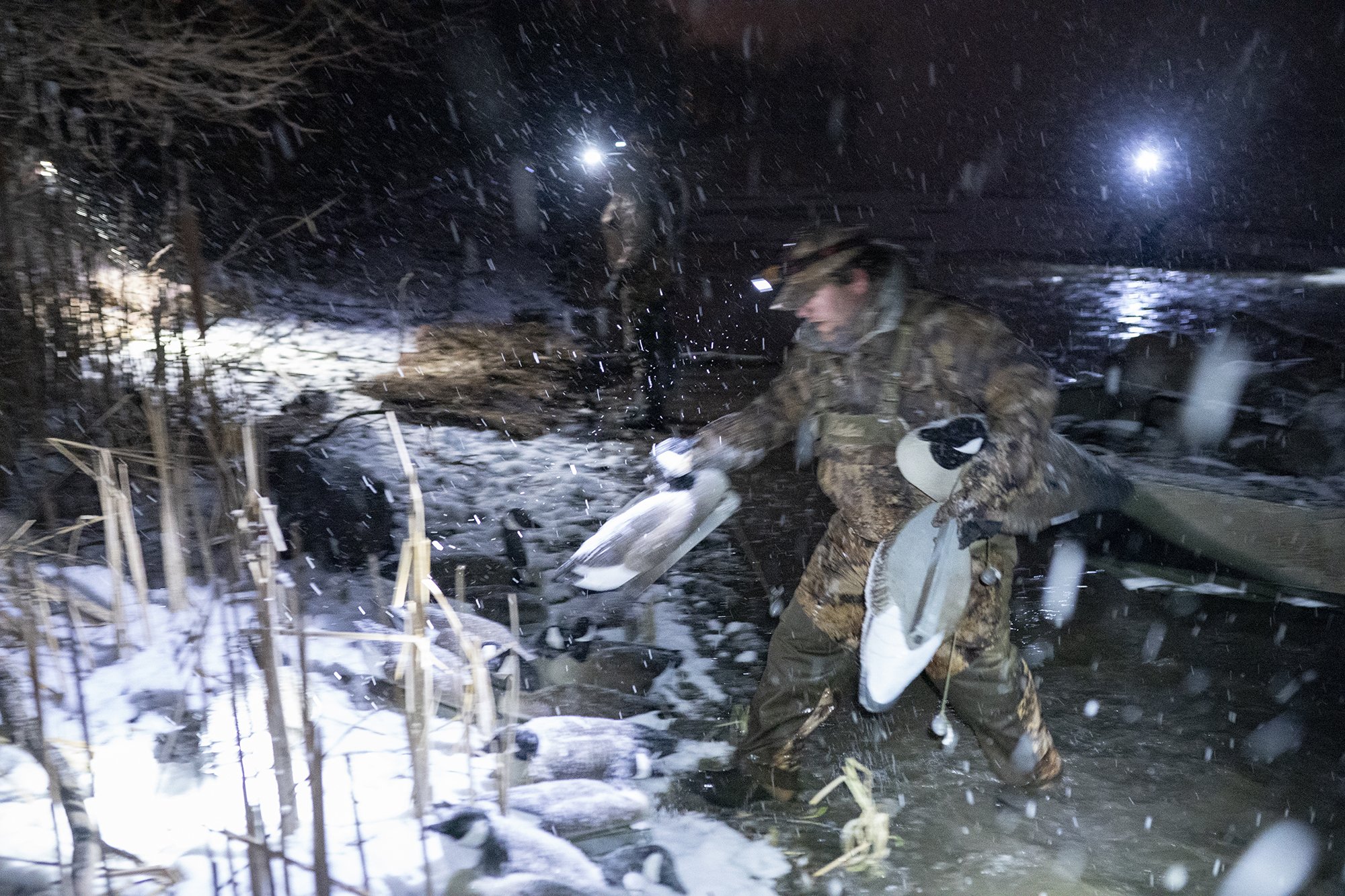
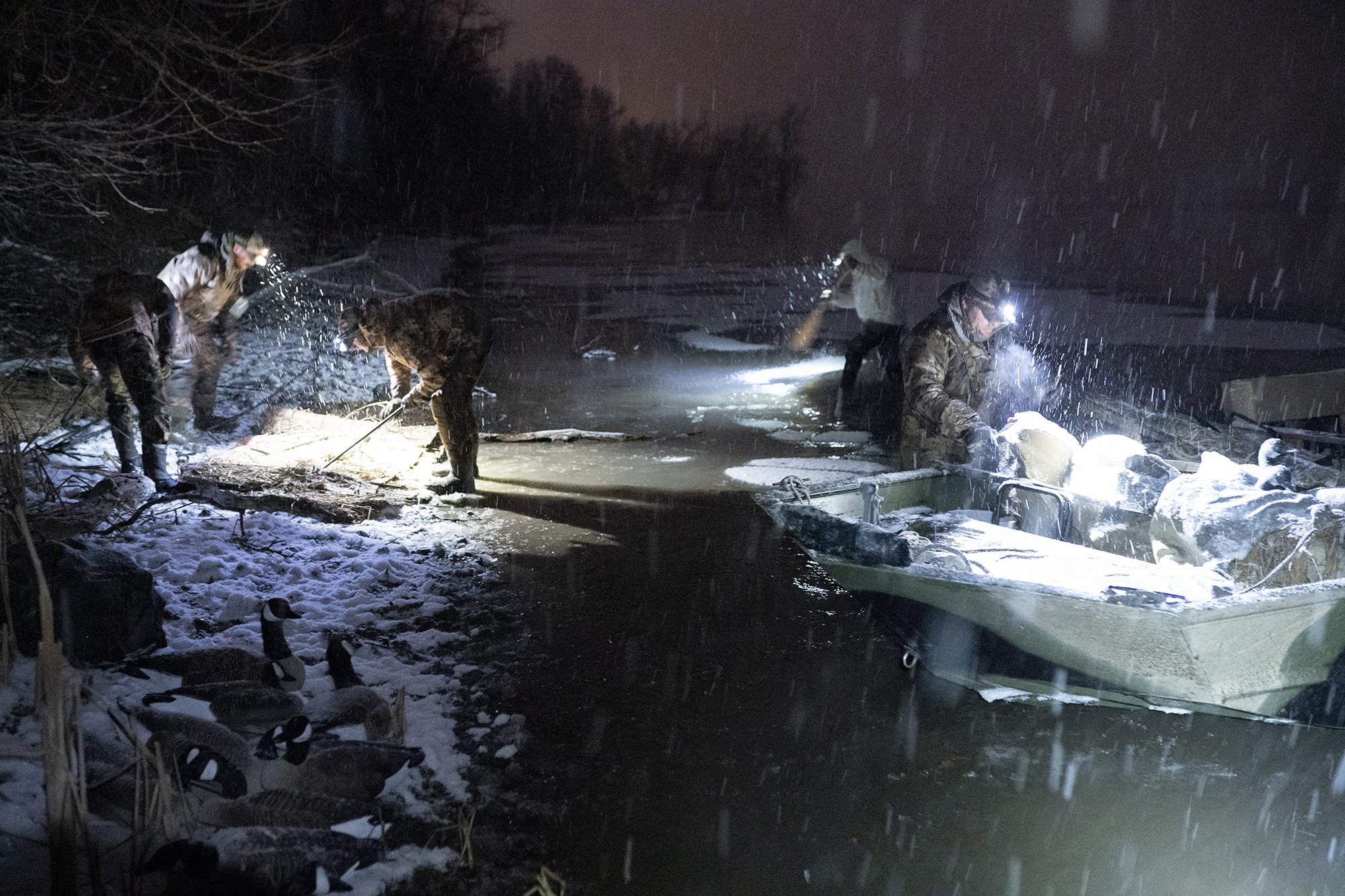
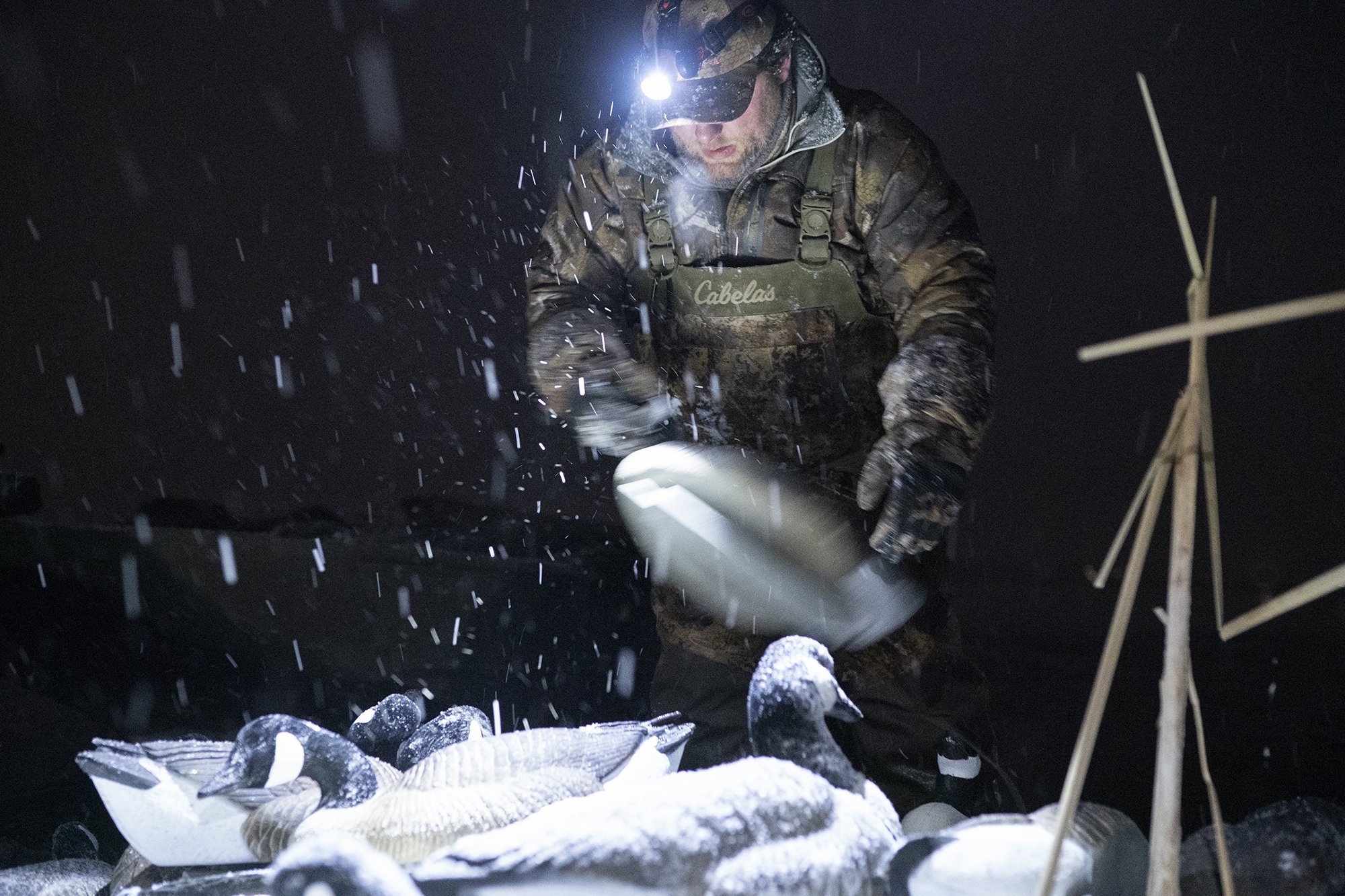
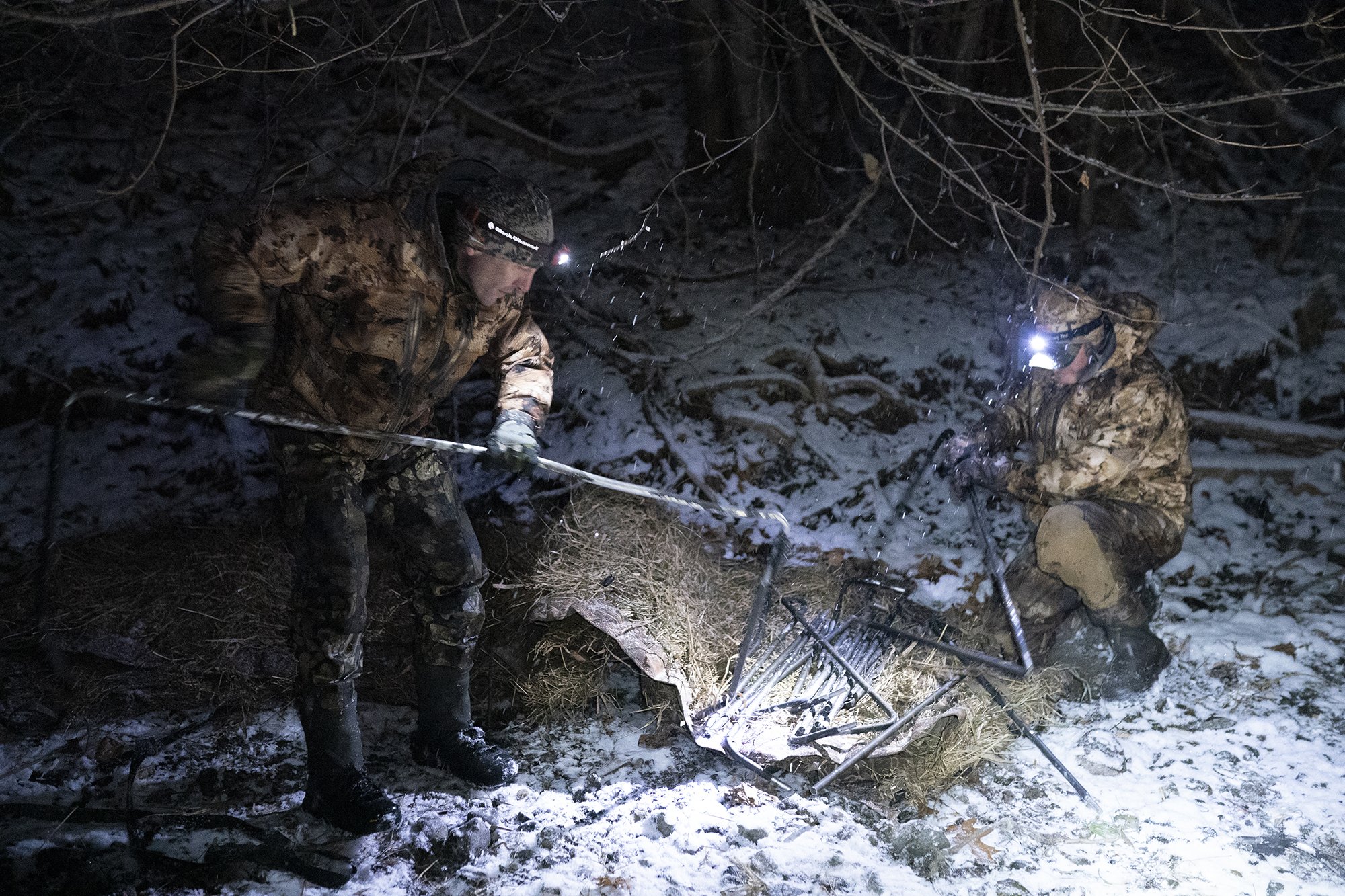
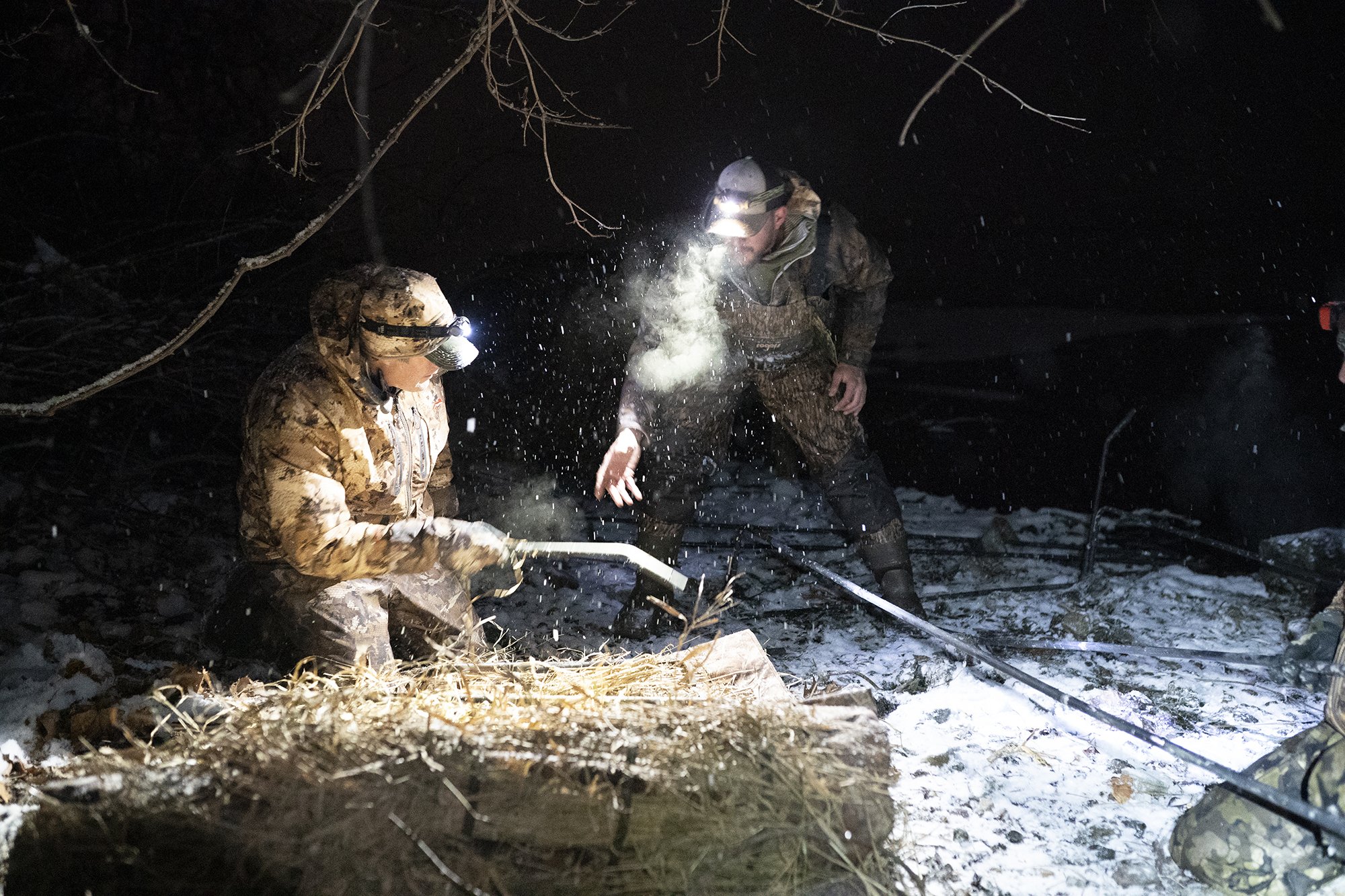
Before sunrise, guides set decoys on the North Platte River.
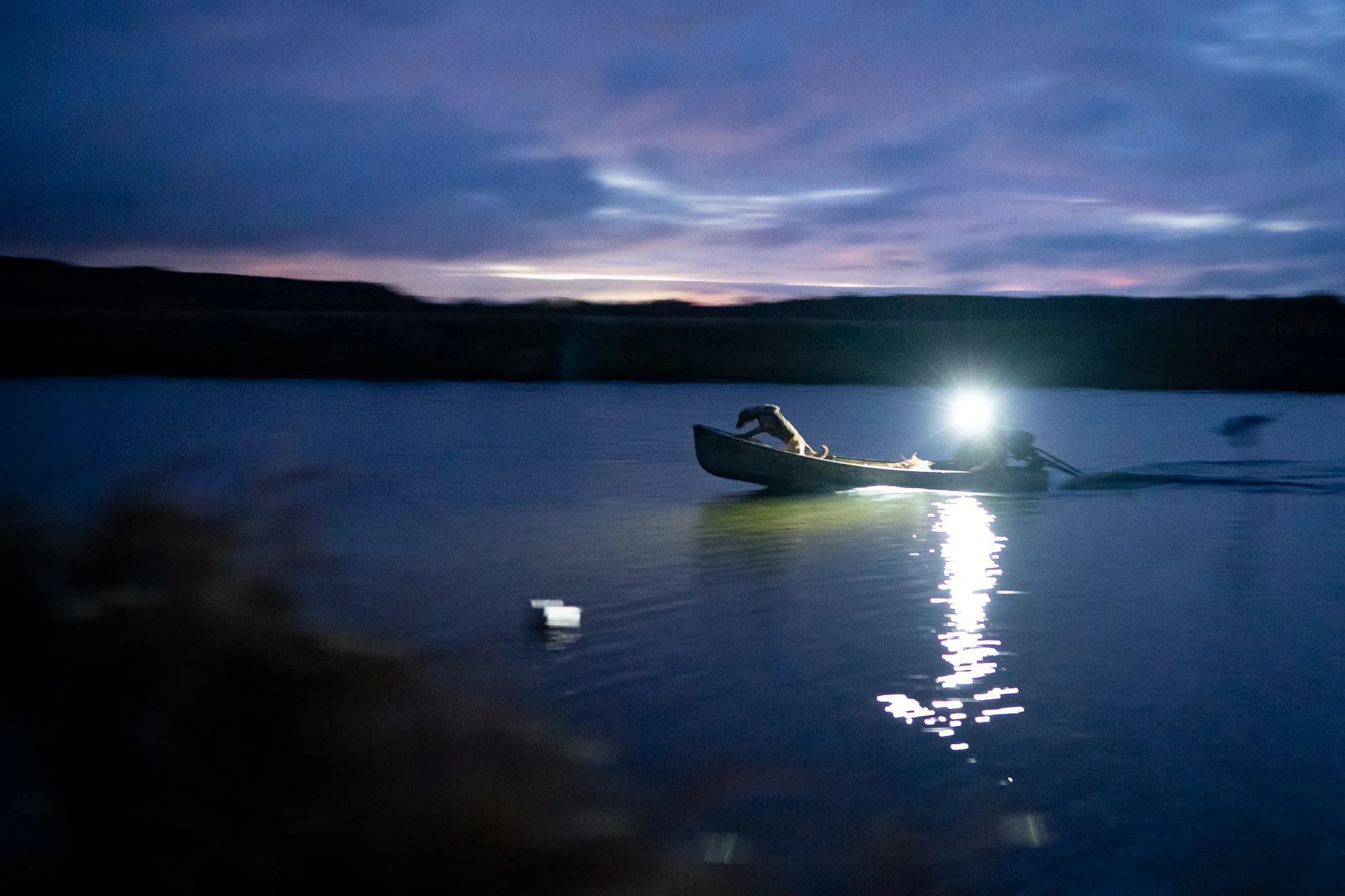
Before First Light in the Nebraska Marsh
The work starts in the dark.
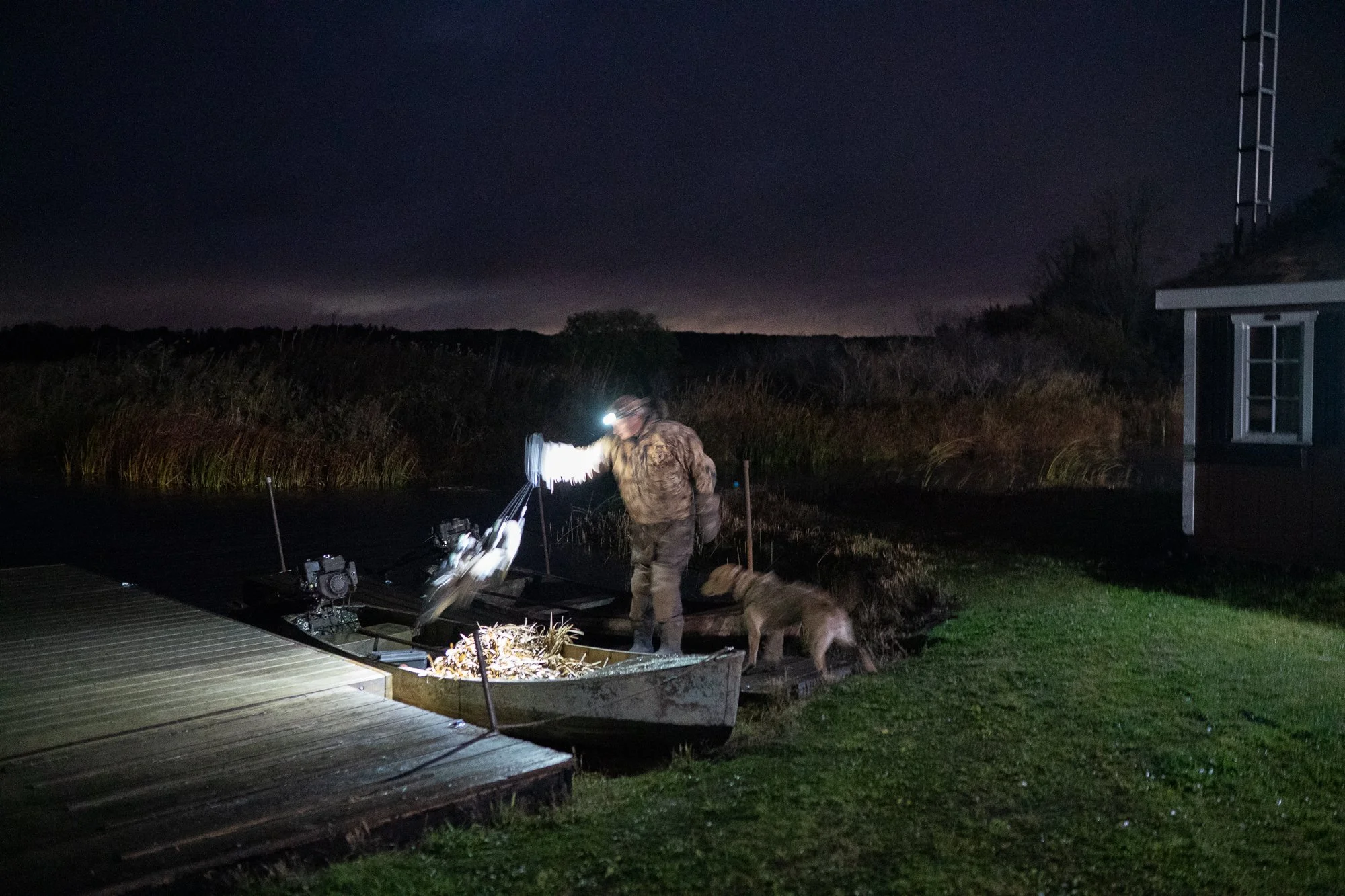
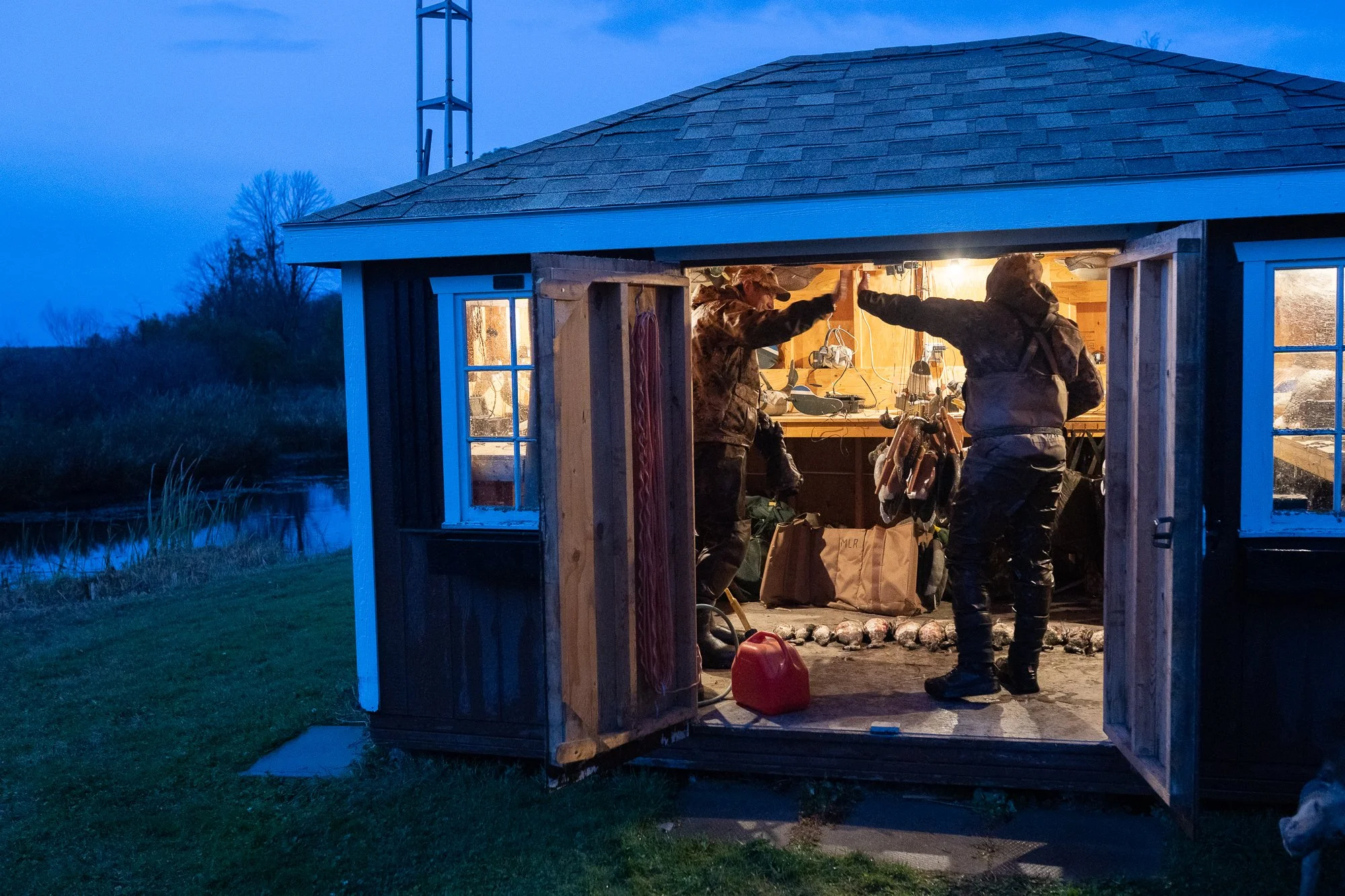
Waders on. Headlamps cutting through just enough to see where you’re stepping. The ground isn’t solid—it gives a little with every step, a mix of sand, water, and whatever’s underneath. You don’t really think about it. You just keep moving.
Decoys go out quietly. No wasted movement. Everyone knows what they’re doing.
Somewhere out there, you start to hear birds. Not close, but not far either. Enough to remind you why you’re standing in freezing water before sunrise.
Then it’s back to waiting.
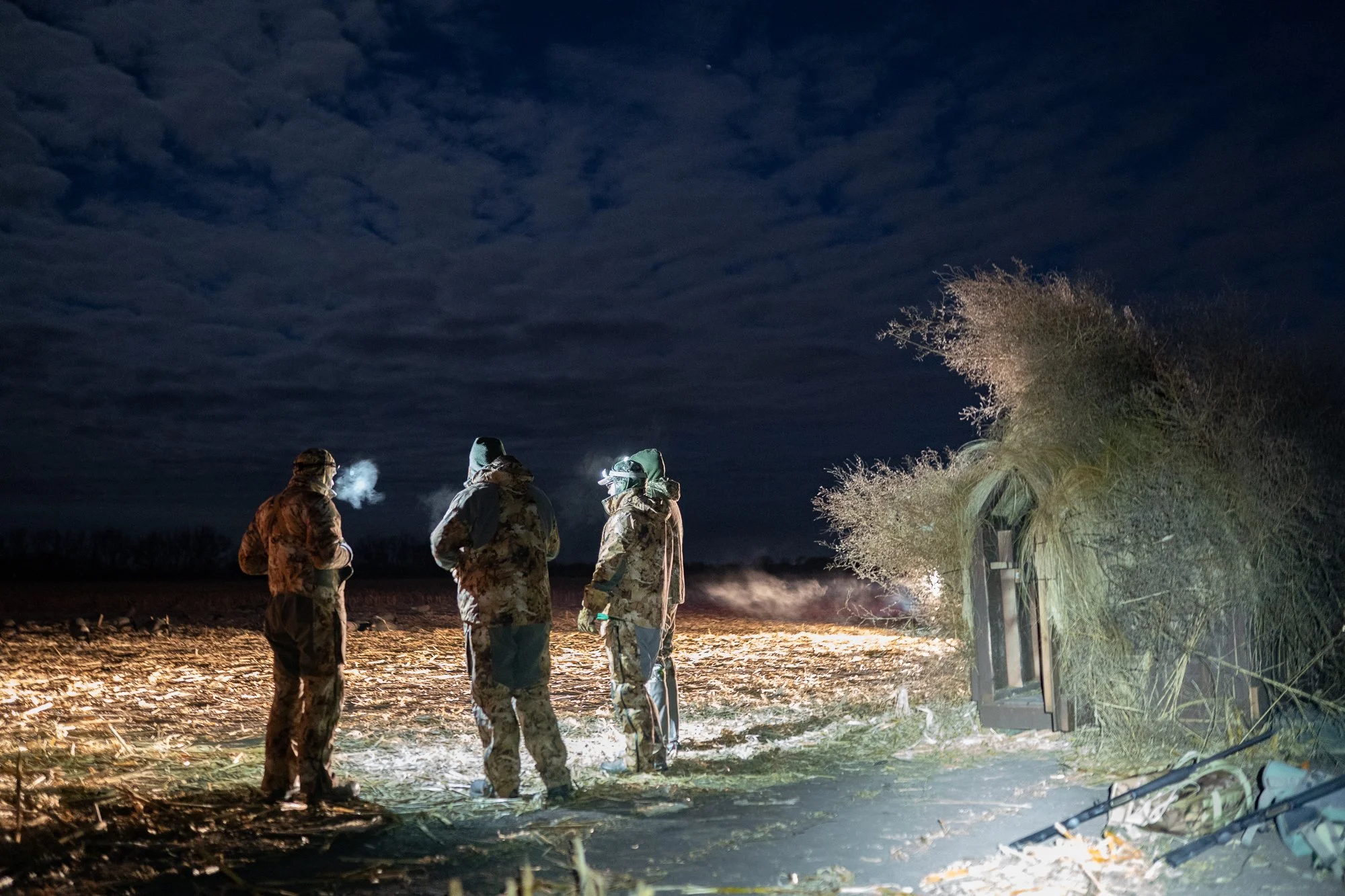
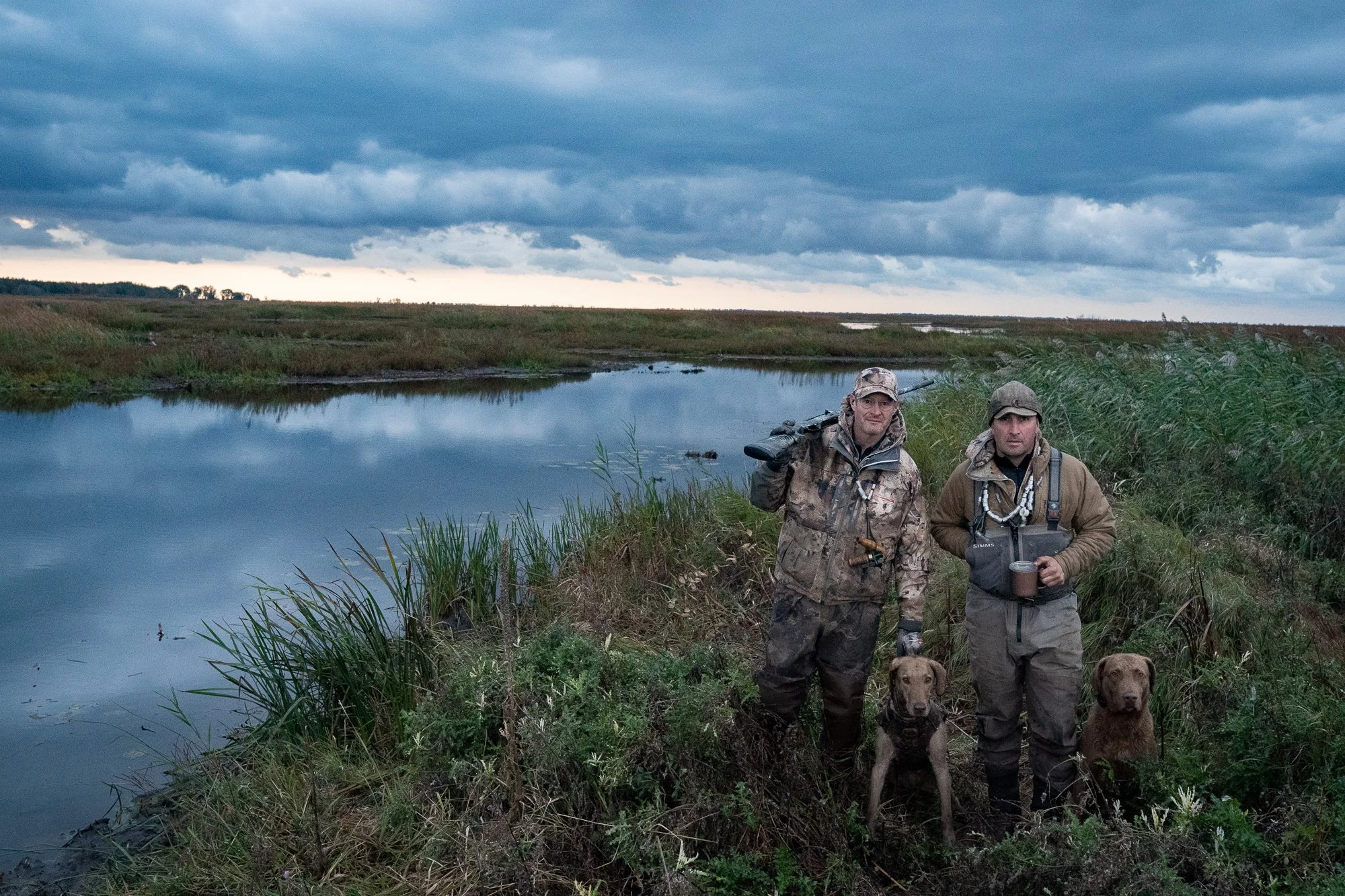
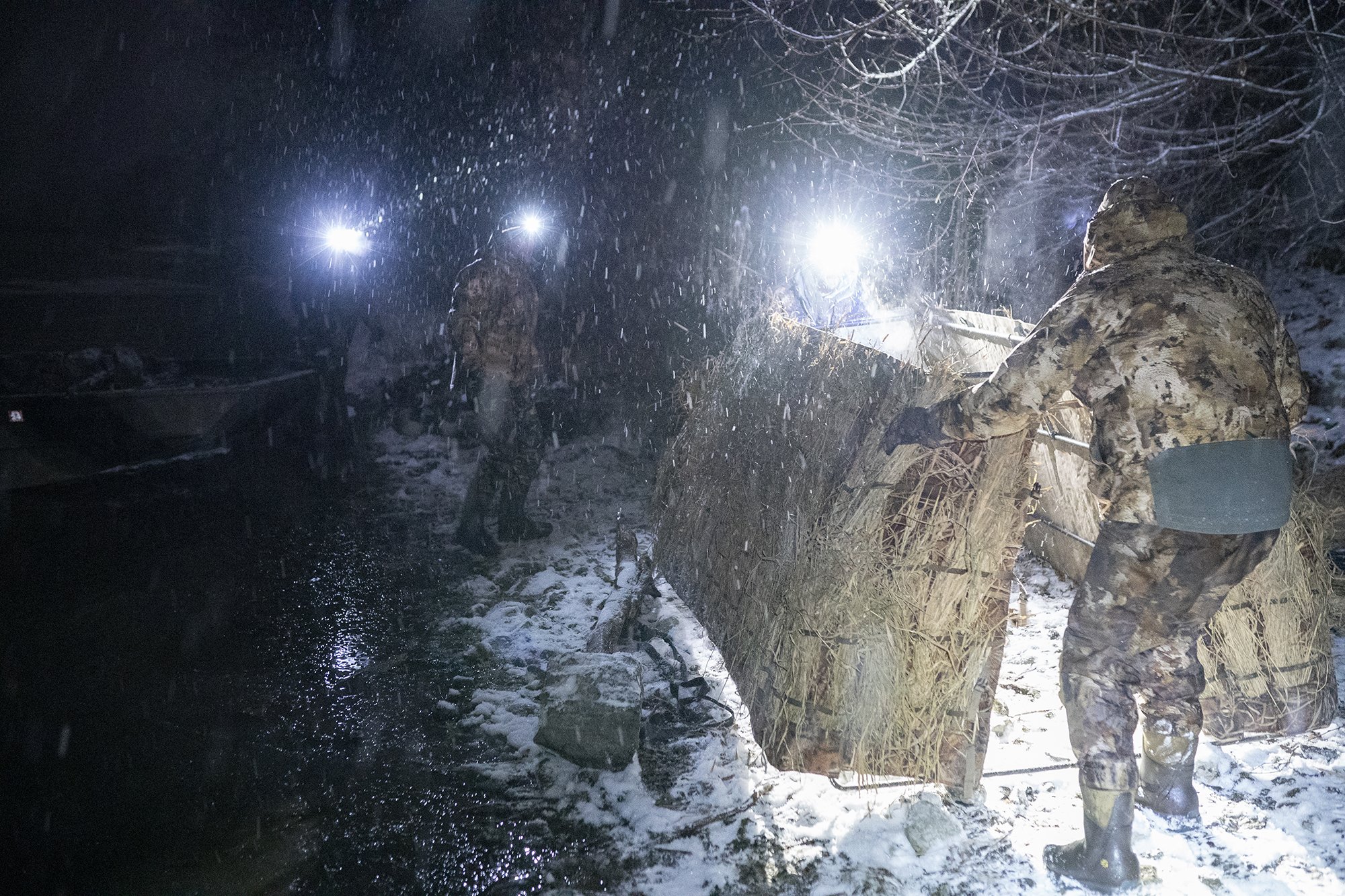
Hunters gather beside a grass-covered blind in frozen morning darkness before the first flights begin.
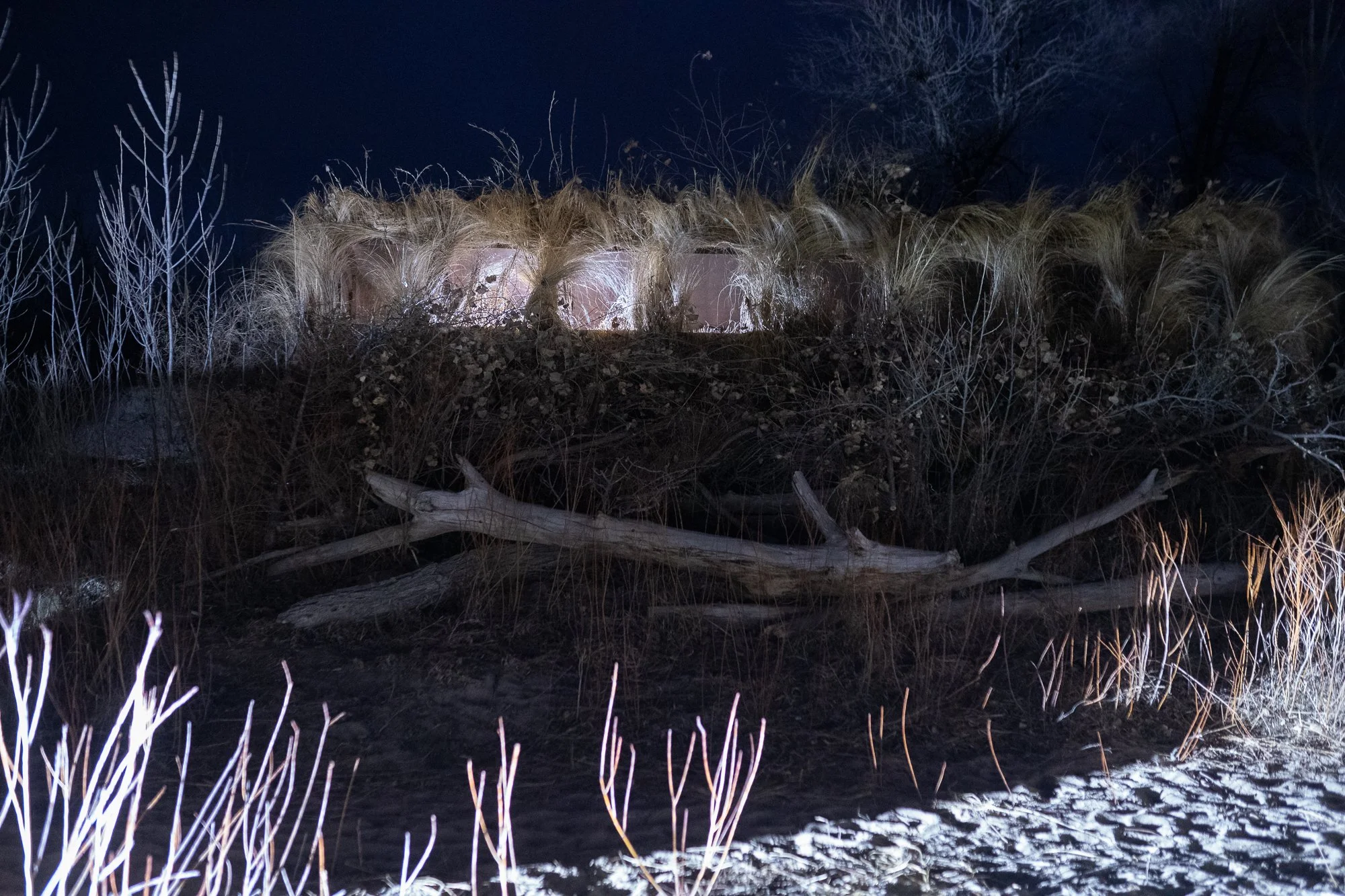
A concealed duck blind waits along the riverbank before first light.
Waiting on Birds
This is the part most people don’t see.
There’s a lot of time between moments. Long stretches where nothing happens. You sit, watch, adjust your gloves, sip coffee if you brought it. Eyes feverishly scanning the sky even when there’s nothing to see yet.
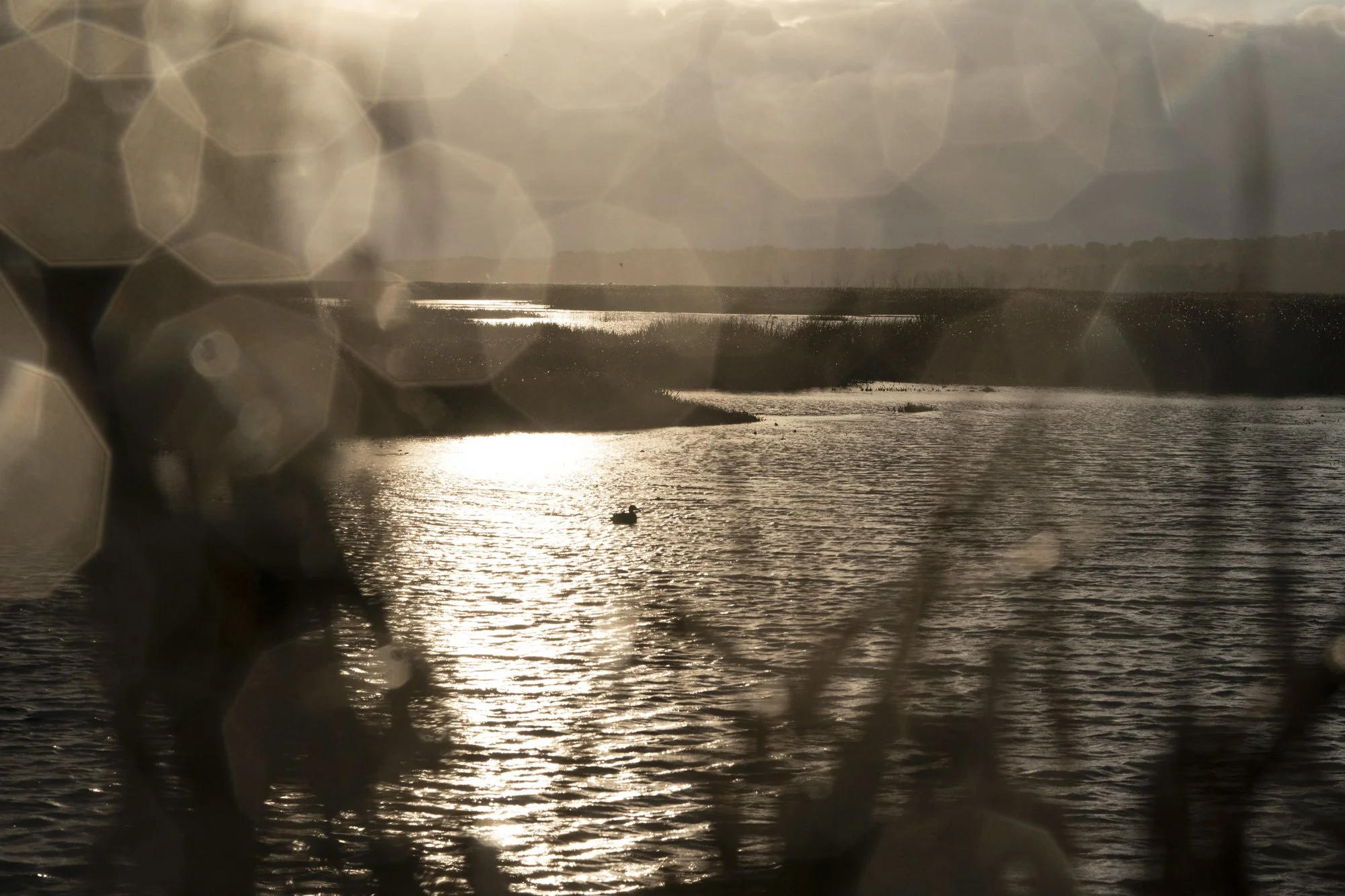
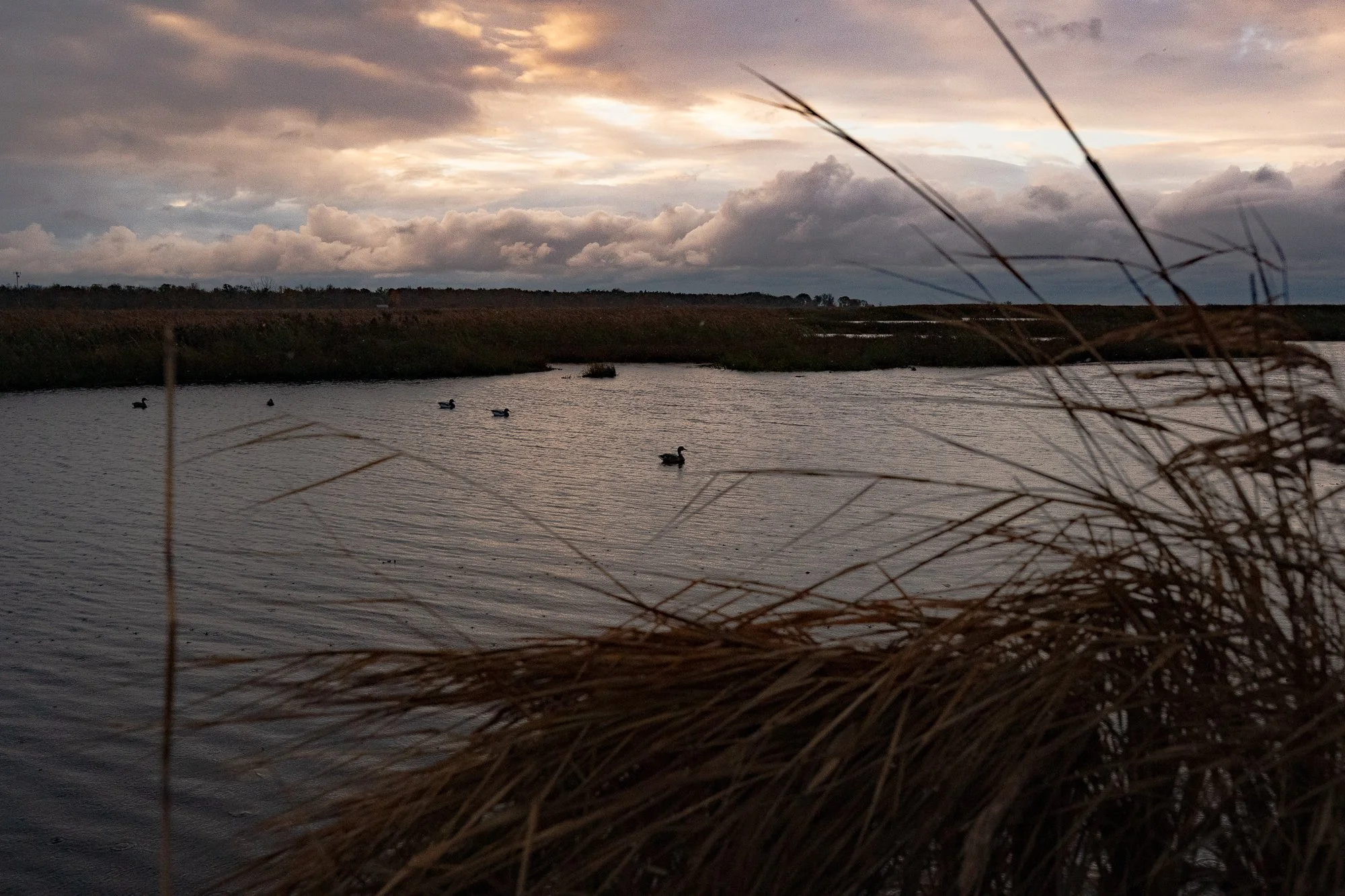
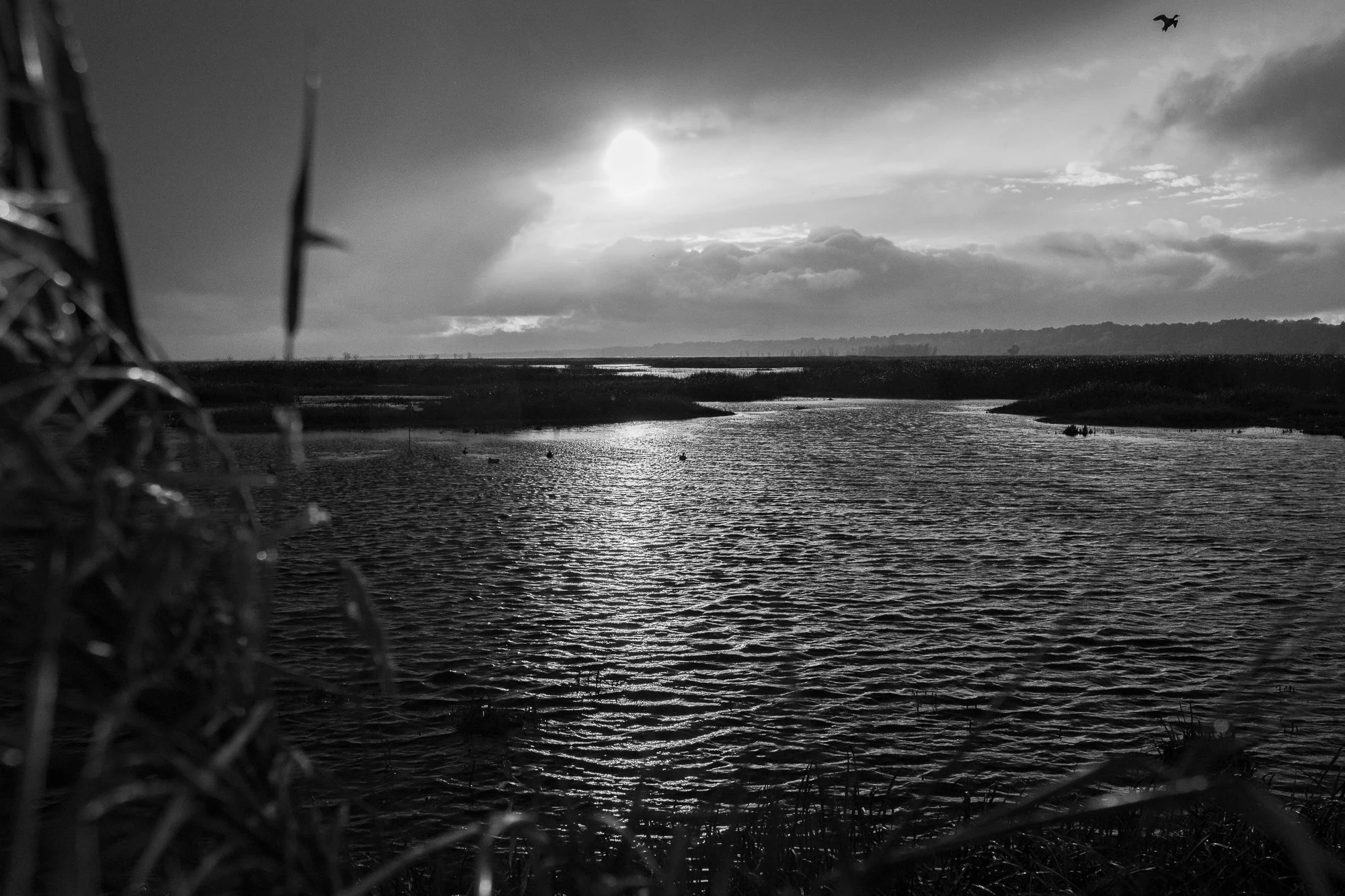
As the light comes up, the landscape starts to take shape. What was just darkness turns into texture—water, grass, pockets of open space where birds might drop in.
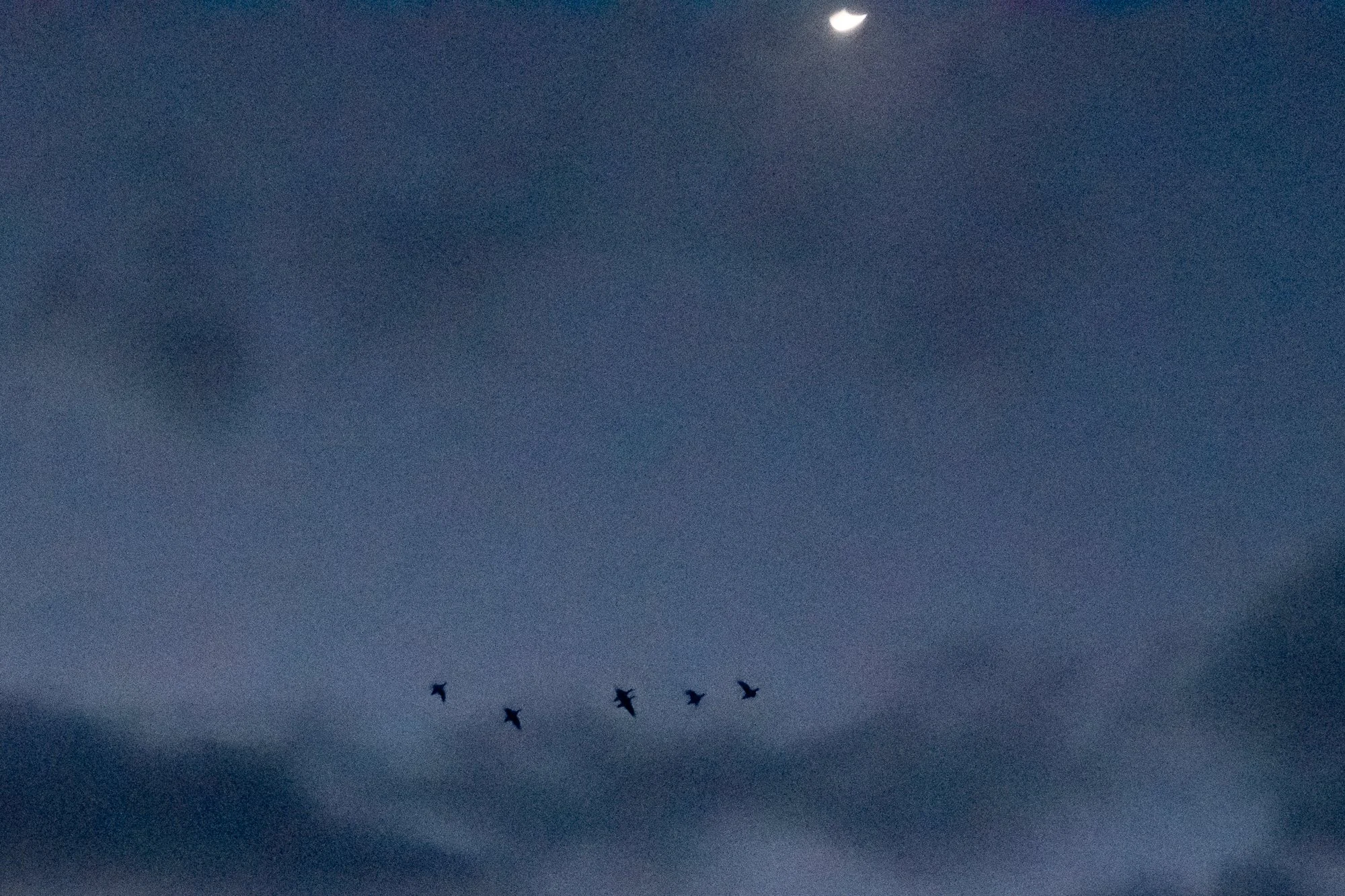
You hear wings before you see them. A quick call. Heads turn. Then nothing. False alarm.
And then it goes quiet again.
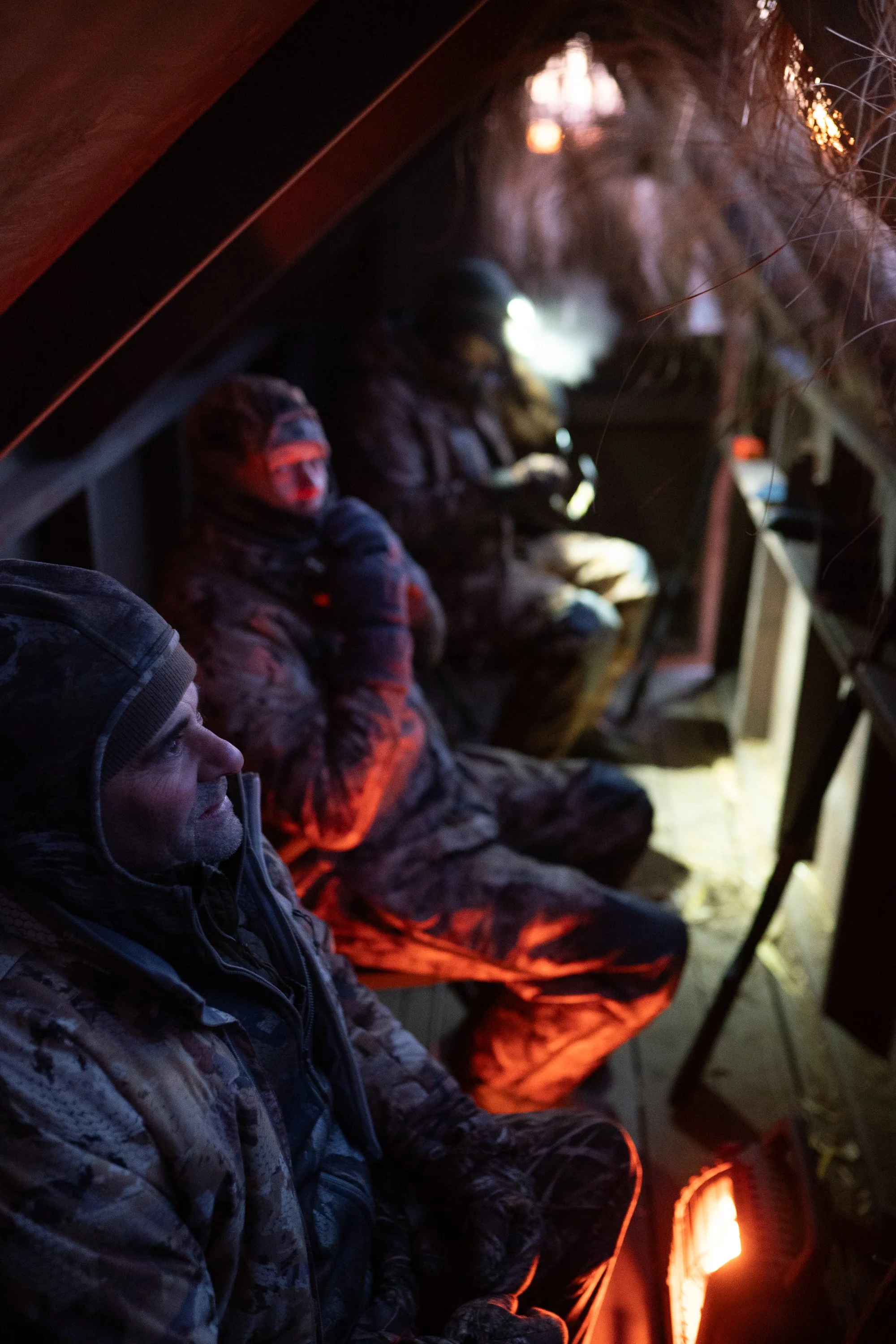
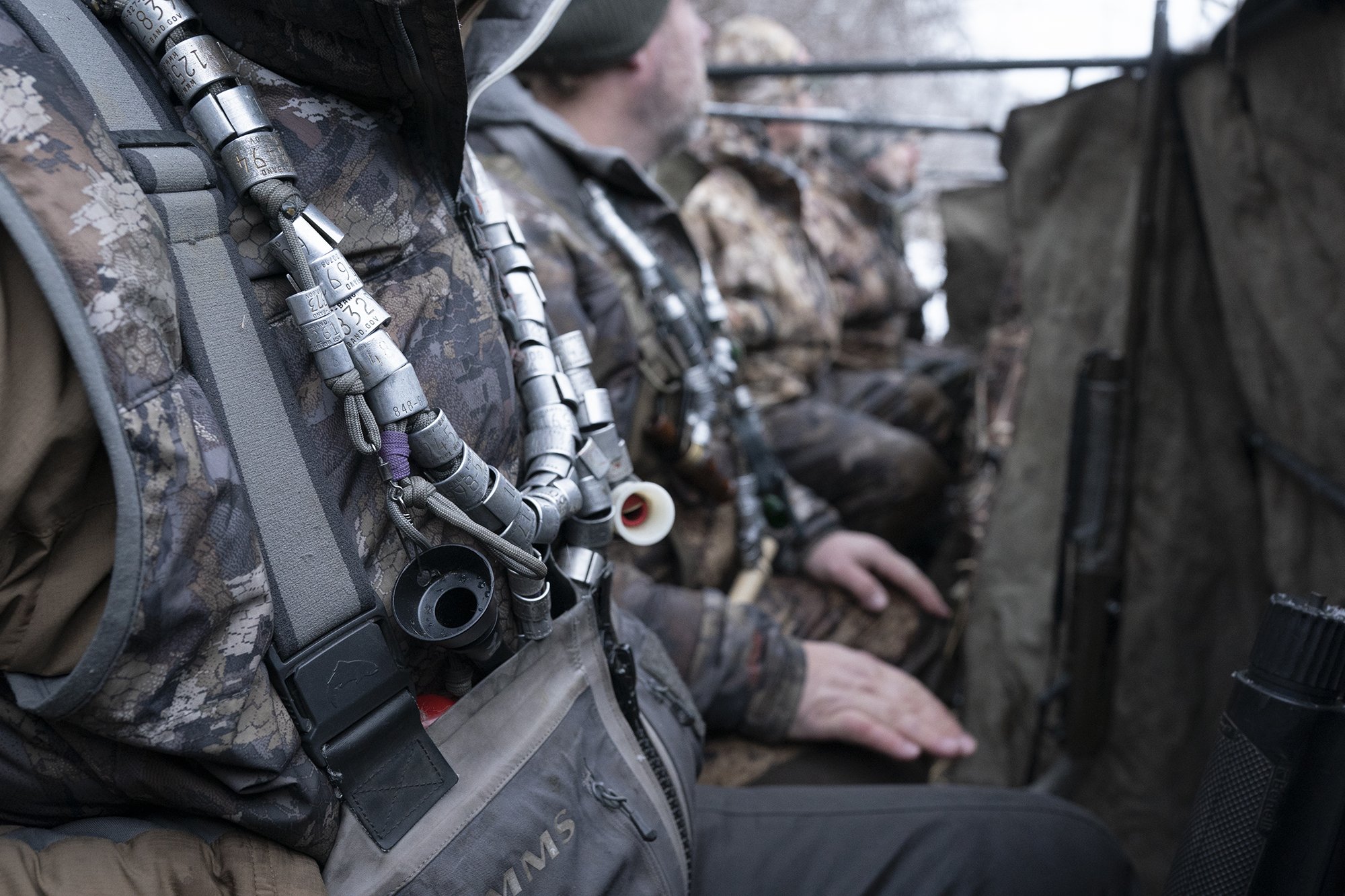
Inside the blind, hunters wait through the cold stillness before first light breaks over the Nebraska marsh.
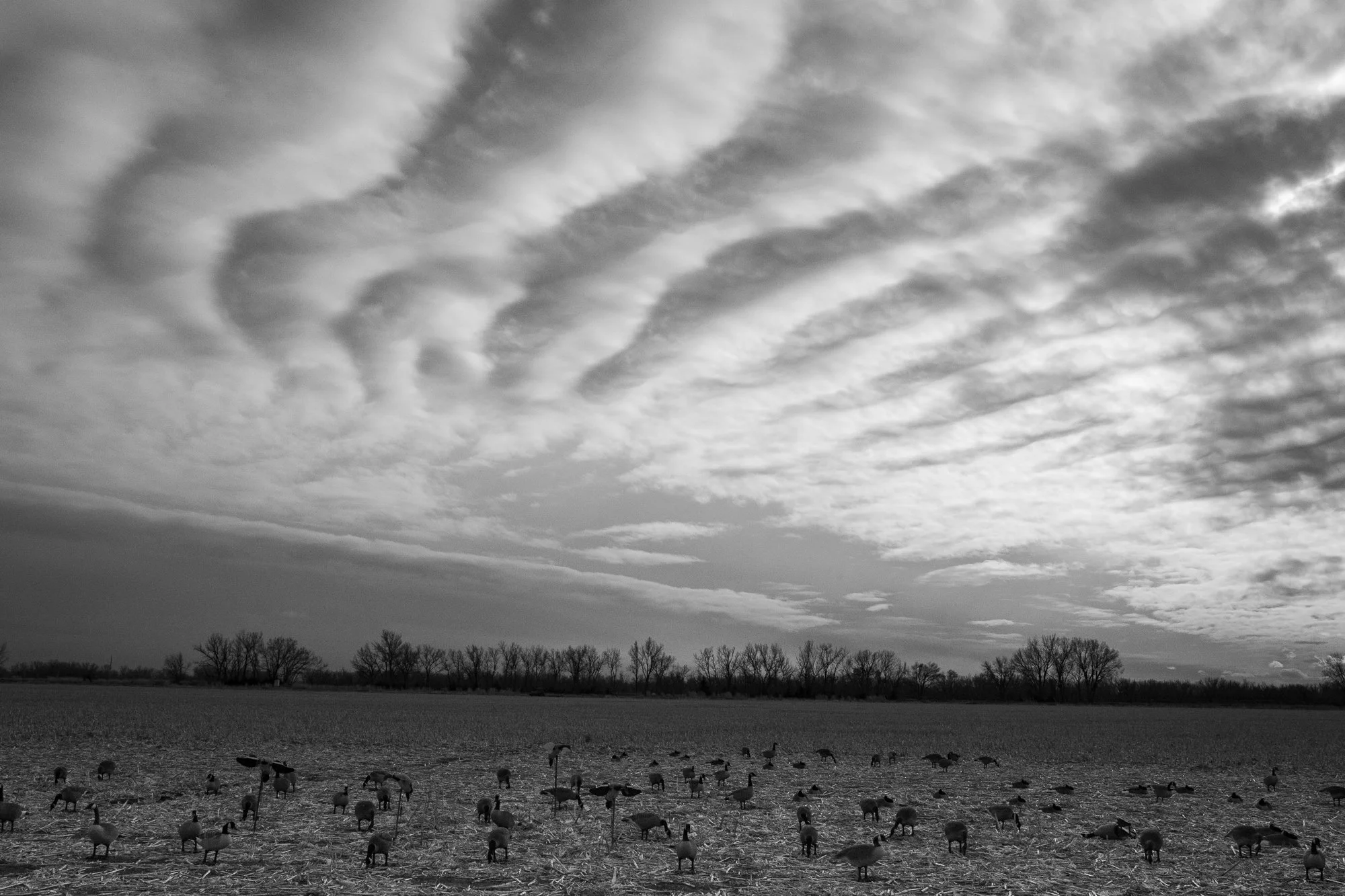
Goose decoys fill the field under dramatic cloud formations in Nebraska
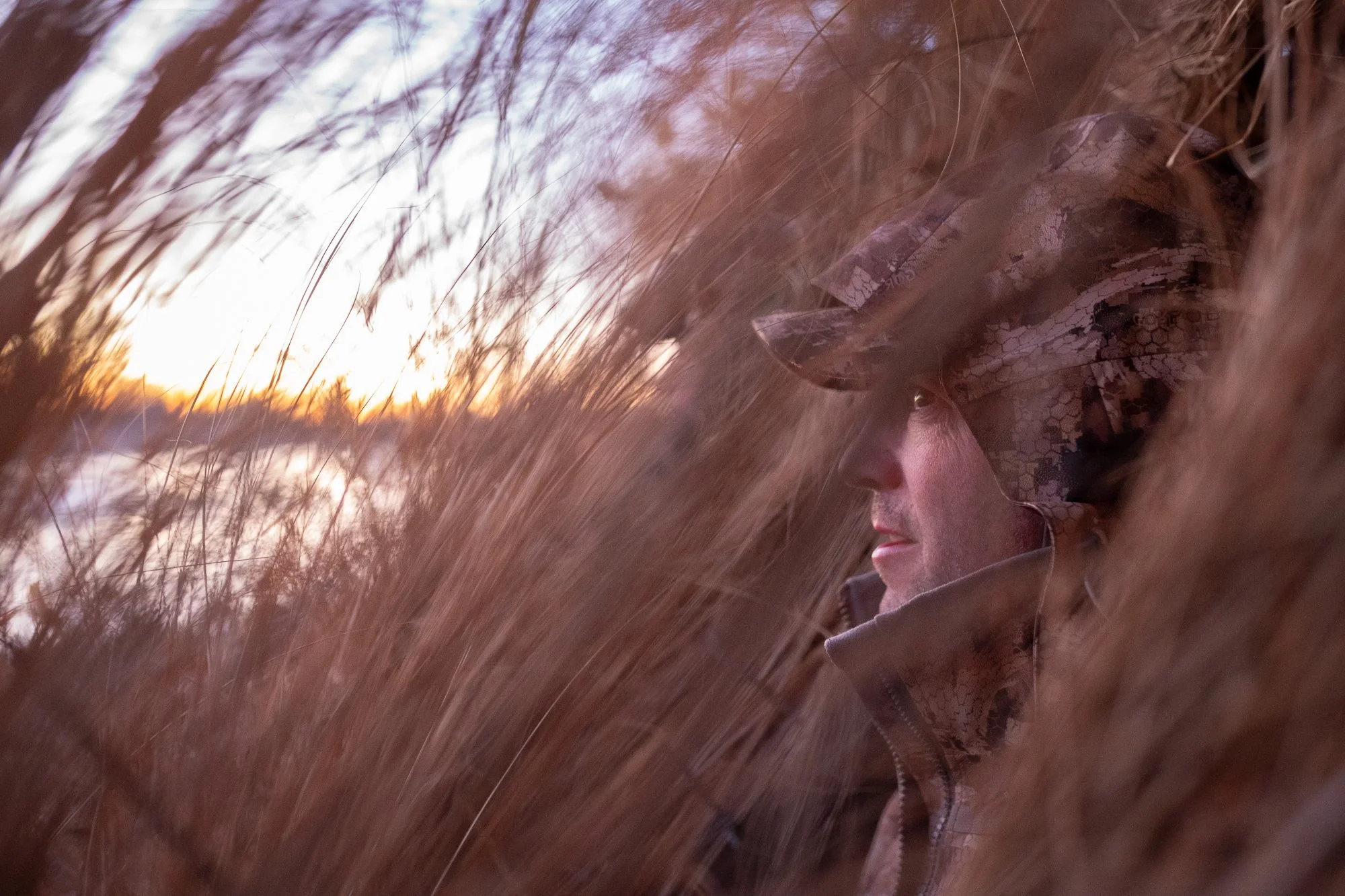
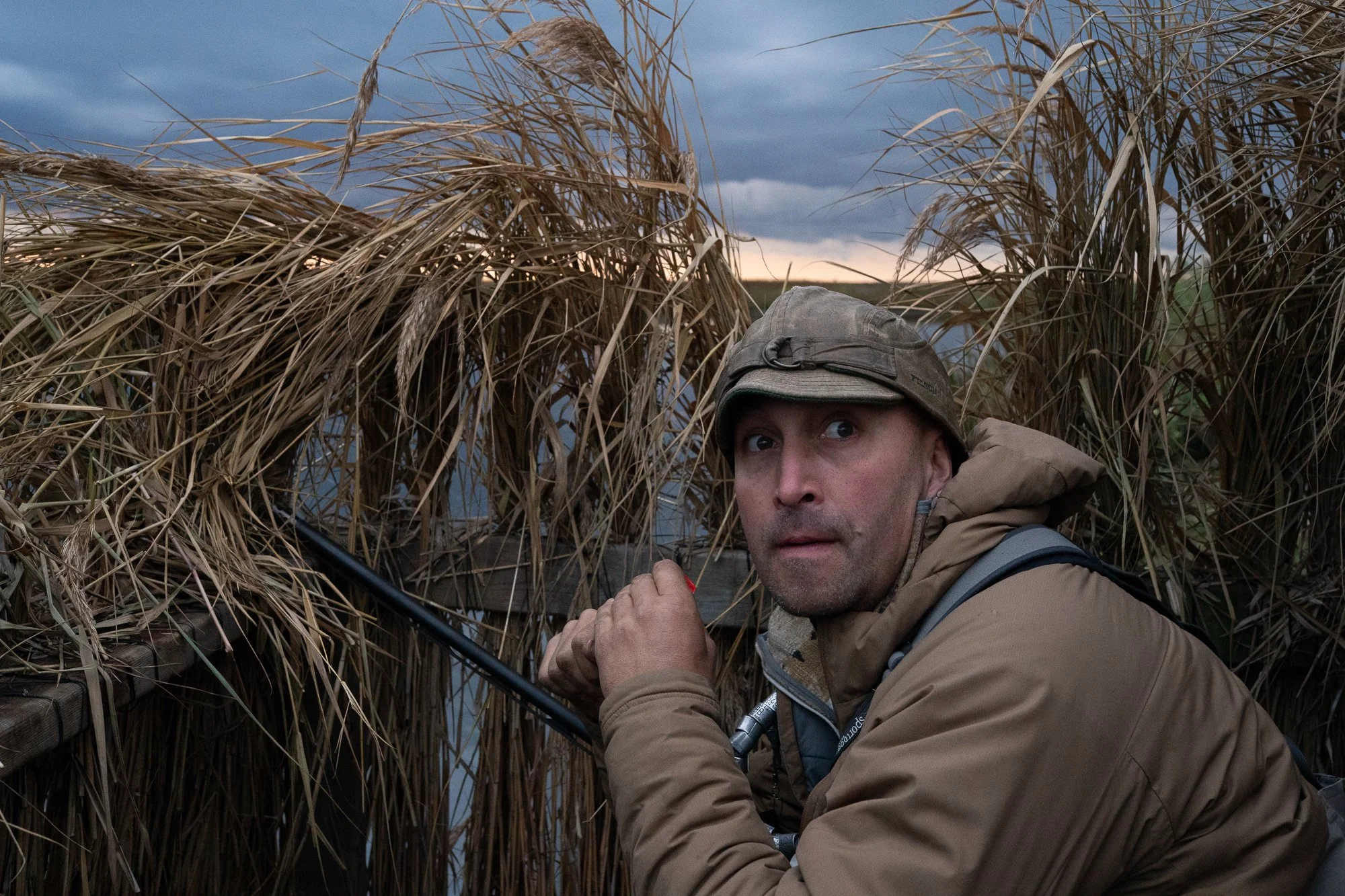
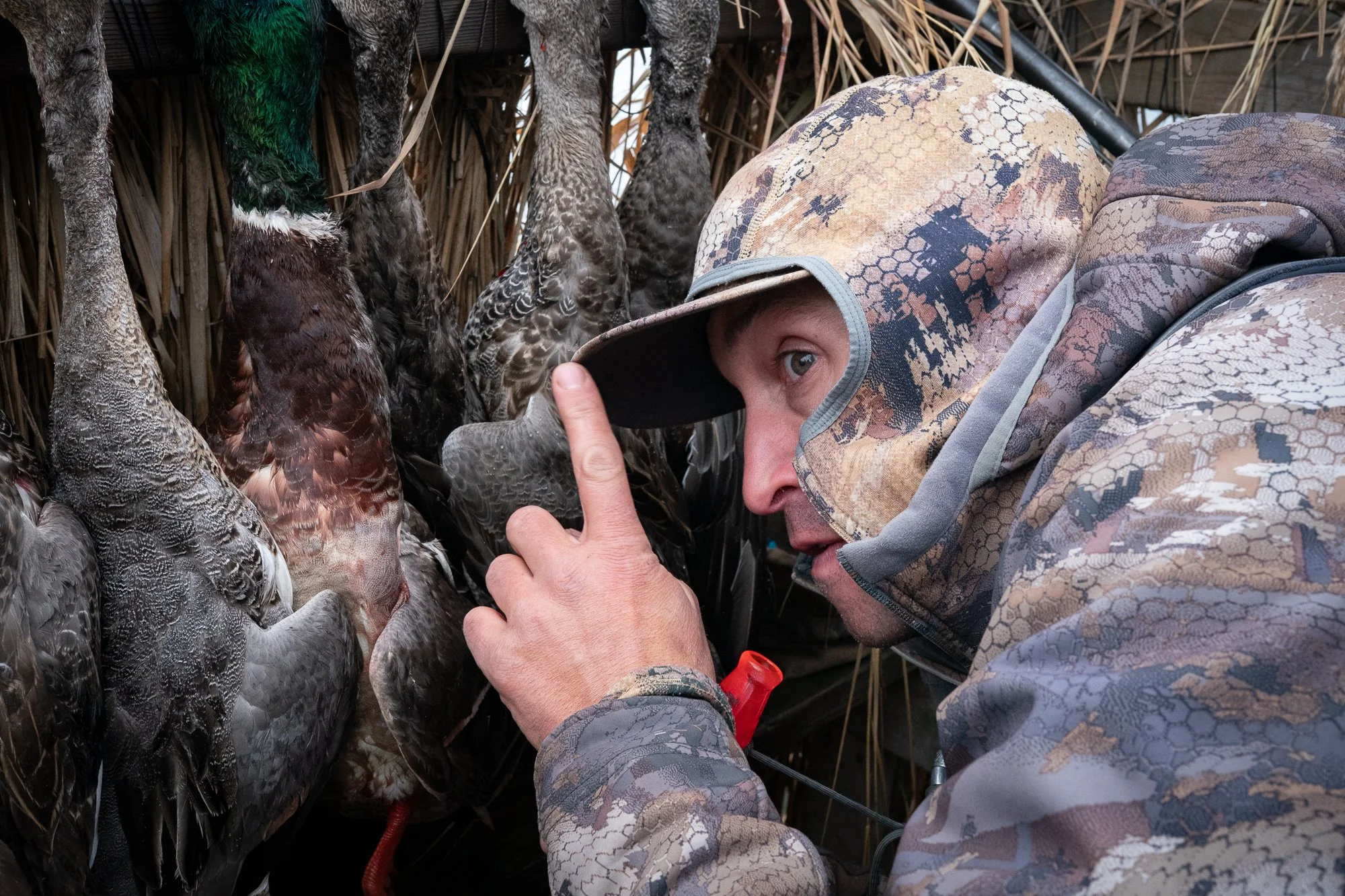
Inside the blind, a hunter checks the view through the grass cover.
When It Happens
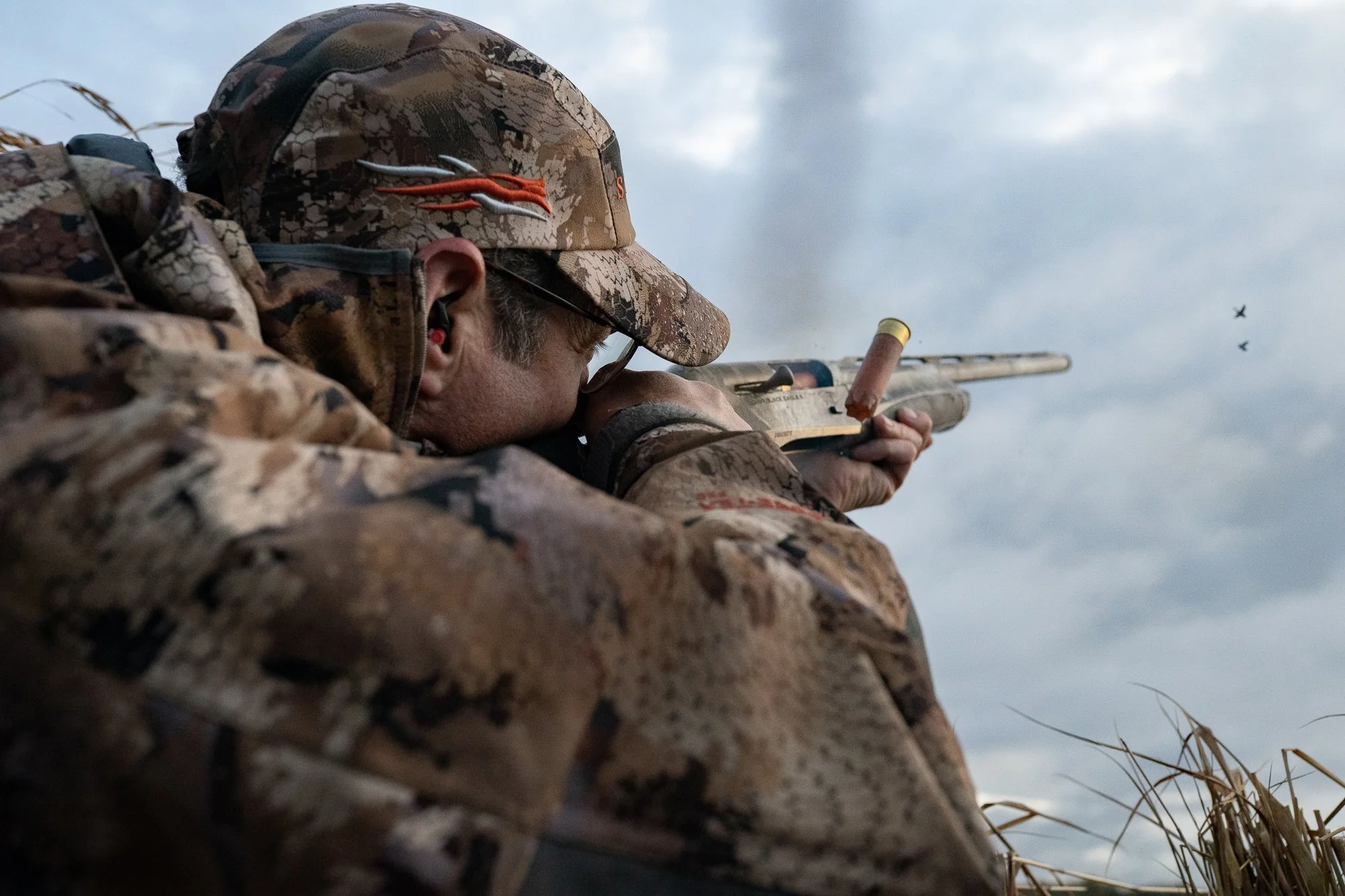
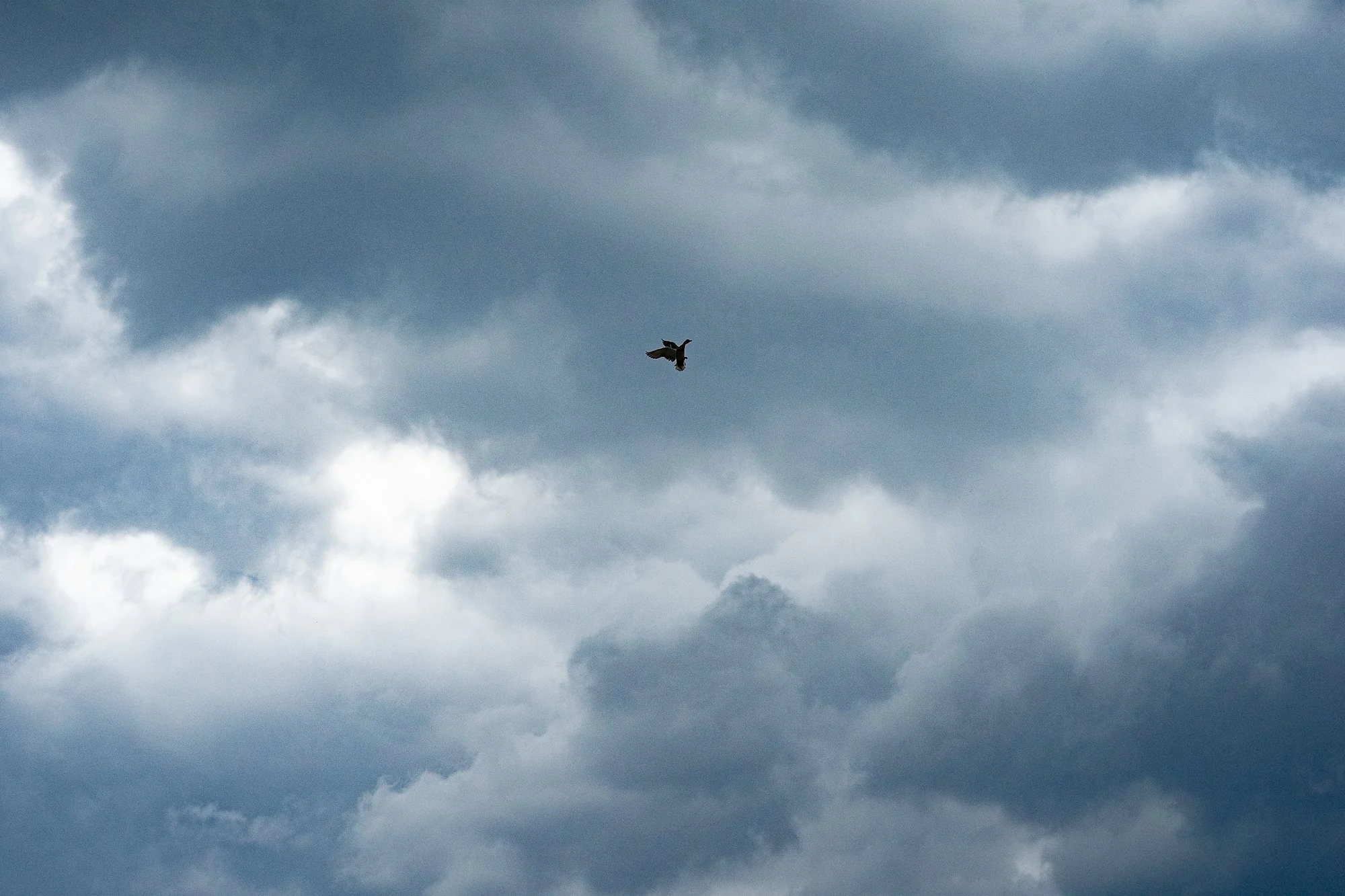
When birds finally commit, it doesn’t build slowly—it just happens.
One second you’re staring at empty sky, the next there’s movement, sound, energy. Calls get sharper. Everyone’s locked in. The stillness disappears and gets replaced with a kind of controlled chaos that might only lasts a few seconds, or the birds need a bit more convincing so the drama could last 5 minutes while they circle, then the decoy!!
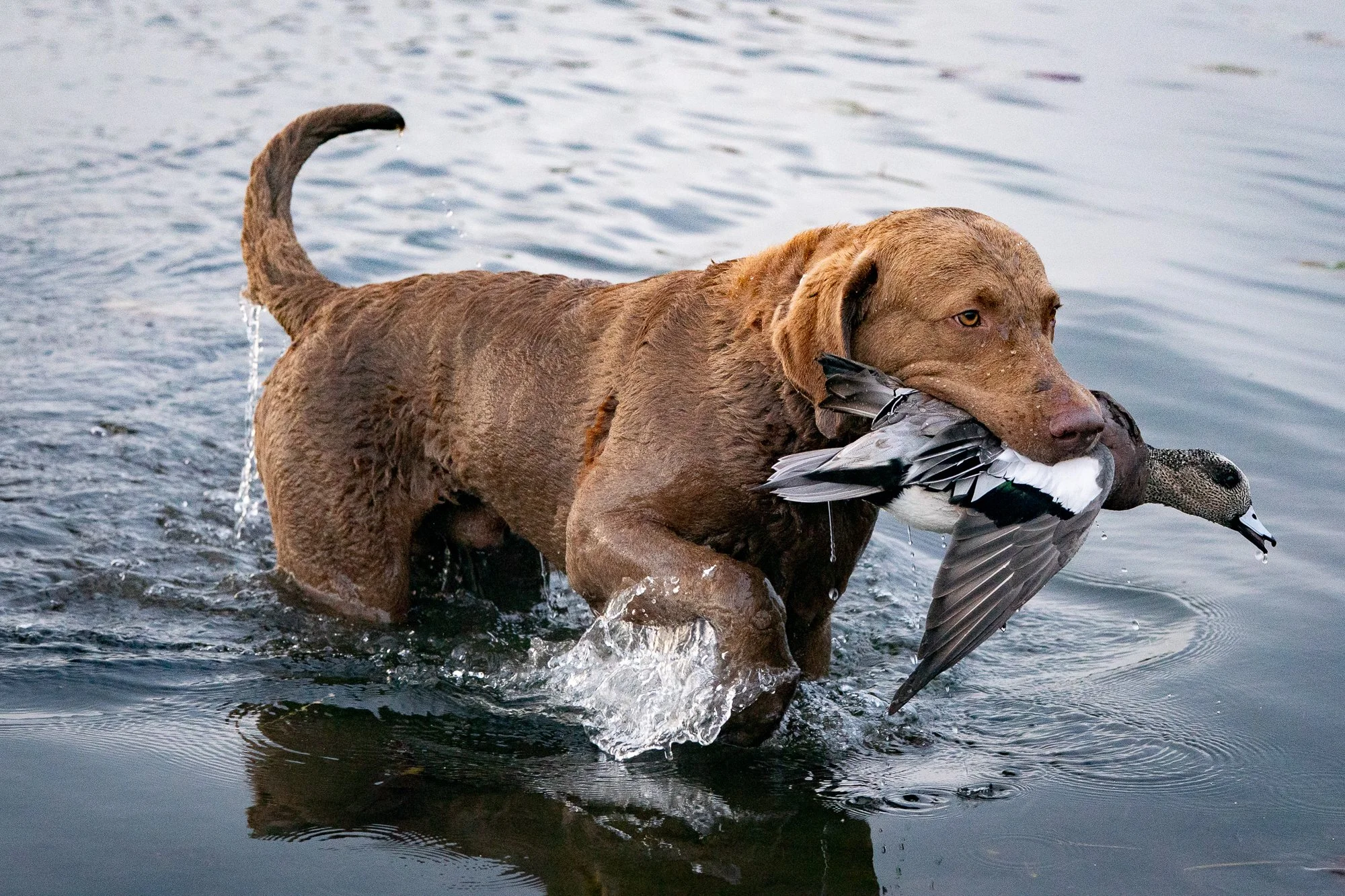
You celebrate then reset. Pick up birds. Straighten things out. And then you’re right back to waiting like it never happened.
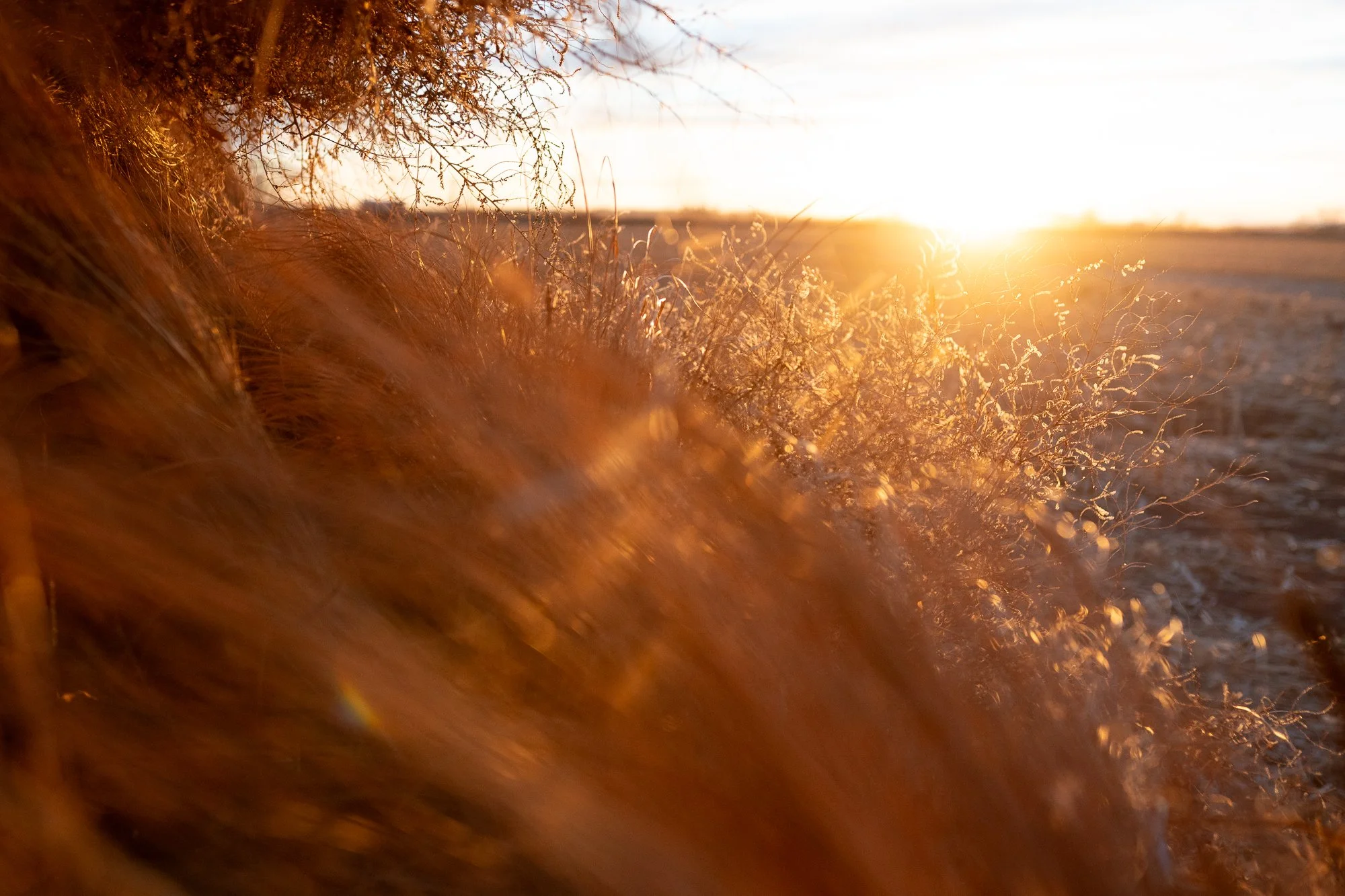
First lights puts a golden glow on the brush covering the duck blind
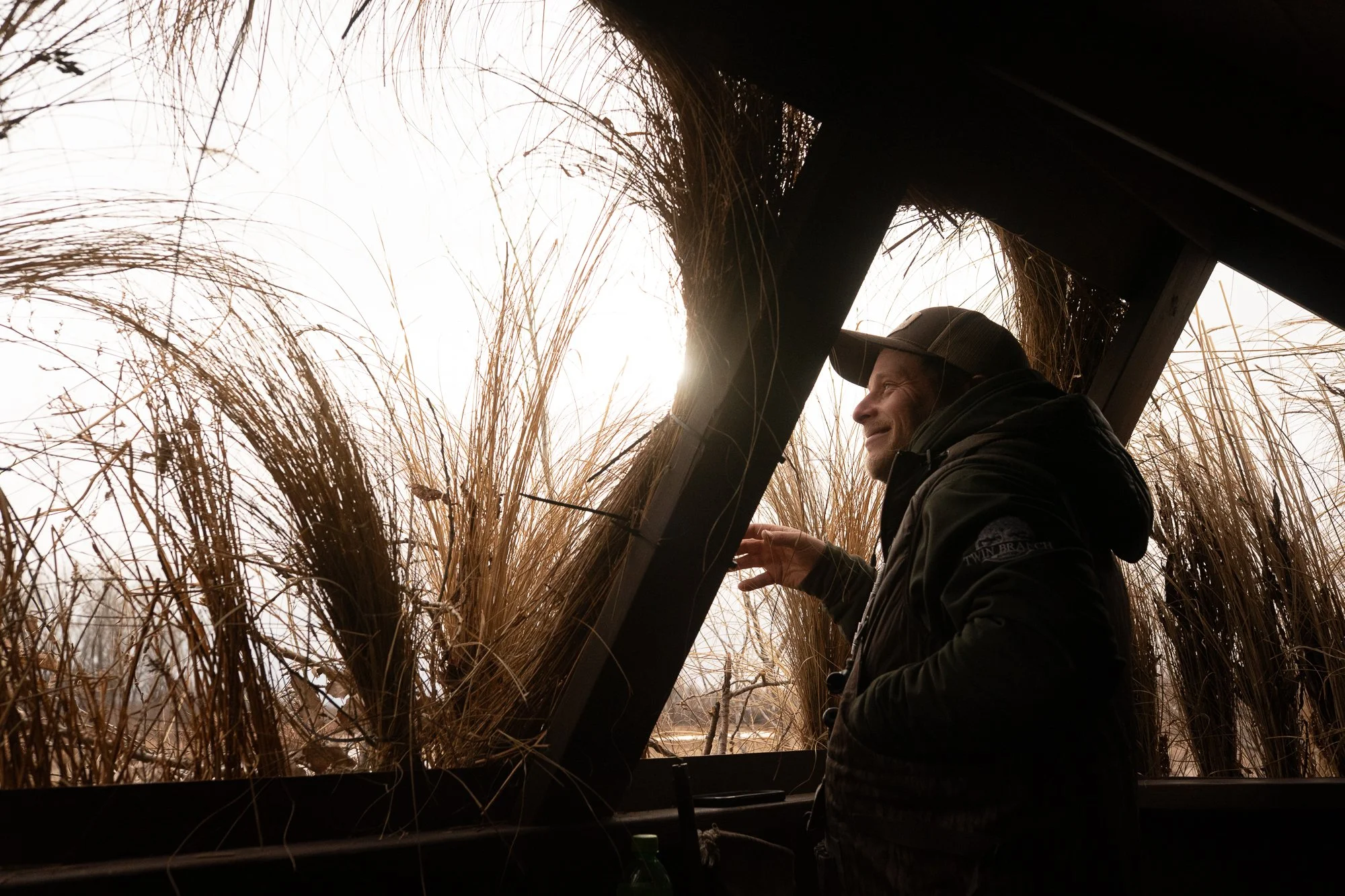
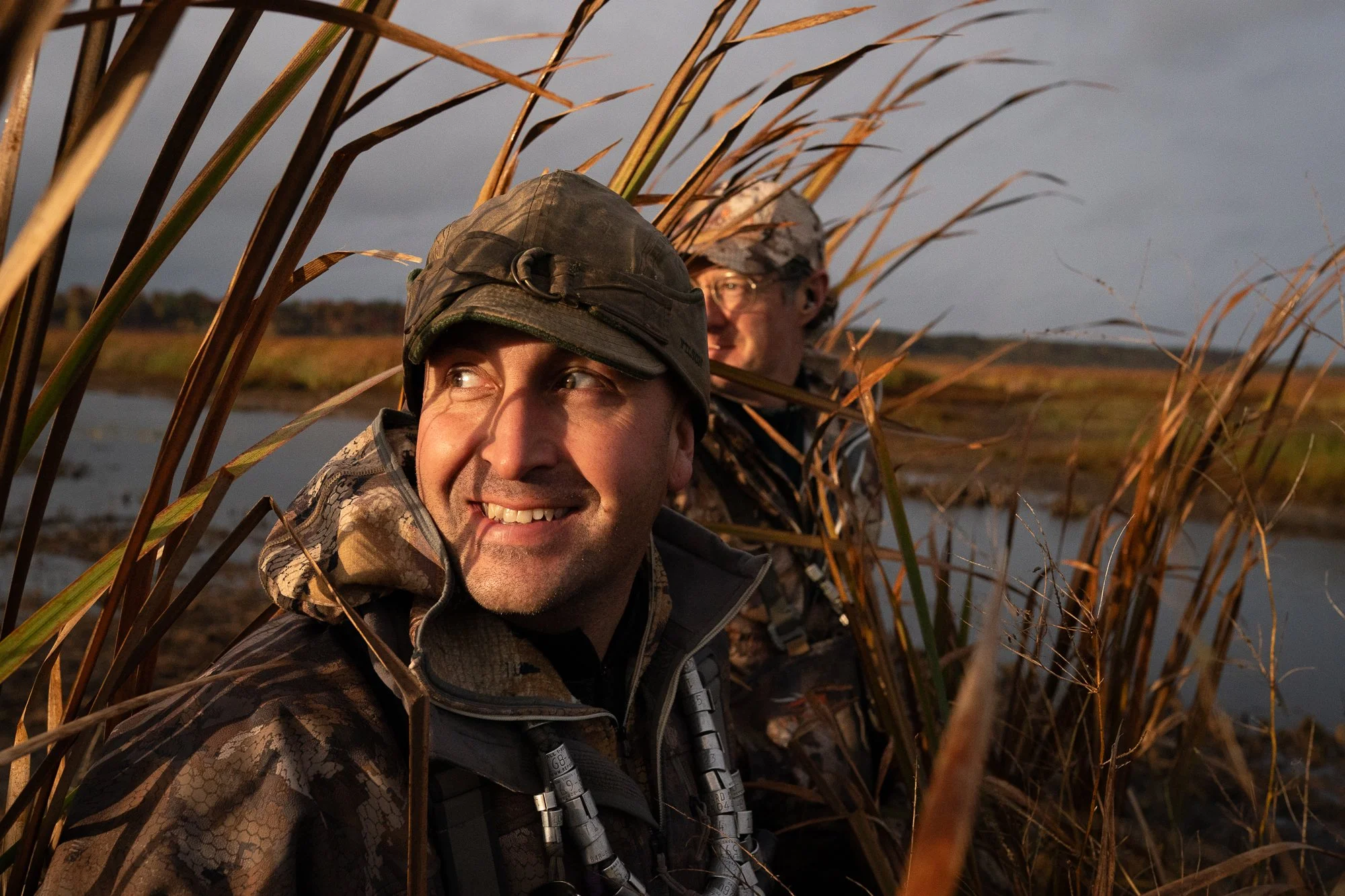
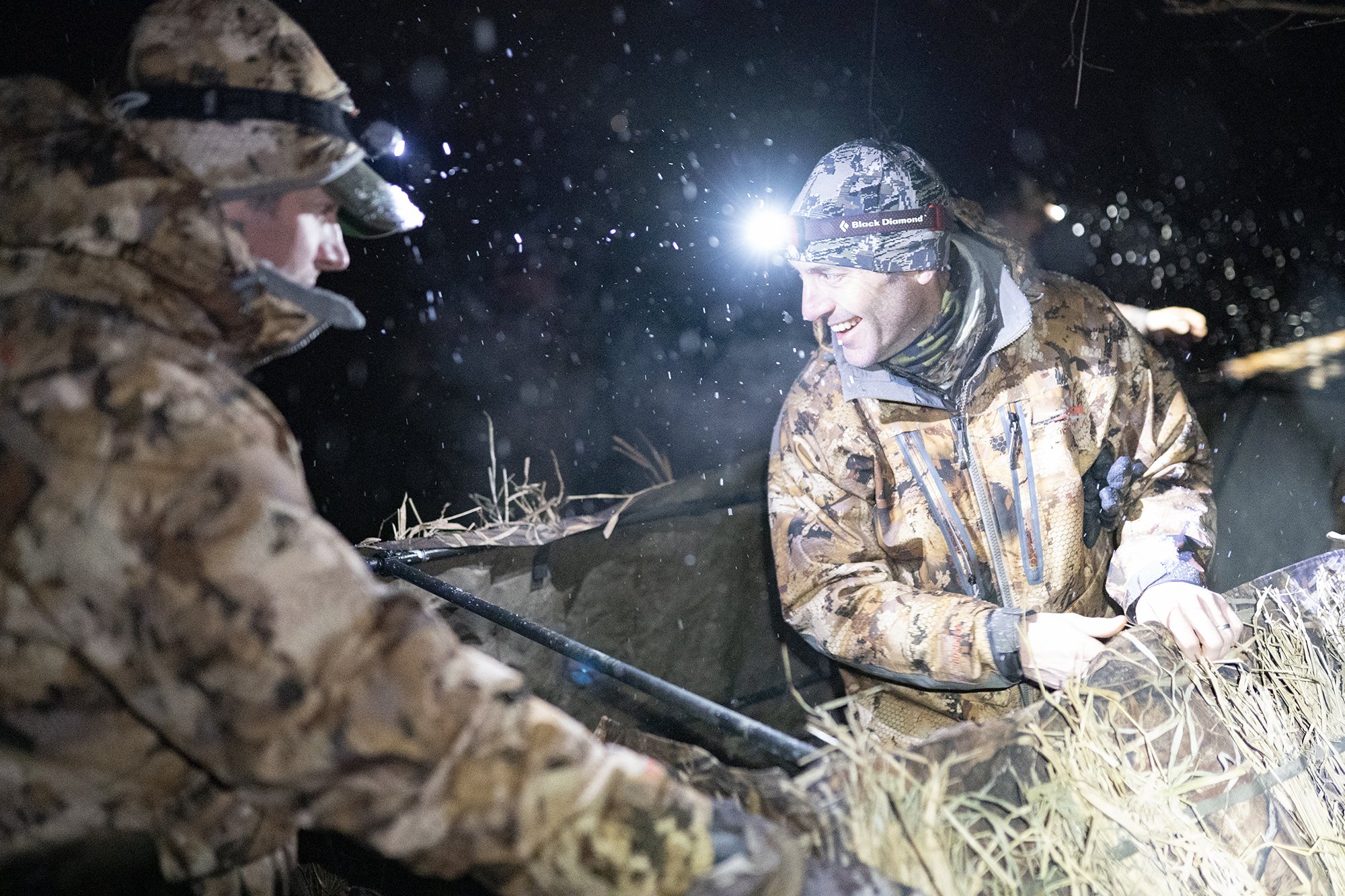
Spencer Proulx smiles in the blind while waiting for ducks
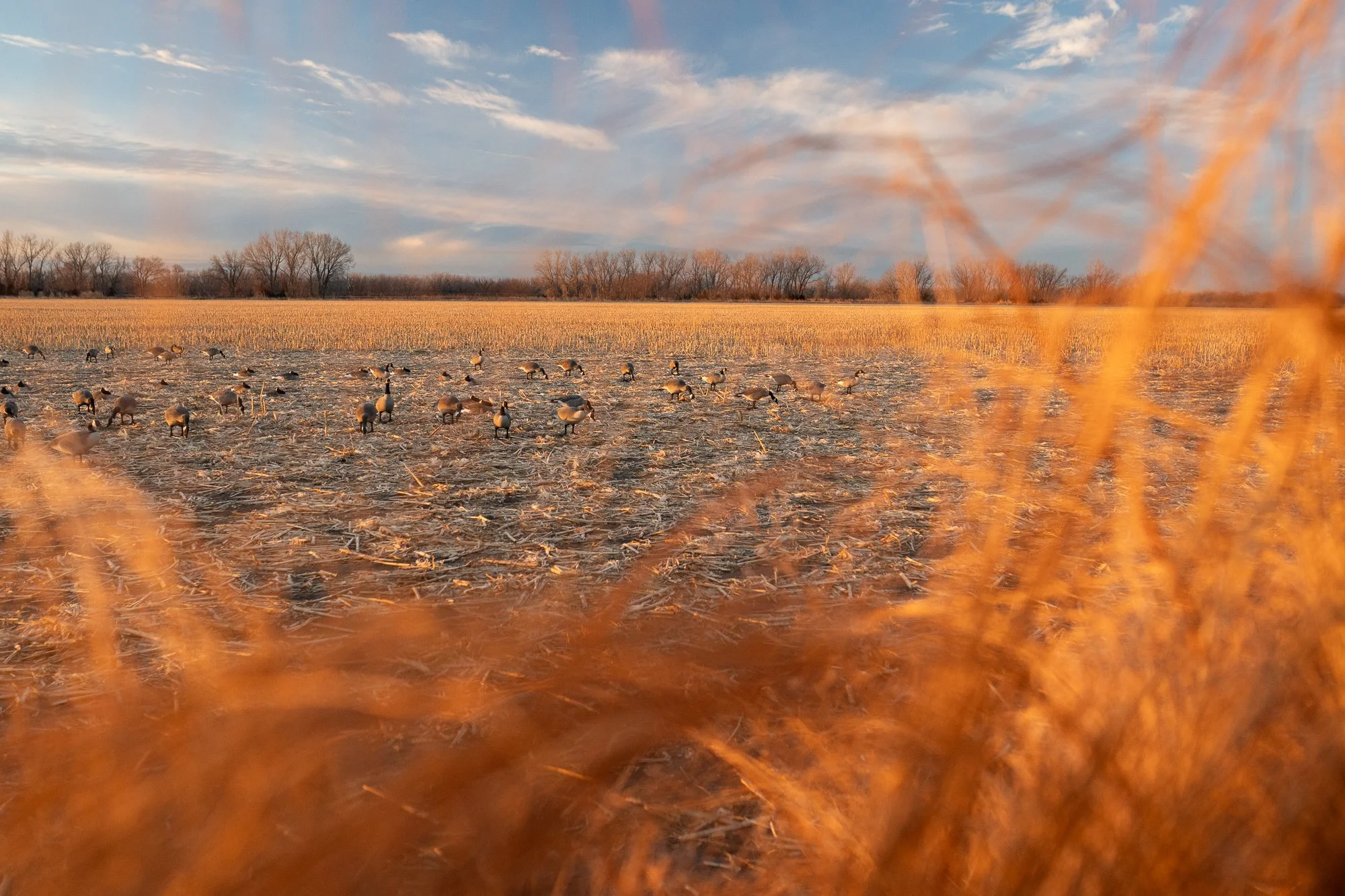
Goose decoys are illuminated in a field by early morning sunlight as hunters wait for action.
Duck Hunting with Twin Branch Hunt Co.
As most hunters do, we scheduled our trip almost a year in advance. And as chance would have it, the weather had been laughably warm for weeks prior to our arrival, so there weren’t a lot of birds moving. Still, Spencer Proulx and Bill Winn did what professionals do, they worked their ass off to get us some action.
The thing you learn as years pass with any kind of hunting, is hitting your limit doesn’t matter. It sure is fun when it happens, but there’s so much more to a hunting trip than a stack of birds. Even looking back on this trip that was just a few months ago, I couldn’t tell you how many birds we got on any of the morning or evening hunts, but we sure did have fun!!
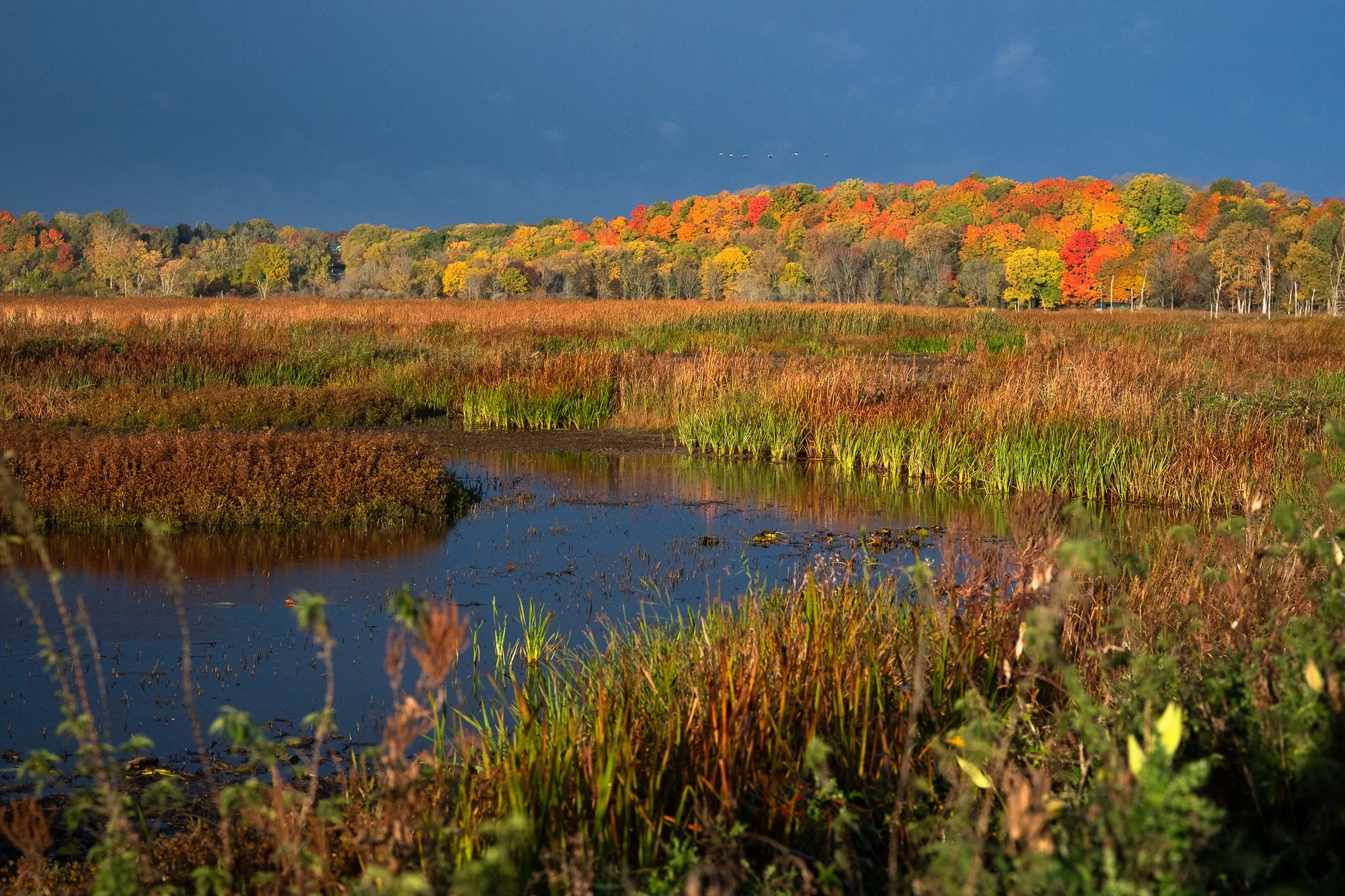
The landscape in this part of Nebraska Sandhills doesn’t try too hard. It’s open, quiet, and built for this kind of hunting. Farm fields, marsh pockets, the North Platte River, and just enough cover to disappear into if you do it right.
Everything about the hunt reflected that. No theatrics. No forced moments. Just a focus on putting people in the right place and letting the birds do what they’re going to do.
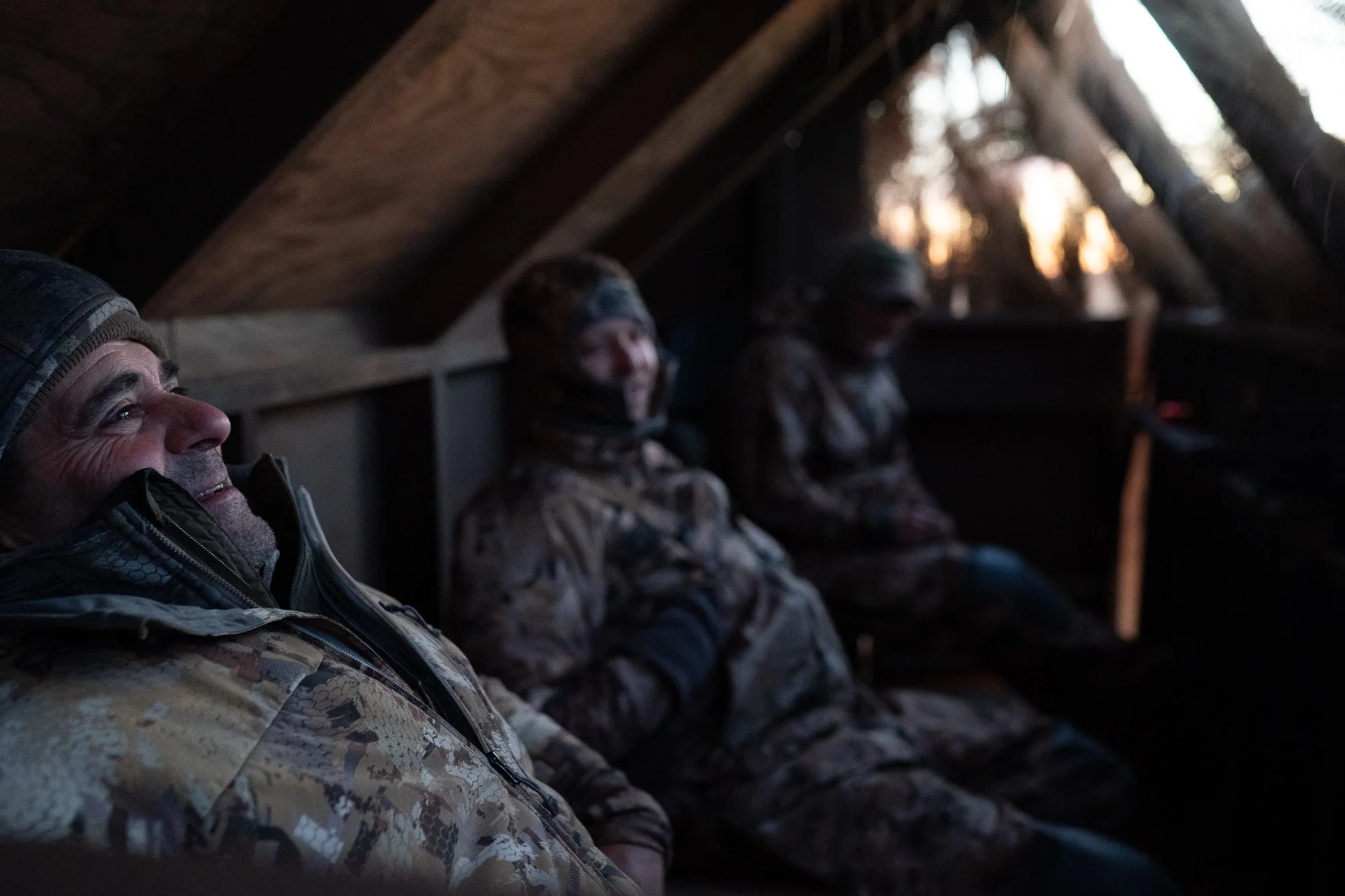
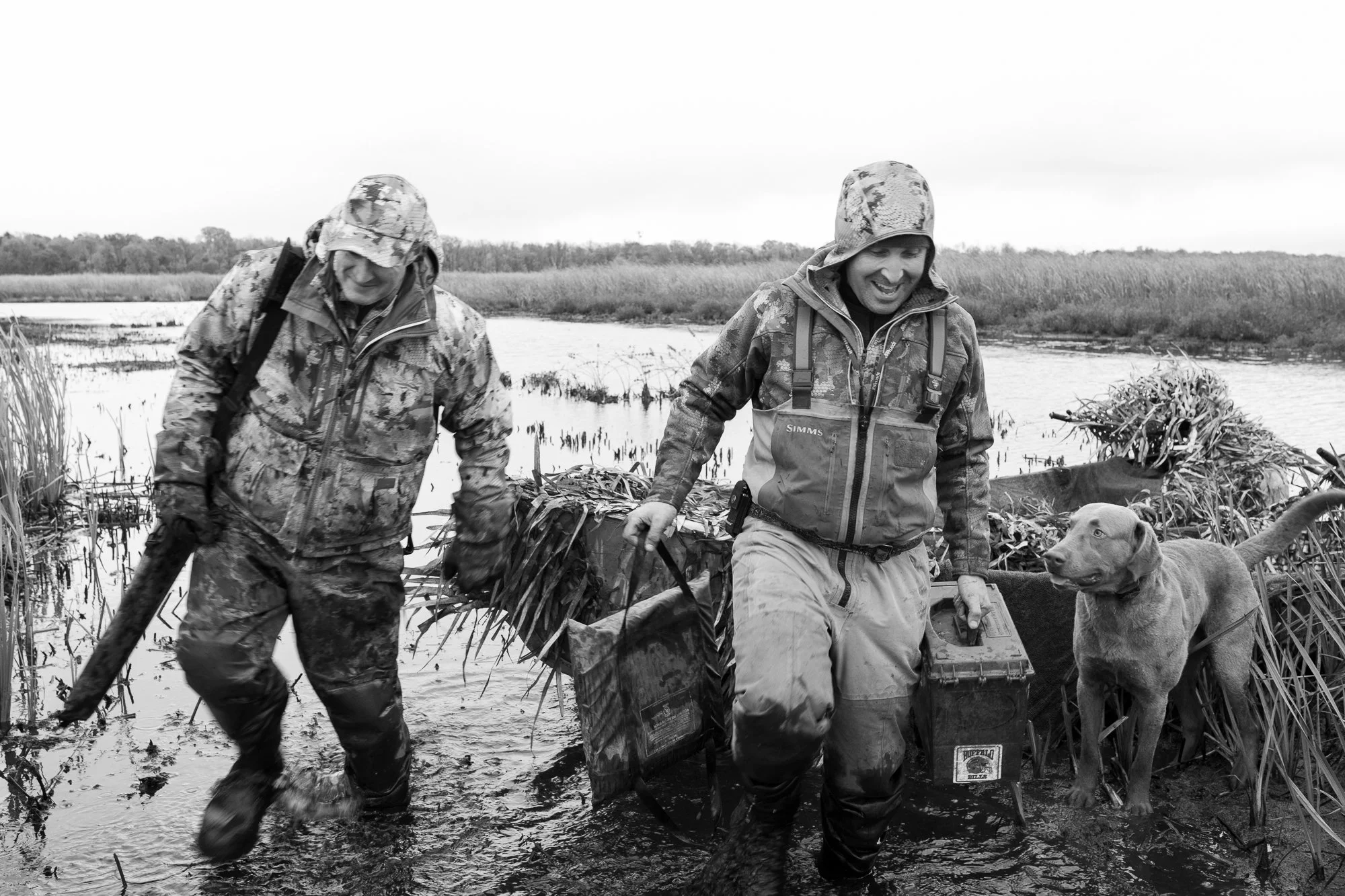
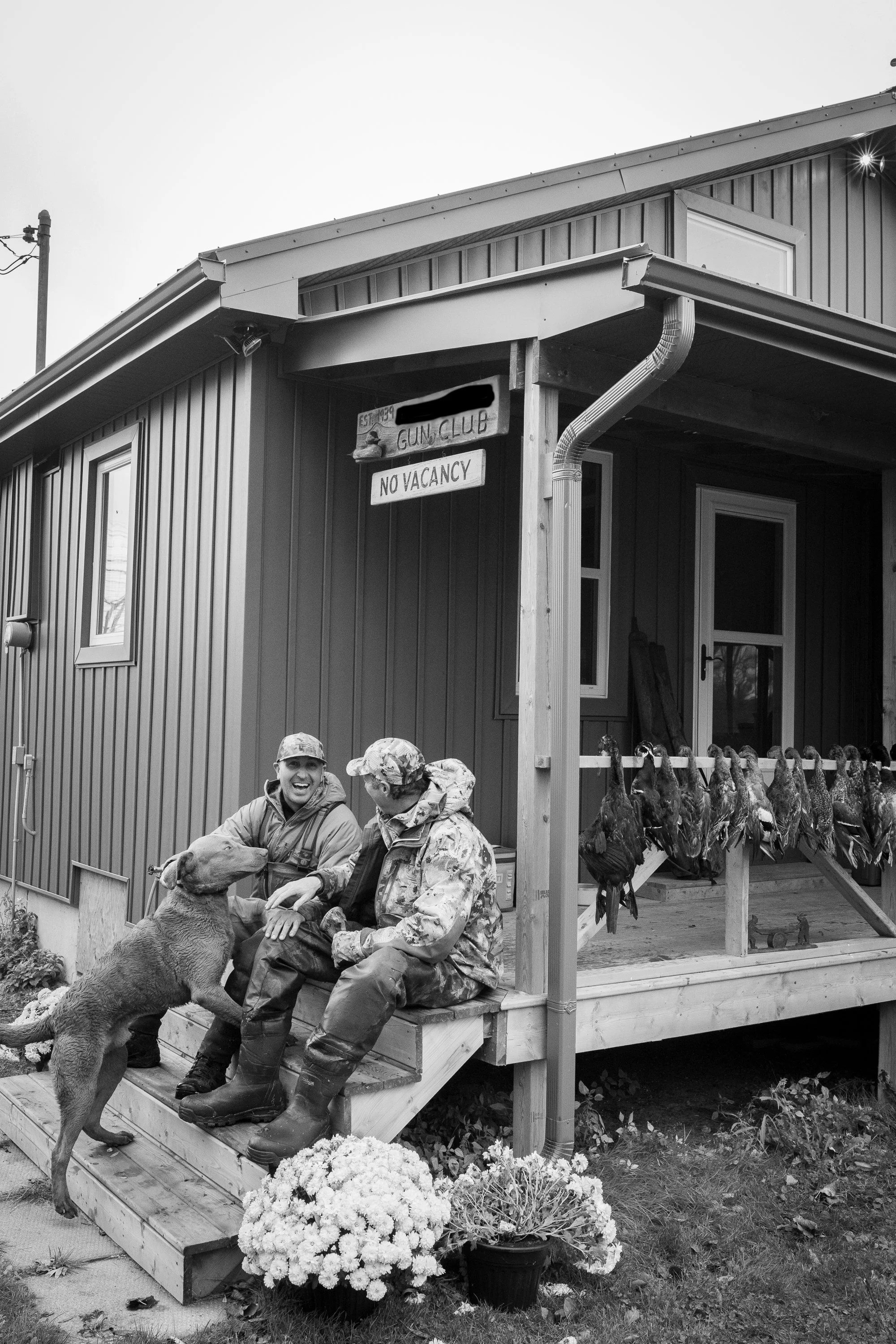
Hunters laugh in the blind during a slow time of day
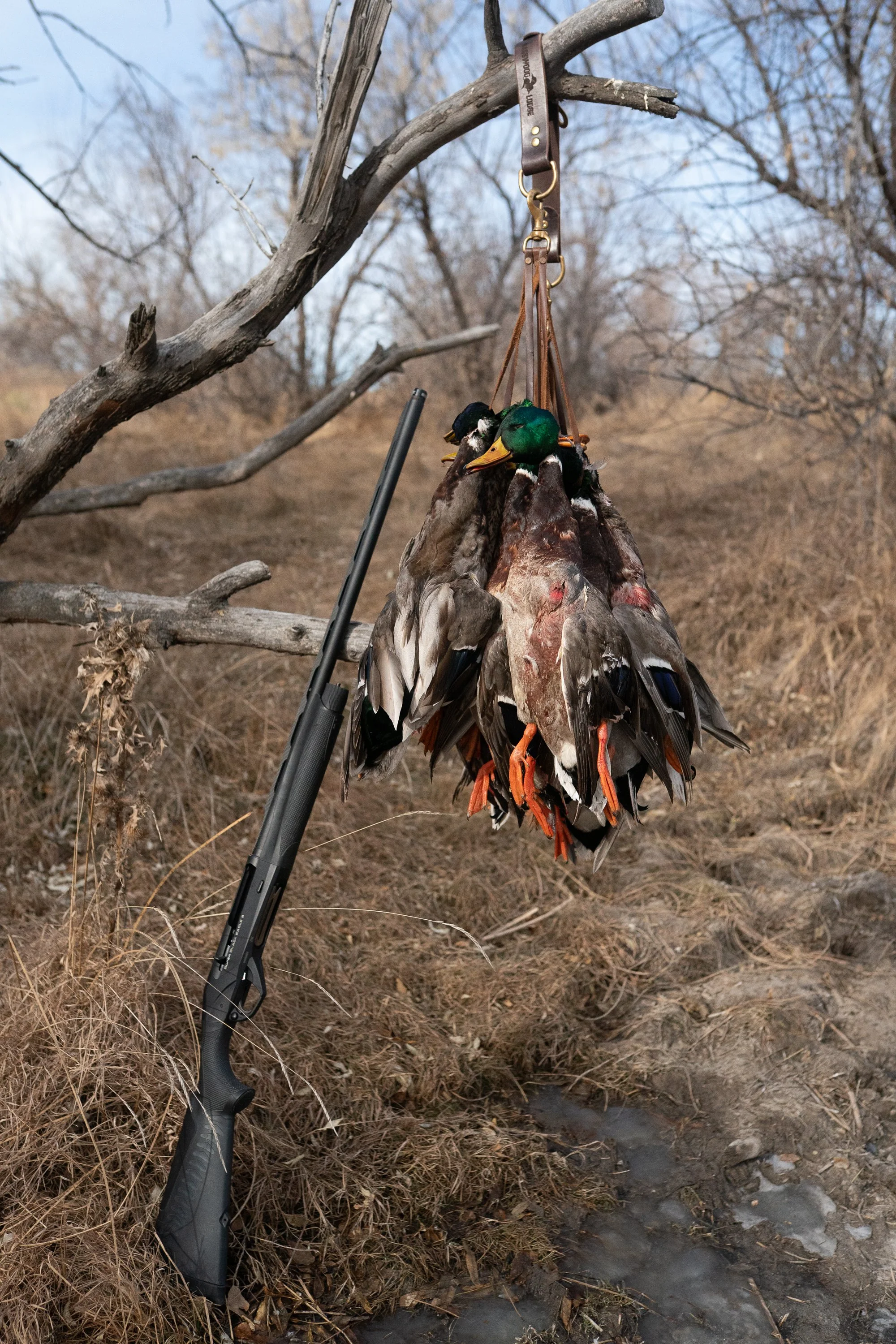
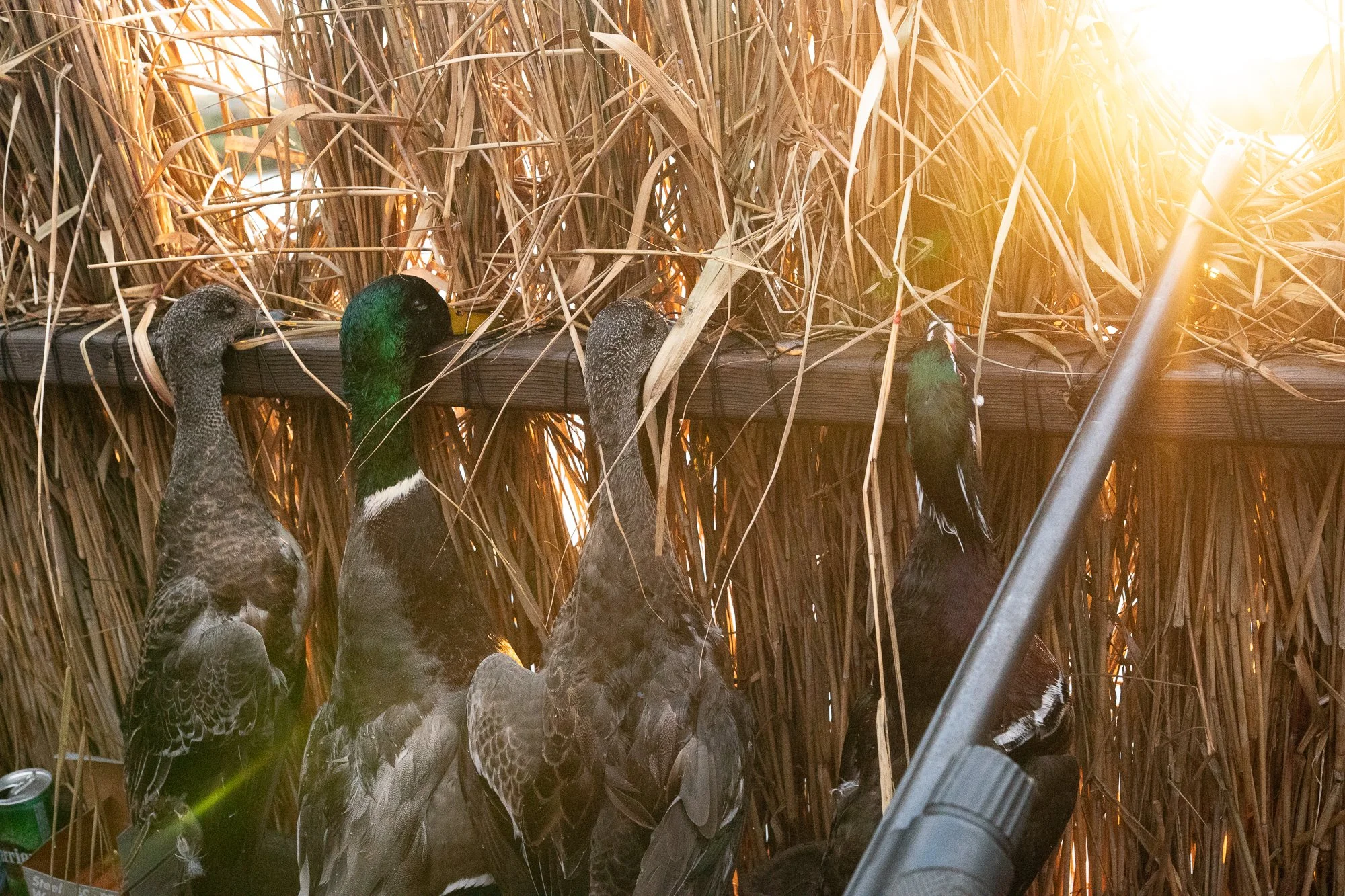
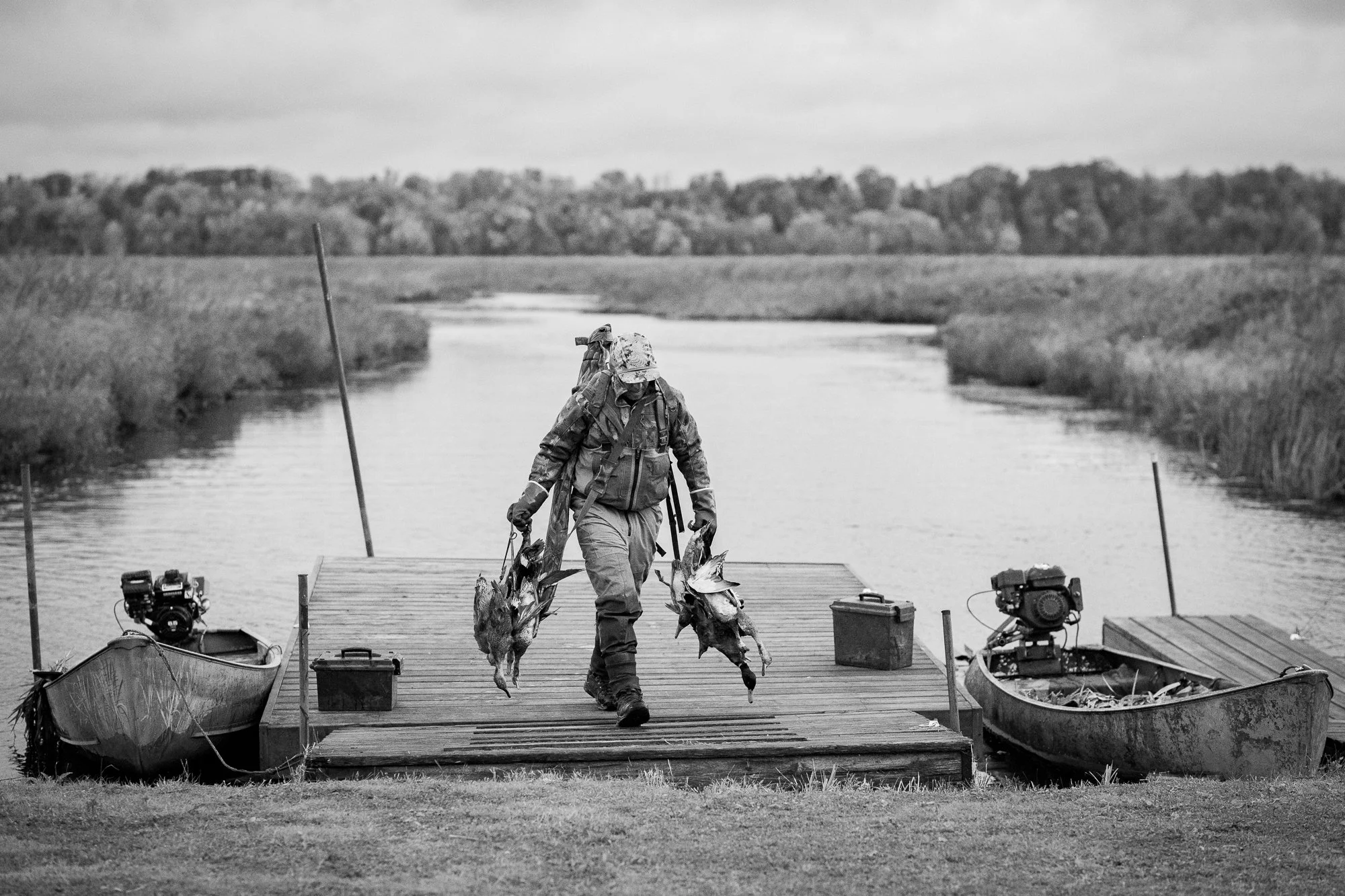
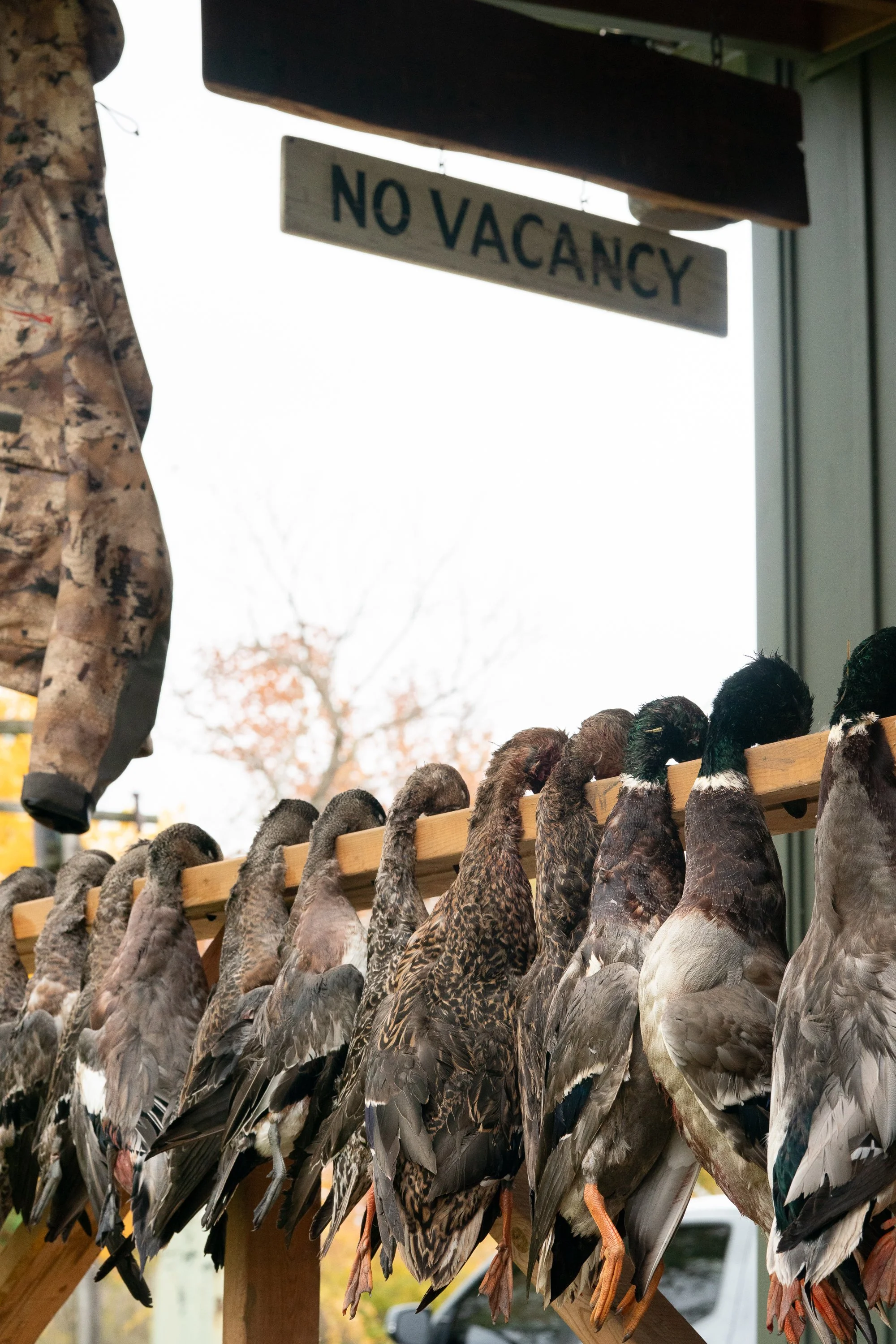
A strap of mallards hangs beside the shotgun after a cold morning in the duck blind.
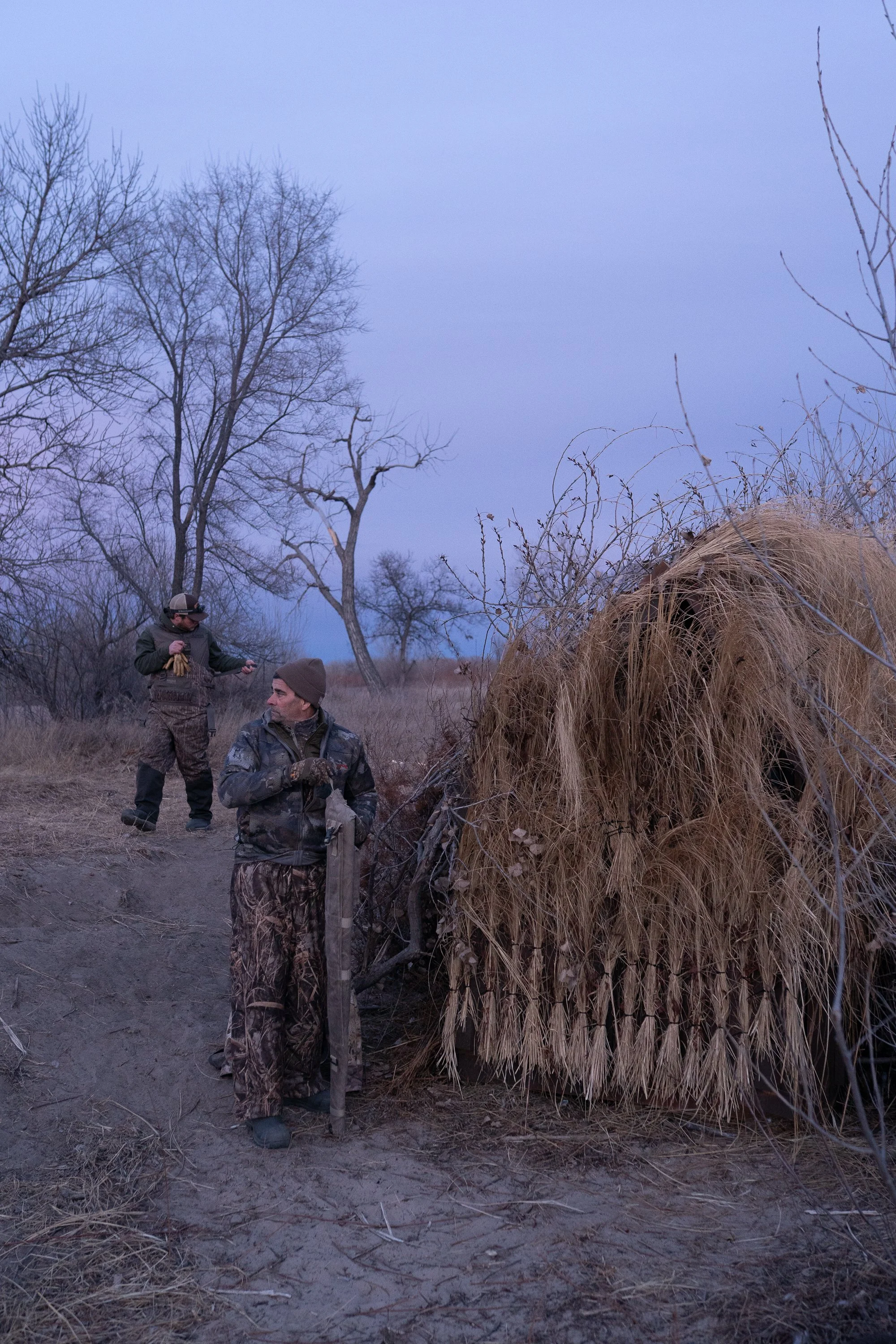
Hunters prepare beside a grass-covered blind as early morning light settles over the riverbank.
A Larger Body of Work
Mornings like this are part of a much bigger effort to document duck hunting as it actually is—not the highlight reel version, but the full experience.
The early wake-ups. The cold. The waiting. The short bursts where everything comes together.
There’s a rhythm to it that doesn’t translate unless you’re there, and that’s what I’m after—photographs that feel like being in the blind, not just looking at it from the outside.
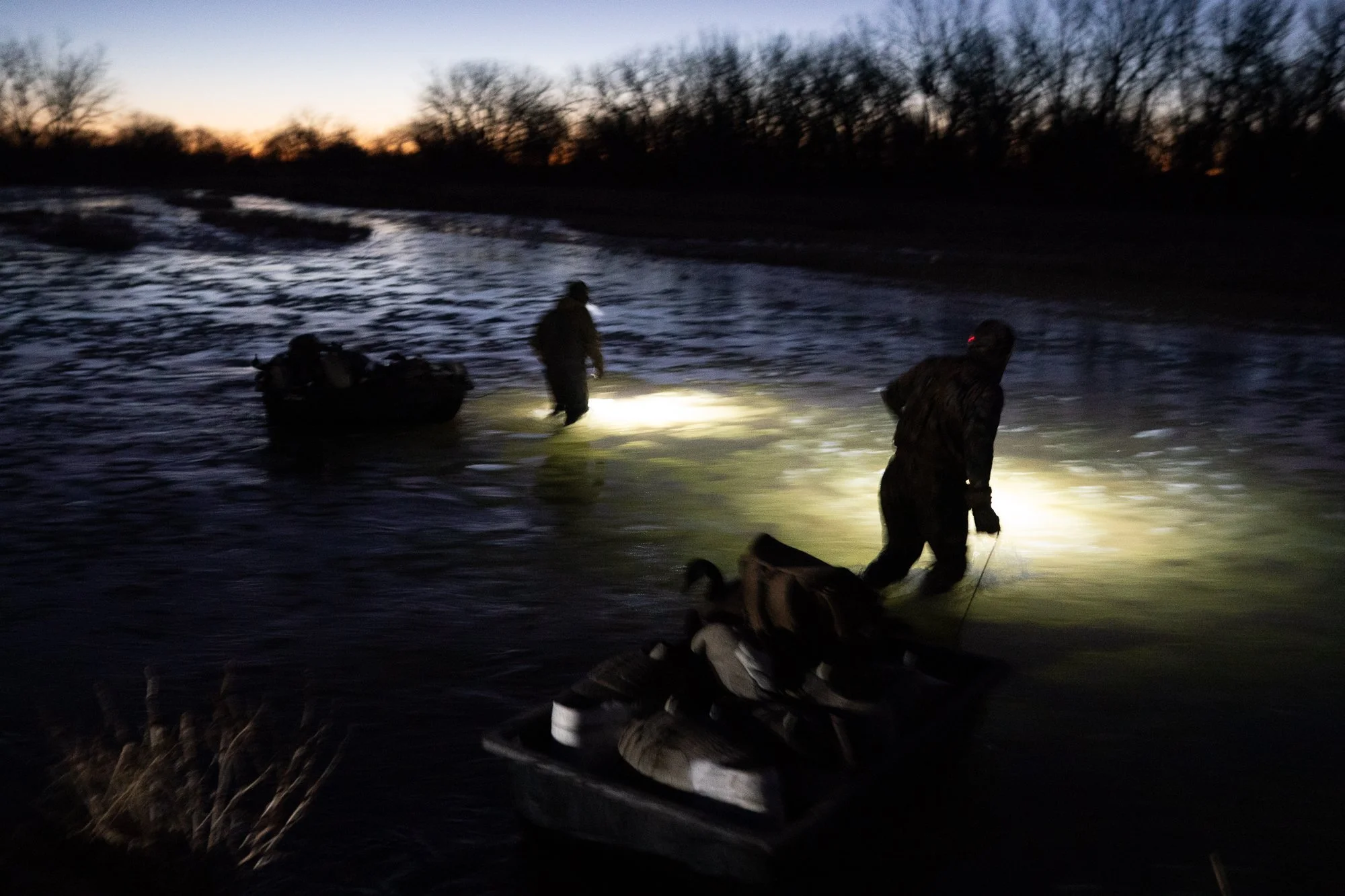
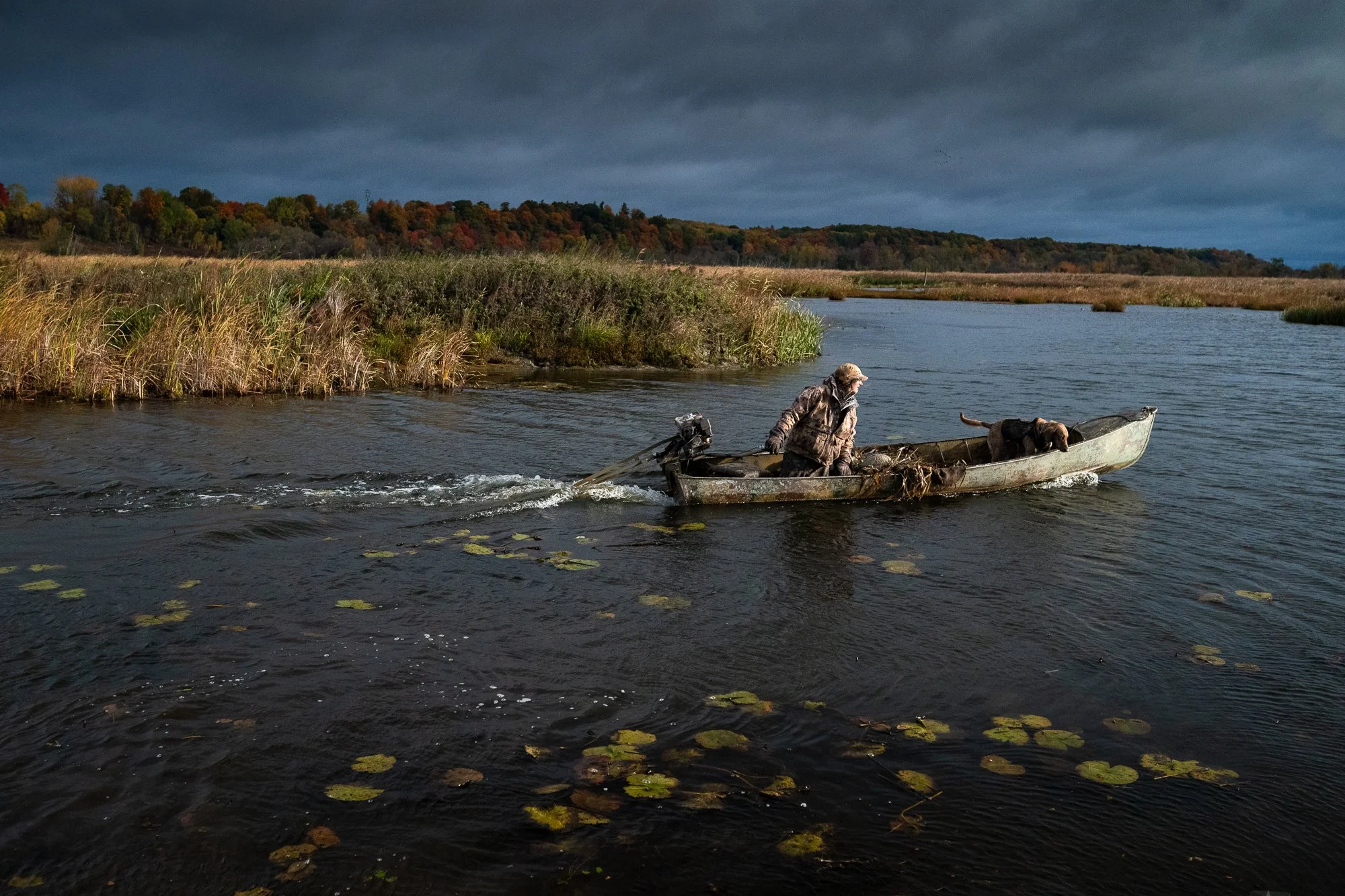
Hunters move through cold river water at first light, continuing the work before birds begin to move.
More Duck Hunting Photography From Other States
If you want to see more work like this—from different states, different conditions, and different mornings in the marsh, click below